
What is automated equipment tracking: an enterprise guide
TL;DR:
- Manual asset registers are often inaccurate, with inventory accuracy around 85 to 90 percent, leading to asset misplacement and financial loss. Automating equipment tracking with sensors, wireless protocols, and AI significantly improves accuracy, efficiency, and asset recovery. Successful enterprise implementation requires careful planning, phased rollout, and ongoing optimization to fully leverage the benefits.
Manual asset registers have a well-documented problem: they are wrong. Inventory accuracy with manual methods typically sits at 85 to 90 percent, which means roughly one in ten assets is either misrecorded, misplaced, or simply missing. For large enterprises managing thousands of devices across distributed sites, that gap carries real financial weight. Understanding what is automated equipment tracking, and why it matters operationally, is no longer a peripheral IT question. It sits at the centre of how forward-thinking organisations control costs, maintain audit readiness, and free their IT teams from low-value manual work.
Table of Contents
- Key takeaways
- What automated equipment tracking actually means
- The measurable benefits of equipment tracking
- Choosing the right tracking technology
- Implementing automated tracking in a large enterprise
- My perspective on where automated tracking is actually heading
- How Velocity-smart automates the physical layer
- FAQ
Key takeaways
| Point | Details |
|---|---|
| Automation replaces manual error | Automated tracking systems lift inventory accuracy from ~85% to over 99%, removing the primary cause of asset loss and audit failures. |
| Technology choice determines outcomes | RFID, UWB, BLE and GPS each suit different environments; matching technology to asset type and site conditions is more important than selecting the most advanced option. |
| Implementation risk is often underestimated | Enterprise deployments with 10,000+ assets typically require a phased rollout of three to six months to manage integration, security and training. |
| AI amplifies tracking value | Embedding AI analytics into tracking platforms reduces data analysis time by up to 95% and converts raw location data into operational decisions. |
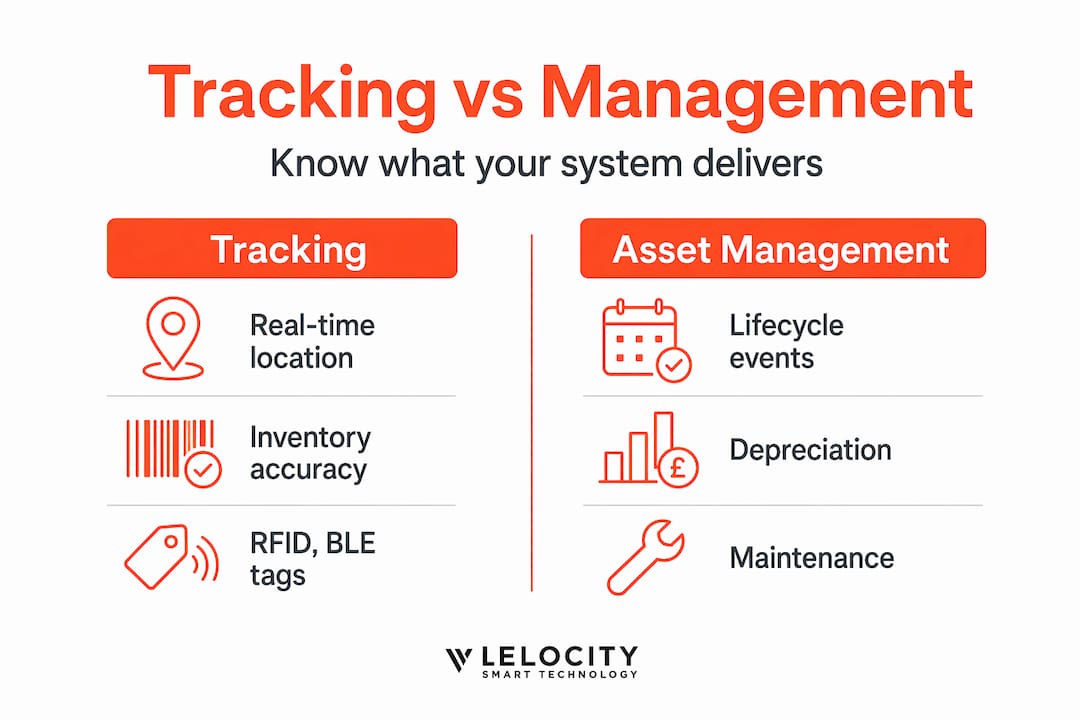
| Tracking and asset management are distinct | Equipment tracking records location and movement; full asset lifecycle management extends to maintenance schedules, depreciation and compliance workflows. |
What automated equipment tracking actually means
Automated equipment tracking is the use of hardware sensors, wireless communication protocols, and software platforms to identify, locate, and record the status of physical assets without manual intervention. Where a spreadsheet or barcode scanner requires a person to update a record, an automated system captures that data continuously and writes it to a central platform in real time.
The core components of any automated tracking system include:
- Identification tags or labels: RFID tags (both UHF and HF), Bluetooth Low Energy (BLE) beacons, UWB anchors, or GPS transponders attached to each asset.
- Readers and antennas: Fixed or handheld devices that interrogate tags and relay signals to the network. Fixed readers at doorways or racking positions create passive, always-on detection.
- IoT sensors: Supplementary sensors that capture environmental context such as temperature, vibration, or power status alongside location data.
- Software platform: A central application that processes raw signal data, applies business logic, and presents dashboards, alerts, and reports to operations teams.
The distinction between asset tracking and asset management is worth clarifying here. Tracking records where an asset is, who has it, and when it moved. Asset management extends further, encompassing maintenance schedules, depreciation records, warranty status, and compliance reporting. Many enterprises conflate the two when scoping a project, which leads to either over-engineering a tracking deployment or under-investing in the broader management capability they actually need.
Pro Tip: Before selecting a platform, map your primary use case clearly. If you need to know where 5,000 laptops are at any given moment, a tracking-focused solution is appropriate. If you also need to manage refresh cycles and software licence compliance, a full asset management platform will serve you better.
| Capability | Tracking system | Asset management system |
|---|---|---|
| Real-time location | Yes | Sometimes |
| Check-in / check-out automation | Yes | Yes |
| Maintenance scheduling | No | Yes |
| Depreciation and financial records | No | Yes |
| Audit trail and compliance reporting | Partial | Full |
The measurable benefits of equipment tracking
The operational case for automated tracking systems is not theoretical. Inventory accuracy exceeds 99% when RFID, UWB, and IoT technologies replace manual methods, compared to the 85 to 90 percent ceiling that manual processes consistently reach. For a global enterprise carrying £50 million in IT assets on its balance sheet, closing that accuracy gap directly affects capital planning, insurance, and audit outcomes.
Productivity gains follow a similar pattern. Industrial automation in equipment tracking delivers operational productivity improvements of 15 to 30 percent and can reduce data analysis time by up to 95 percent when AI tools are embedded in the platform. For IT operations leaders, that translates directly into reclaimed engineer time that can be redirected toward higher-value work.
“The real value of automated equipment tracking is not just knowing where an asset is. It is eliminating the administrative overhead that manual processes generate at every point in the asset lifecycle.”
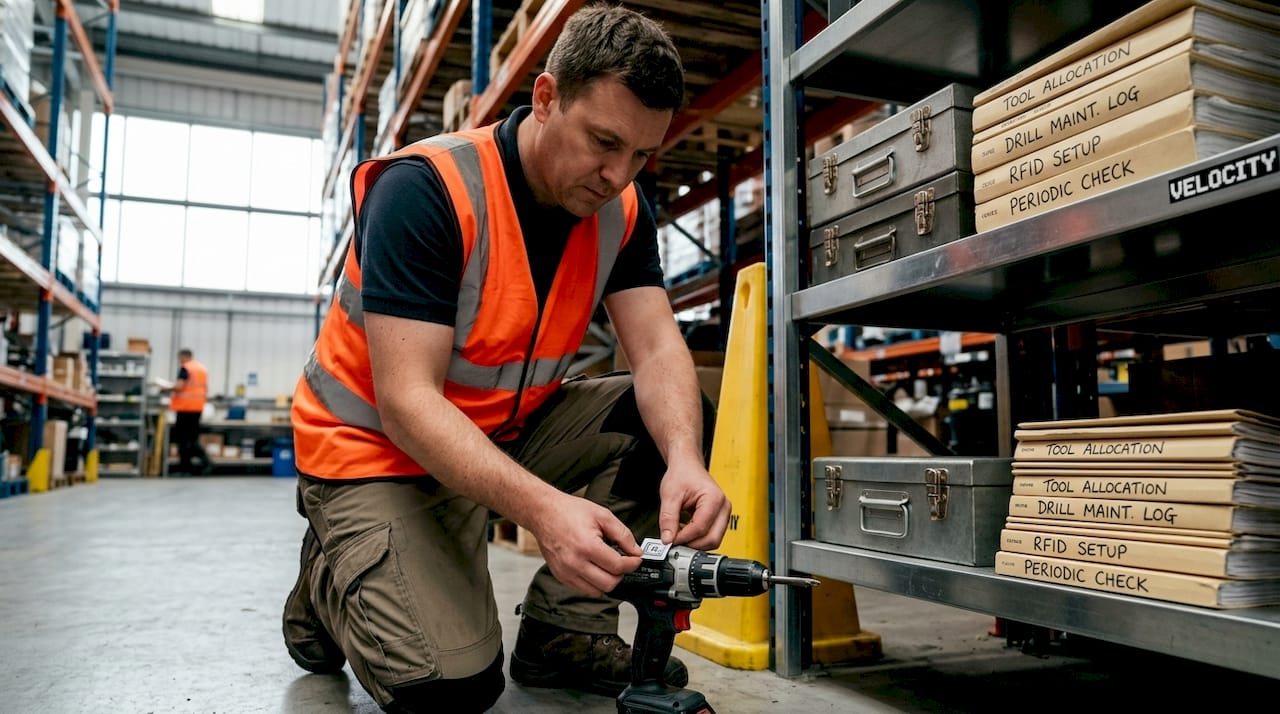
Asset recovery is another measurable benefit that is frequently under-counted in business cases. RFID tool tracking cuts manual errors and reduces inventory count times from 20 to 40 minutes per cycle to a matter of seconds. When a misplaced asset can be located immediately rather than written off and replaced, the cumulative saving across a large estate is substantial.
CFOs are paying attention to a related trend. AI platforms embedding continuous anomaly detection and predictive analytics are actively reducing the need for manual data analysis roles. Platforms that can flag an asset that has not been scanned in 48 hours, predict equipment failure from usage patterns, or identify utilisation gaps across sites give finance teams the ROI narrative they need to approve capital expenditure on tracking infrastructure.
Choosing the right tracking technology
Not all automated tracking systems perform equally across different operational environments. Understanding the trade-offs between technologies is one of the most consequential decisions an IT decision-maker will make during a tracking project.
| Technology | Typical range | Accuracy | Best use case | Key limitation |
|---|---|---|---|---|
| UHF RFID | 1 to 10 metres | Medium | High-volume asset inventories, warehouses | Metal and liquid interference; read range halves in dense settings |
| HF RFID | Up to 1 metre | High | Access control, document tracking | Short range limits large-area coverage |
| UWB | 10 to 50 metres | Very high (10 cm) | Real-time indoor positioning, high-value assets | Infrastructure cost and complexity |
| BLE | 10 to 30 metres | Medium | Office environments, loose equipment tracking | Signal interference in crowded RF environments |
| GPS | Global | Medium outdoors | Fleet, field assets, outdoor equipment | Does not function reliably indoors |
| Barcode / QR | Contact to 1 metre | High | Low-budget deployments, static inventories | Requires manual scan; no passive detection |
One frequently underestimated factor is the physical environment. UHF RFID read ranges cited by manufacturers often assume ideal conditions. In real industrial settings with metallic racking, dense cable runs, or equipment clusters, observed read ranges can drop by 30 to 50 percent. A site survey is not optional; it is the foundation on which any reliable RFID deployment is built.
The cloud versus on-premise decision adds another layer of complexity. Enterprise-grade on-premise tracking software carries licence and deployment costs ranging from £20,000 to £100,000 or more, with multi-month implementation timelines. Cloud-hosted platforms reduce upfront capital outlay and accelerate deployment, but introduce data residency and latency considerations that regulated industries such as pharma, defence, and financial services must evaluate carefully. Hybrid architectures, where real-time data is processed locally but aggregated and reported centrally, are increasingly common in enterprises with both compliance constraints and geographic scale.
Pro Tip: For assets deployed in environments with significant metallic infrastructure, request a site-specific read-rate test from your RFID vendor before committing to an architecture. A 30-minute pilot test with representative tag placements will reveal real-world performance far more accurately than a manufacturer’s data sheet.
Implementing automated tracking in a large enterprise
A well-designed tracking system that is poorly implemented will underperform relative to its potential. The implementation phase is where most enterprise deployments encounter their most significant risk, and where the gap between realistic and optimistic project planning becomes apparent.
A structured implementation approach typically follows these stages:
- Scoping and asset baseline. Document the asset types, volumes, locations, and existing tracking methods in scope. This creates the baseline against which post-deployment accuracy improvements are measured.
- Technology selection and site survey. Match technology to environment using the criteria discussed above. Conduct physical site surveys at representative locations before finalising hardware choices.
- Pilot deployment. Deploy in one location or asset category before scaling. A pilot covering 500 to 1,000 assets will surface integration issues, user adoption barriers, and infrastructure gaps at a manageable scale.
- Integration with existing systems. Connect the tracking platform to your CMDB, ITSM tooling, and any ERP or procurement systems that hold asset financial records. This is typically the most technically complex phase.
- Event-driven workflow configuration. Configure the platform to trigger automated workflows on asset events: an alert when a high-value device leaves a defined zone, an automated spare-part reservation when a maintenance threshold is crossed, or a check-in notification when a loaned device is returned.
- User training and change management. Adoption by end users and IT staff is as consequential as the technical configuration. On-premise deployments with 10,000 or more assets typically require three to six months of phased rollout to manage integration, security hardening, and training adequately.
- Performance review and optimisation. Measure accuracy, ticket volume related to asset queries, and engineer time spent on asset administration at 90 days post-deployment. Adjust reader placement, tag density, and workflow triggers based on observed data.
The organisations that extract the most value from automating device workflows are those that treat implementation as an ongoing operational process rather than a one-off project. Configuration drift, asset portfolio changes, and evolving site layouts all require periodic re-calibration of the tracking infrastructure.
Pro Tip: Build your event-driven automation incrementally. Start with three or four high-value workflow triggers, measure their impact, and add complexity once the foundation is stable. Attempting to automate every possible workflow at go-live is a reliable path to a delayed, over-budget deployment.
My perspective on where automated tracking is actually heading
In my experience working with large enterprise IT programmes, the most common mistake I see is treating automated tracking as a technology decision when it is, at its core, a process decision.
The organisations that achieve the strongest outcomes are not necessarily those that deploy the most sophisticated technology. They are the ones that reduce manual friction at each step in the asset workflow, incrementally, rather than attempting a wholesale transformation in a single programme. A well-configured BLE deployment that eliminates three manual touch-points in a check-out process will outperform a poorly configured UWB system in nearly every operational metric.
What I find genuinely compelling about the current trajectory is how AI is changing the nature of the analysis layer. Historically, the value locked in tracking data was only accessible to organisations with the analytical resource to process it. AI agents now perform continuous anomaly detection and surface predictive insights without a dedicated analyst. That shifts the return-on-investment conversation from “we will save analyst time” to “we will make better decisions faster,” which is a much more compelling case to make to a CFO.
The physical layer of the IT stack has, for too long, been the one area where automation stalls. Agentic AI is already reshaping digital service delivery, but the moment a workflow touches a physical handover, a person still has to intervene. The platforms that connect AI-driven workflows to physical asset endpoints are the ones that will define the next phase of enterprise IT service maturity.
— Anthony
How Velocity-smart automates the physical layer
Velocity-smart’s Smart Collect platform sits at the intersection of automated equipment tracking and AI-driven ITSM workflows. Running natively within ServiceNow, it writes asset state, device location, ownership history, and audit data directly to your CMDB as native configuration item records. There is no parallel database, no middleware layer, and no separate vendor security review to manage.
The platform’s hardware endpoints, including smart IT support kiosks and smart vending solutions, close the gap between AI-resolved tickets and physical handovers without requiring an engineer to attend. For IT operations leaders evaluating enterprise automation solutions, Smart Collect provides a direct path from tracking infrastructure to end-to-end ticket resolution. Contact Velocity-smart to arrange a demonstration specific to your asset estate and ServiceNow environment.
FAQ
What is automated equipment tracking?
Automated equipment tracking uses hardware sensors such as RFID tags, BLE beacons, or UWB anchors combined with software platforms to identify, locate, and record the status of physical assets in real time, without requiring manual data entry.
How does equipment tracking work in a large enterprise?
Tags or sensors attached to assets communicate with fixed or handheld readers, which relay data to a central software platform. The platform processes that data and triggers automated workflows, dashboards, and alerts based on pre-configured business rules.
What are the main benefits of equipment tracking?
The primary benefits include improved inventory accuracy above 99%, operational productivity gains of 15 to 30 percent, reduced asset loss, faster audit cycles, and AI-enabled analytics that reduce data analysis time by up to 95 percent.
Why choose automated asset tracking over manual methods?
Manual tracking methods consistently cap inventory accuracy at 85 to 90 percent and require significant staff time. Automated systems eliminate manual errors, provide continuous visibility, and integrate directly with ITSM and CMDB platforms to keep asset records current without human intervention.
How long does an enterprise tracking implementation take?
For deployments covering 10,000 or more assets, a phased rollout of three to six months is standard, accounting for system integration, security configuration, and user training across multiple sites.
Recommended
See what Smart Collect® could save you
Model your savings in two minutes, or book a 60-minute workshop to pressure-test the numbers against your estate.