What is contactless hardware distribution?
TL;DR:
- Contactless hardware distribution uses automated, software-controlled systems to streamline device collection and return, replacing manual touchpoints. It offers faster fulfillment, detailed audit trails, reduced support costs, and a better user experience, especially across distributed workforces. Successful implementation relies on proper software integration and change management to maximize operational benefits.
Most IT leaders still picture hardware distribution as a desk visit, a signed form, and a courier handing over a laptop. That picture is increasingly obsolete. Contactless hardware distribution replaces those manual touchpoints with automated, software-driven systems that let employees collect, return, and replace devices without queuing, without paperwork, and without waiting for a technician. For organisations managing thousands of devices across multiple sites, this shift is not cosmetic. It changes how IT teams operate, how assets are tracked, and how quickly people get the tools they need.
Table of Contents
- Key takeaways
- What is contactless hardware distribution?
- Benefits and challenges of contactless distribution
- Comparing contactless distribution approaches
- How it works in distributed workplaces
- Future trends in hardware distribution
- My take on contactless distribution’s real value
- See contactless hardware distribution in action
- FAQ
Key takeaways
| Point | Details |
|---|---|
| Contactless means automated | Hardware distribution becomes software-driven, removing manual handoffs and physical interaction from device fulfilment. |
| Multiple hardware models exist | Smart lockers, vending machines, and IT support kiosks each serve distinct use cases across enterprise environments. |
| Audit trails replace sign-off sheets | Time-stamped digital logs improve compliance and loss prevention far beyond manual records. |
| ServiceNow integration is a differentiator | Native ITSM integration automates approvals, asset updates, and access permissions without separate platforms. |
| ROI is measurable and fast | High-volume deployments using automated fulfilment can achieve return on investment within twelve months. |
What is contactless hardware distribution?
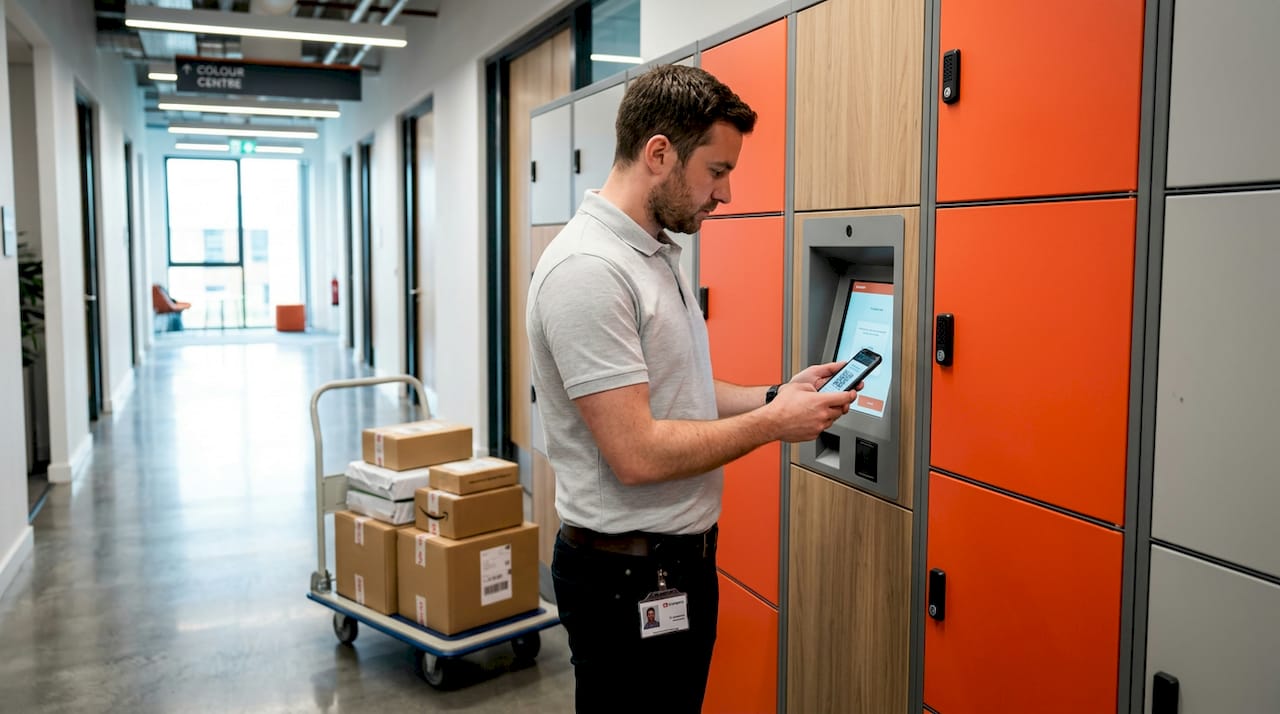
Contactless hardware distribution is the automated, touch-free delivery and collection of IT equipment using physical infrastructure controlled by software. Rather than relying on a technician or IT desk operative to hand over a device, the system authenticates the user, verifies their entitlement, and unlocks the correct compartment or dispenses the correct item without any human intermediary. Think of it as self-service device collection operating at enterprise scale, with full asset management integration.
Traditional hardware distribution relies on scheduled desk visits, manual inventory logs, and human approval chains. This model collapses under the pressure of distributed workforces, shift workers, and multi-site operations. Contactless models replace these friction points with three core components.
- Smart lockers. Secure compartments controlled by software. An employee receives a notification, authenticates using NFC, QR code, or mobile credential, and collects their device. No queue, no waiting.
- Smart vending machines. Purpose-built dispensers for smaller IT items such as peripherals, cables, headsets, and replacement accessories. Stock levels are tracked in real time.
- IT support kiosks. Staffed virtually rather than physically. Employees interact with remote technicians via a kiosk screen, run diagnostics, and exchange faulty equipment on the spot.
The authentication layer is what makes the whole system work. NFC and QR code access provide a critical security control layer that improves safety, throughput, and unattended pickup with full audit trails. Mobile credentials are gaining ground because they remove the need for dedicated readers at every location, which is particularly valuable in large, geographically spread estates.
Pro Tip: When selecting authentication hardware, match the reader type to the environment. Rugged outdoor readers are appropriate for loading bays and campus gates; sleek kiosk-style readers suit office reception areas and IT service points. Mismatching these increases failure rates and damages user confidence.
Benefits and challenges of contactless distribution
The operational case for contactless hardware distribution is grounded in four concrete advantages, not just convenience.
- Faster device fulfilment. Contactless systems reduce waiting times and queue formation at collection points, increasing the number of transactions completed per shift. A new starter can collect a fully configured laptop in under three minutes without involving IT staff.
- Granular audit trails. Automated proof-of-pickup logging removes the human error risks inherent in paper sign-off processes. Every collection, return, and exchange is time-stamped and attributed to an authenticated user, which is invaluable for compliance audits and loss prevention.
- Reduced IT support costs. Removing technician involvement from routine distribution tasks frees skilled staff for higher-value work. Organisations operating at scale see meaningful reductions in service desk call volume when self-service collection handles the repetitive fulfilment requests.
- Improved employee experience. Collecting a device at a time that suits the employee, rather than during a narrow IT desk window, matters. It reduces friction at onboarding and improves satisfaction scores for IT services.
“Contactless access in logistics mirrors self-service retail but with industrial-grade security controls, balancing speed with compliance.” — Contactless warehouse access: setup guide
The challenges are real and worth addressing honestly. Upfront capital investment in lockers, kiosks, or vending machines is significant, particularly for organisations fitting out multiple sites simultaneously. Integration complexity is the second hurdle. Systems that cannot connect natively to your ITSM platform require middleware, manual data synchronisation, and additional GDPR risk. Change management is the third. Employees and IT teams accustomed to face-to-face handoffs need clear communication and accessible support to adopt new collection workflows confidently.
Comparing contactless distribution approaches
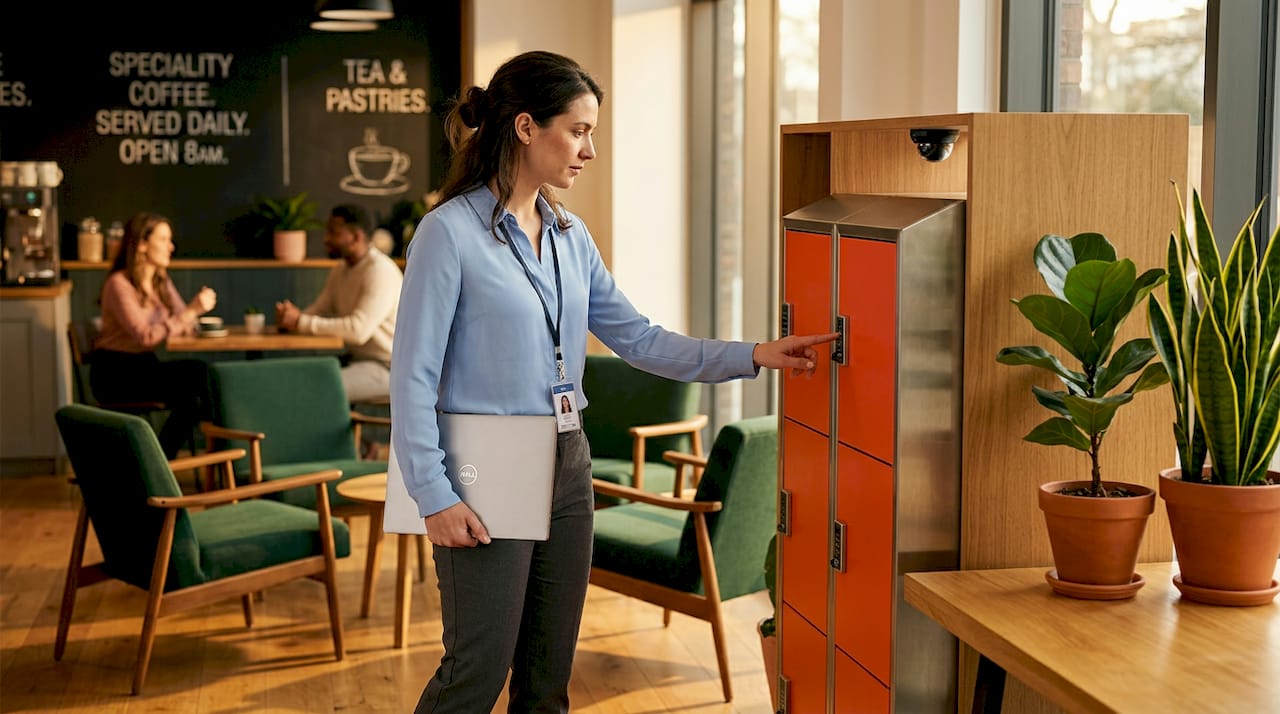
Not every contactless hardware distribution method suits every context. The choice between smart lockers, vending machines, and IT support kiosks depends on the type of equipment being distributed, the frequency of transactions, and the physical environment.
| Method | Best for | Key advantage | Limitation |
|---|---|---|---|
| Smart lockers | Laptops, large devices, personalised items | Secure, individual compartments with full audit logging | Higher footprint and installation cost |
| Smart vending machines | Peripherals, accessories, consumables | High-throughput dispensing of standardised stock items | Not suited to large or fragile devices |
| IT support kiosks | Device exchange, diagnostics, remote support | Combines hardware handoff with live technician access | Requires network connectivity and staffing coordination |
| Hybrid models | Mixed estates, multi-shift sites | Combines locker security with kiosk support capability | Requires careful workflow design to avoid overlap |
Software orchestration is what separates effective contactless distribution from a collection of disconnected hardware. The platform sitting behind these physical units controls authentication, triggers asset management updates, manages permissions, and generates the audit record. Systems built natively on platforms like ServiceNow remove the need for separate data environments, which matters greatly for organisations subject to GDPR or sector-specific compliance frameworks.
Hardware-free distribution models are also emerging, using mobile devices as the terminal rather than dedicated hardware. This approach can reduce total cost of ownership significantly by eliminating procurement cycles for readers and terminals. The trade-off is that reliability depends on the employee’s device, which introduces a variable the organisation does not fully control.
Pro Tip: Before selecting a distribution model, map your transaction types by volume and device size. High volumes of small, standardised items favour vending machines. Low-volume, high-value device assignments favour lockers. Trying to use one model for everything usually means it does neither well.
How it works in distributed workplaces
The practical workflow for contactless hardware distribution typically follows a consistent pattern, regardless of which physical infrastructure is deployed.
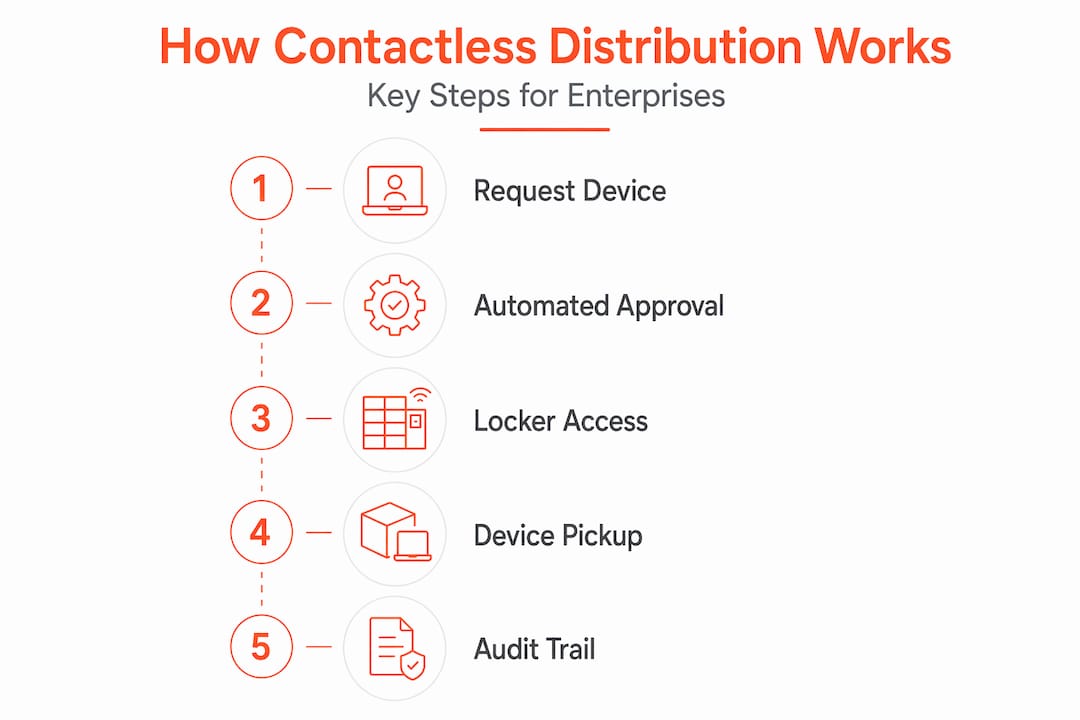
- A new starter or existing employee raises a device request through a service portal or ITSM system, triggering an automated approval workflow.
- Once approved, the relevant asset is reserved in the nearest locker or vending unit and the employee receives an access credential. This is usually a QR code, a PIN, or an NFC push to their mobile device.
- The employee authenticates at the collection point, the compartment opens or the item is dispensed, and the asset record is updated in real time without any manual intervention.
- Returns and repairs follow the same logic in reverse. The employee deposits the device, the system logs the return, and the asset record reflects the change immediately.
Integration with asset management and ITSM systems is not optional here. It is what makes the model work at scale. Organisations already running ServiceNow gain a significant advantage when their distribution hardware integrates natively with that platform, because touchless solutions can trigger workflows, update CI records, and manage lifecycle events without any re-keying.
For multi-location enterprises, event-based permissions are particularly powerful. Access to a specific locker compartment can be granted and revoked automatically based on workflow state, removing the risk of unauthorised collection or unclaimed devices occupying capacity.
Future trends in hardware distribution
The contactless distribution market is not static. The contactless access and payment market is projected to grow from USD 12.12 billion in 2019 to USD 52.35 billion by 2027, a compound annual growth rate of 21.65%. That trajectory reflects demand from logistics, smart buildings, and enterprise IT converging on the same need: faster, more reliable, touch-free access to assets.
AI-powered robotics are beginning to enter the distribution layer. Automated AI-driven fulfilment systems can achieve return on investment within twelve months in high-volume environments, particularly where items are lightweight and standardised. IT hardware fits that profile well. Subscription-based Robotics-as-a-Service models are making this accessible to organisations without the capital budget for outright purchase.
Mobile devices are also reshaping how employees interact with distribution infrastructure. NFC-enabled mobile devices are being used as certified access terminals, eliminating the need for dedicated branded hardware at every collection point. For enterprise IT teams managing large distributed estates, this could reduce deployment costs and accelerate rollout timelines considerably. The shift towards software-defined distribution, where the phone becomes the terminal, is already underway in payment technology and will translate directly into IT hardware logistics.
My take on contactless distribution’s real value
What I have observed, working with enterprise IT teams across large and complex organisations, is that the conversation about contactless hardware distribution almost always starts in the wrong place. Teams focus on the lockers, the machines, the physical hardware. That is the visible part. The actual value sits in the data layer.
The first time an IT director sees a real-time dashboard showing exactly where every device is, who collected it, when, and from which location, the reaction is usually the same. They ask why they were ever doing it any other way. The smart lockers for remote IT support conversation shifts from “interesting technology” to “operational necessity” the moment the audit and compliance implications become clear.
What I have found drives success in practice is not the sophistication of the hardware. It is the quality of the software integration and the rigour of the workflow design before anything is installed. Organisations that deploy contactless lockers without connecting them properly to their ITSM platform end up with expensive storage boxes. Those that invest in proper integration from the outset get a genuinely different operating model.
My contrarian view: change management is underfunded in almost every deployment I have seen. Employees who are not briefed properly simply do not use the system, and utilisation rates collapse. The technology is the easy part.
— Anthony
See contactless hardware distribution in action
Velocity-smart builds the infrastructure and software that makes contactless hardware distribution work at enterprise scale. The Smart IT Support Kiosk combines device exchange, remote technician access, and secure diagnostics in a single unit, deployable across multiple sites without onsite IT staffing.
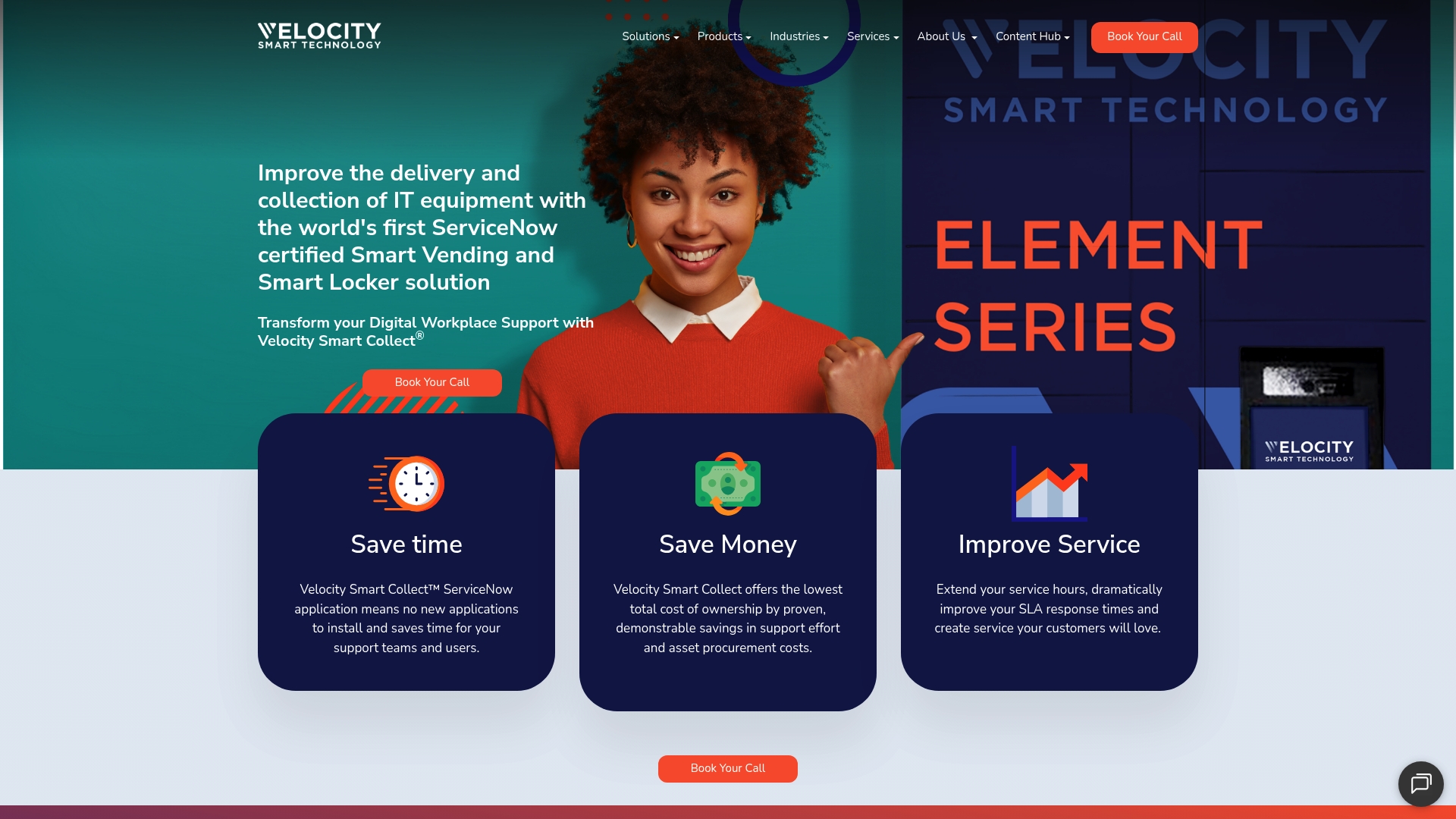
Velocity Smart Collect, the leading ServiceNow-certified smart locker and vending platform, runs natively inside your ServiceNow instance. That means automated approvals, real-time asset updates, and full audit logging without additional data platforms or GDPR exposure. For IT teams managing distributed estates, that integration depth makes a measurable difference to both compliance posture and operational cost.
Explore how the Smart IT Support Kiosk can transform device fulfilment and remote support across your organisation.
FAQ
What is contactless hardware distribution?
Contactless hardware distribution is the automated, touch-free collection and return of IT devices and equipment using smart lockers, vending machines, or kiosks controlled by software. Employees authenticate using mobile credentials, QR codes, or NFC and collect their assigned device without involving a technician.
How does contactless hardware distribution work?
A device request is raised through a service portal, triggering an automated approval and asset reservation. The employee receives an access credential, authenticates at the collection point, and the system logs the transaction and updates asset records in real time.
What are the main benefits of contactless hardware delivery?
The primary benefits are faster fulfilment, granular digital audit trails, reduced IT support costs, and improved employee experience. Automated logging removes human error from asset records and significantly strengthens compliance and loss prevention.
Which is better for enterprise IT: smart lockers or vending machines?
Smart lockers suit high-value items such as laptops that require individual secure compartments. Vending machines are better for high-throughput distribution of smaller, standardised items such as peripherals and accessories. Many enterprises deploy both.
Can contactless distribution integrate with ServiceNow?
Yes. Platforms such as Velocity Smart Collect are built natively on ServiceNow, meaning approvals, asset updates, and access permissions are managed entirely within the existing ITSM instance without middleware or additional data platforms.
Recommended
See what Smart Collect® could save you
Model your savings in two minutes, or book a 60-minute workshop to pressure-test the numbers against your estate.