Digital lockers put the intelligence in the platform, not just the steel.
You already run a distributed IT estate, and every device handover still costs your team time it does not have. Velocity digital lockers move that work into software: your people request, collect, return and swap IT kit through their own ServiceNow workflows, while your team keeps a full chain-of-custody audit trail behind every door. It is how IT leaders at Roche, BAE Systems and Centrica take the manual grind out of device management without losing a shred of control.
What is a digital locker?
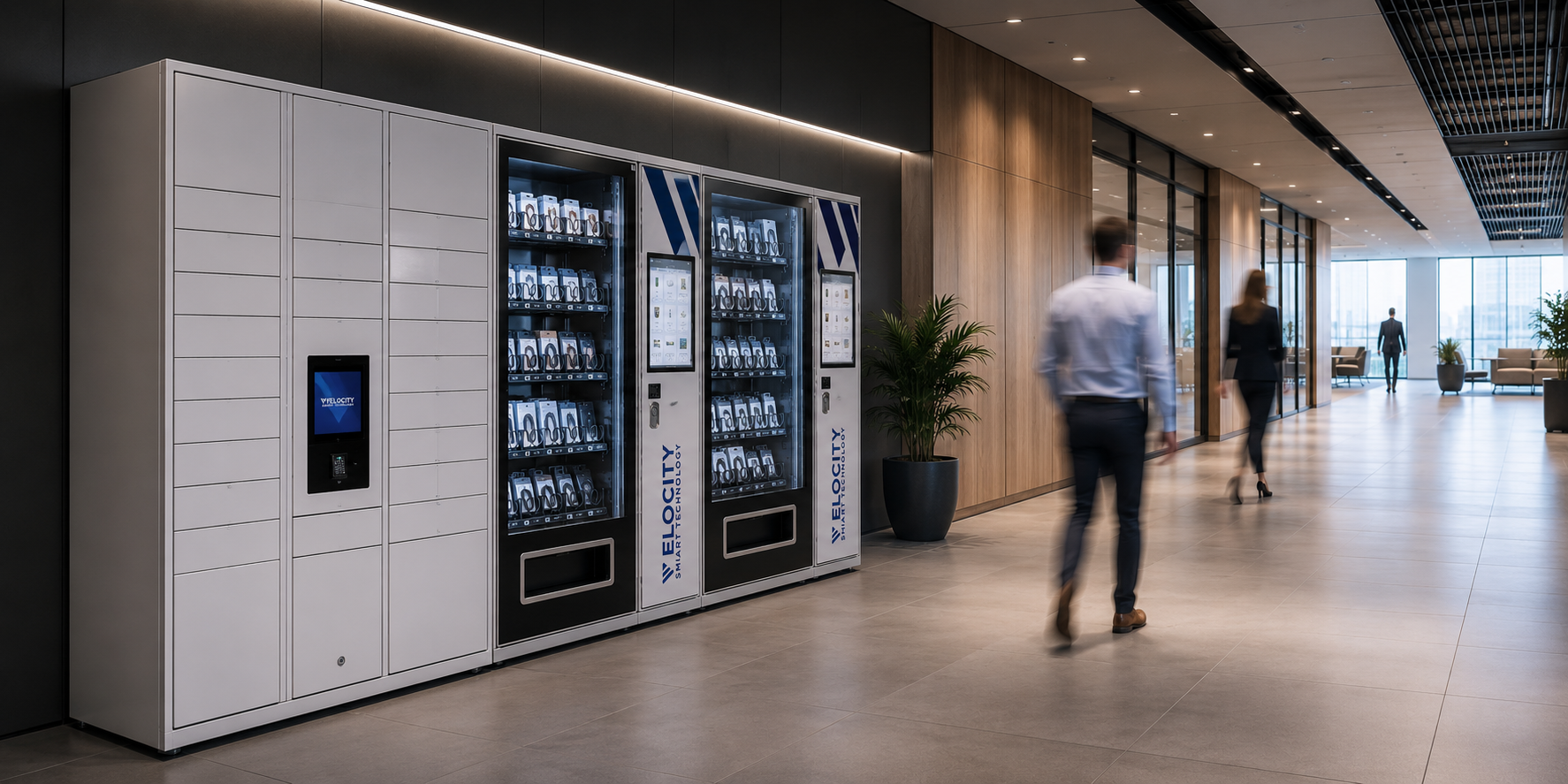
A digital locker is a secure, electronically controlled compartment whose access, allocation and audit are all governed by software rather than by a key or a signing-out sheet. Your employee requests a device through their service portal, the platform assigns a compartment and issues a one-time code, and every open, collection and return is written to a permanent record. The steel keeps the kit safe; the software decides who gets in, when, and against which ticket.
That is the difference between a digital locker and an ordinary locked cabinet. Velocity digital lockers run natively inside your ServiceNow tenant, so access control, device records and the audit trail all live in the environment your team already owns. There is no separate directory to maintain, no middleware to keep alive, and no nightly sync to reconcile.
- Software-defined access — the platform decides who opens which compartment, and when
- Full chain of custody — every open, collection and return logged against a ServiceNow ticket
- ServiceNow-native — access control and device records stay inside the tenant you already run
How digital lockers work, end to end
Every transaction runs through your own ITSM. Your employee never joins a queue, and your team never touches the handover. Here is the loop a digital locker closes on its own.
A digital locker system controlled entirely from ServiceNow
The reason a Velocity digital locker system earns its place is that the intelligence sits in the platform, not in the cabinet. Access control, allocation, authentication and reporting are all Velocity Smart Collect® running natively inside ServiceNow — so you govern the whole estate from the environment your team works in every day, rather than logging into yet another console.
That native footprint is what lets you scale digital lockers across sites without fragmenting how your organisation operates. One access model, one audit standard, one place to look — whatever hardware sits underneath.
Authentication your organisation already trusts
Every collection is authorised by a credential the platform issues at the moment a request is approved — a one-time code, a PIN, or the employee's corporate ID or badge. The credential is tied to a single ticket and a single compartment, so the record maps one collection to one transaction. There is no new app to install and no separate password to manage.
Why authenticate the transaction, not just the person? A credential tied to one ticket and one compartment gives you a clean, one-to-one map between every request in ServiceNow and every physical collection. That is the chain of custody regulated, distributed enterprises — pharma, defence, energy — depend on when they need to prove exactly who held which asset and when.
What digital lockers change for your IT team and your people
Two groups feel it first. The IT team stops running a handover desk, and employees stop waiting on one. Here is what shifts on each side.
For your IT team
Break-fix swaps, new-starter kit-outs, peripheral fulfilment and loan returns all run without an engineer in the loop. Your specialists stop staffing a collection desk and get their week back, while every movement still reconciles itself in ServiceNow. The audit trail is captured whether anyone is watching or not.
For your people
They collect what they need the moment they need it, day or night, without booking a slot or joining a service-desk queue. A broken laptop goes in, a working one comes out, and they are back to work the same hour. The wait that used to sit between a ticket and a device simply disappears.
Across the Velocity customer base, IT leaders typically see a return inside year one — the onsite support they stop paying for, and the tickets they stop raising, cover the platform before the first year is out.
Standing up your digital lockers, step by step
You do not need a year-long programme to start. We map the handover workflows you run today, size a pilot, and grow from there once your people feel the difference.
IT leaders ask us these questions about digital lockers
See digital lockers running inside your own ServiceNow
Spend 60 minutes with a Velocity ServiceNow architect and you will leave with your device-handover workflows mapped, a pilot sized, and a clear view of the return inside year one. You bring the estate; we bring the plan.