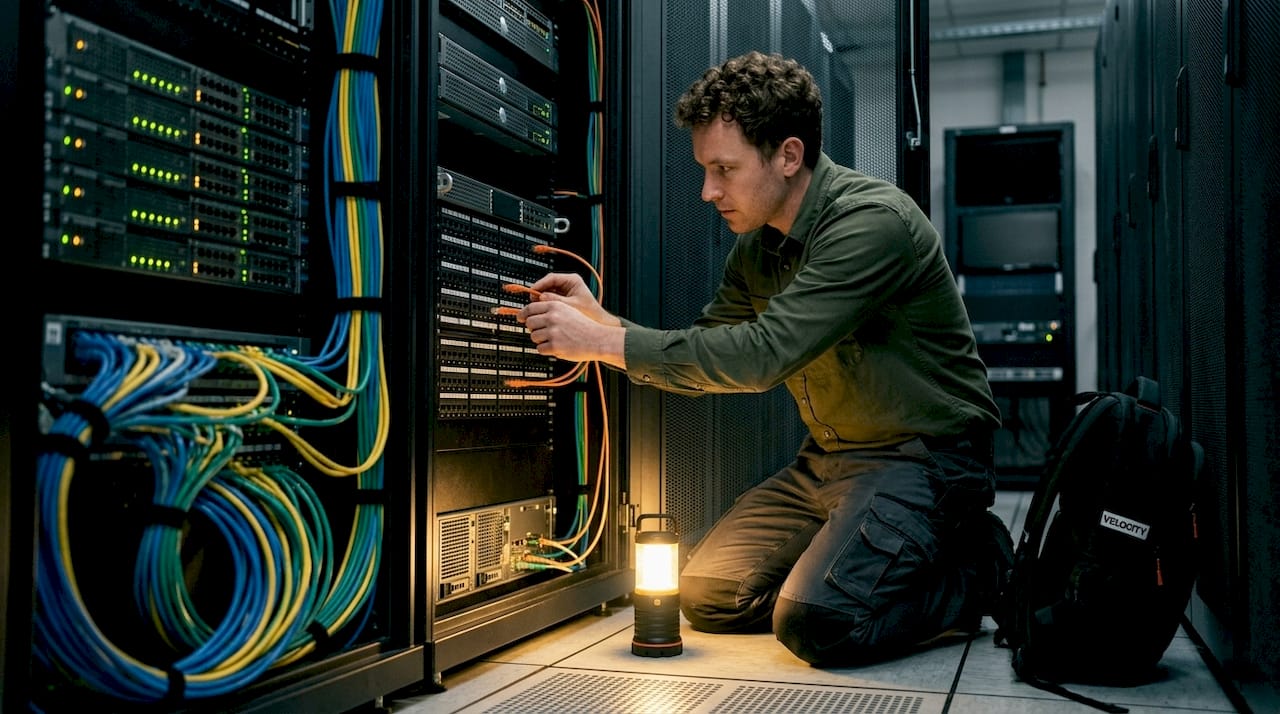
Physical layer of IT automation: an enterprise guide
TL;DR:
- Automating the physical layer of IT infrastructure ensures hardware states match digital configurations and reduces errors. The core tools include reconciliation loops, BMC APIs, and strict documentation discipline, which enable reliable, scalable automation. AI supports validation and anomaly detection but depends on disciplined foundational practices for effective deployment.
The physical layer of IT automation is defined as the automated control, verification, and remediation of Layer 1 infrastructure, covering the cables, patch panels, switches, and bare metal servers that underpin every digital service an enterprise runs. Most automation programmes stop at the software stack. The physical layer sits beneath it, and when it drifts out of alignment with declared configurations, the consequences ripple upward through every dependent system. Network automation at scale confirms that automating repetitive physical layer tasks significantly reduces operational expenditure and human error, particularly in complex environments such as 4G-to-5G migrations and high-density data centres. For IT leaders building automation infrastructure that can support AI-era workloads, the physical layer is not a detail. It is the foundation.
What is the physical layer of IT automation?
The physical layer corresponds to Layer 1 of the OSI model. In the context of IT automation, it refers to the automated processes that govern how physical hardware is provisioned, monitored, and corrected without manual intervention. The industry term for this discipline is physical infrastructure automation, and it sits beneath network layer automation, software-defined networking, and every higher-order abstraction that enterprise IT teams rely upon.
The core challenge is synchronisation. Physical hardware has a real-world state: a cable is plugged in or it is not, a server is imaging correctly or it is not, a port is active or it is not. Digital management systems hold a declared state, the configuration that should exist. When these two states diverge, the result is configuration drift. Automation at the physical layer exists to detect that drift and correct it before it causes an outage or a security incident.
This is not a theoretical concern. AI-era infrastructure mandates deterministic tests and pre-change verification to prevent what practitioners call “snowflake” configurations, where individual servers or network nodes accumulate manual tweaks that make them impossible to reproduce or automate reliably. Eliminating snowflake configurations is one of the primary goals of physical layer automation at enterprise scale.
How does physical layer automation reduce operational costs?
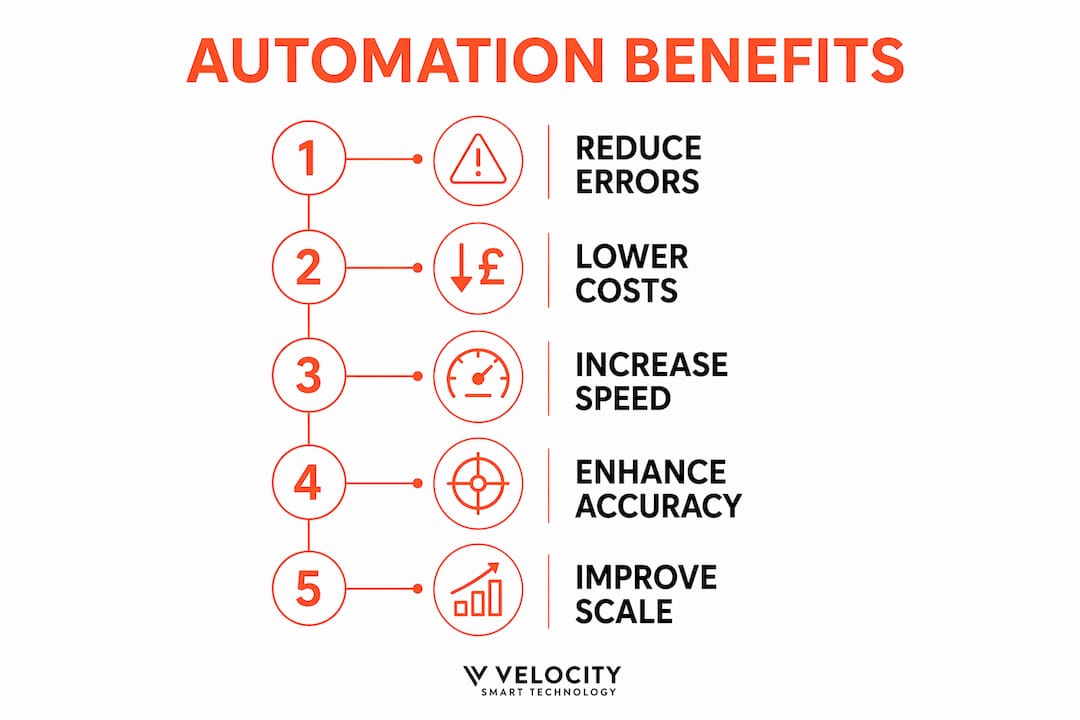
Automation of physical network infrastructure directly reduces operational expenditure by removing the manual, repetitive tasks that consume engineering time and introduce human error. This is not marginal. Studies from early 2026 confirm automation’s critical role in managing complex network infrastructures, particularly during technology transitions such as 4G-to-5G migrations and in data centres where node density makes manual management impractical.
The operational efficiencies that physical infrastructure automation delivers at enterprise scale include:
- Automated configuration and provisioning: Hardware is imaged and configured against a declared manifest without engineer involvement, removing per-device setup time.
- Continuous state monitoring: Automated reconciliation loops detect deviations between actual and declared hardware states in real time, not during the next scheduled audit.
- Remote remediation via BMC APIs: Automating via Redfish and IPMI eliminates crash-cart visits; unresolved issues become physical RMA tickets rather than sysadmin problems.
- Reduced change-related incidents: Pre-change verification and post-change confirmation steps prevent topology mismatches from propagating into production.
- Consistent audit trails: Every hardware state change is logged against the declared manifest, supporting compliance and reducing investigation time after incidents.
The business case compounds over time. Each manual task removed is a task that cannot introduce error. Each reconciliation loop running continuously is an audit that does not require an engineer to schedule.
Pro Tip: Map your current physical layer tasks by frequency and error rate before deploying automation. The highest-frequency, highest-error tasks deliver the fastest return and build the internal confidence needed to extend automation further.
What technologies enable physical layer automation?
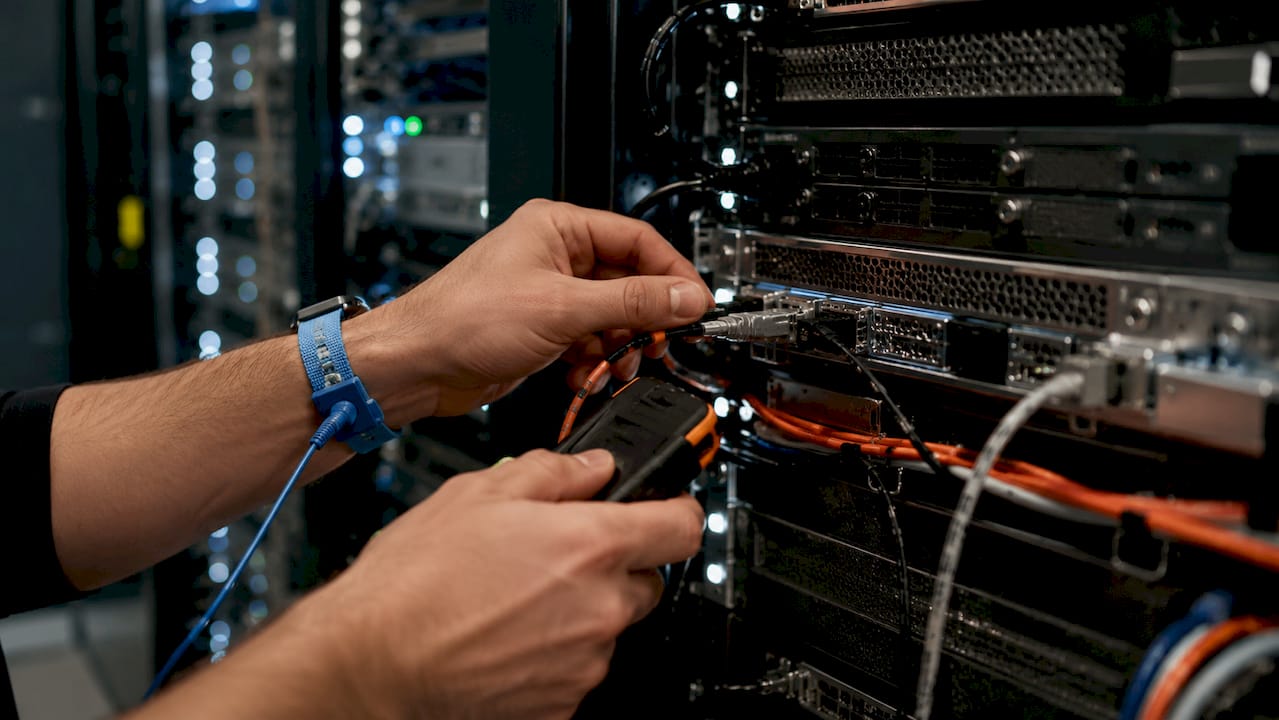
Three foundational technologies make physical infrastructure automation reliable at enterprise scale: declarative Infrastructure-as-Code applied to bare metal, BMC API management, and hardware inventory discipline built around unique identifiers.
Declarative Infrastructure-as-Code for bare metal
Declarative IaC treats physical hardware the same way software teams treat application configuration. An operator defines the desired state in a manifest, and the automation system continuously reconciles actual hardware state against that declaration. GitOps applied to bare metal requires automated reconciliation loops that detect and remediate state drift. When real state diverges from the declared manifest, the system automatically re-images or reprovisions the hardware to restore compliance. This approach removes the human decision point from routine remediation and makes infrastructure state replayable and auditable.
BMC, Redfish, and IPMI as the automation control plane
The Baseboard Management Controller is the API layer that makes remote hardware automation possible. BMC, accessed via the Redfish or IPMI protocols, gives automation systems out-of-band control over physical servers: power cycling, firmware updates, boot order changes, and health monitoring, all without requiring the operating system to be running. This is the mechanism that eliminates crash-cart visits and turns hardware failures into automated remediation events rather than emergency callouts.
MAC addresses and hardware inventory discipline
Treating MAC addresses as unique hardware identifiers and prohibiting manual server tweaks prevents snowflake configurations and the technical debt they accumulate. A properly managed hardware inventory underpins reliable automation because the system always knows which physical device it is addressing. Without this discipline, automation scripts act on assumptions rather than facts, and the consequences of a wrong assumption at the physical layer are severe.
Pro Tip: Integrate pre-change verification and post-change confirmation steps into every automation workflow. Verification confirms the physical state matches the declared state before a change executes. Confirmation validates that the change produced the expected outcome. Both steps are cheap. Skipping them is not.
What are the main challenges in physical layer automation?
The physical layer is, as practitioners note, the silent bottleneck where automation fails without strict documentation discipline. Patch panels, cross-connects, and structured cabling carry no self-reporting capability. They do not announce when a cable has been moved or a port relabelled. The automation system only knows what its records say, and if those records are wrong, every dependent process inherits the error.
The table below contrasts the most common pitfalls with the corresponding best practice for each.
| Common pitfall | Best practice |
|---|---|
| Undocumented cable moves after incidents | Enforce a change record for every physical port change, no exceptions |
| Snowflake servers with accumulated manual tweaks | Treat MAC addresses as unique IDs and prohibit out-of-band configuration changes |
| Topology records updated manually and infrequently | Run automated post-change confirmation to update records immediately after every change |
| IT agile practices applied to OT deterministic systems | Segment automation workflows by system type; apply deterministic validation to OT-adjacent infrastructure |
| Validation skipped under time pressure | Build pre-change verification into the workflow as a blocking step, not an optional check |
The IT and OT boundary deserves particular attention. IT teams operate with agile cadences and tolerate some degree of configuration variance. Operational technology systems, by contrast, require deterministic behaviour. Software-defined automation platforms that reliably translate business intent into safe physical actions are the mechanism for managing this boundary without forcing IT teams to adopt OT-level rigidity across their entire estate.
Pro Tip: Audit your patch panel documentation against physical reality at least once before deploying automation. A single undocumented cross-connect can cause an automated workflow to take down the wrong circuit. The audit is a one-time cost. The outage is not.
How does AI integrate with physical layer management?
AI accelerates physical layer automation but does not replace its foundations. AI is an assistant layering on top of controlled workflows, not a fully autonomous engine. Before AI can add value, the underlying infrastructure requires structured data, deterministic tests, and controlled workflows. Without those foundations, AI amplifies errors rather than preventing them.
The practical role of AI in physical infrastructure automation today includes:
- Anomaly detection: AI identifies deviations from baseline hardware behaviour faster than threshold-based alerting, flagging potential failures before they become incidents.
- Remediation suggestion: AI proposes corrective actions based on historical incident patterns, which human operators review and approve before execution.
- Natural-language policy translation: AI converts business intent, expressed in plain English, into configuration changes that automation systems can execute against declared manifests.
- Validation acceleration: AI evaluates test scenarios and summarises results, reducing the time engineers spend reviewing change outputs.
The most mature implementations follow what practitioners call the “dark factory” pattern. Triple-run validation and policy-enforced approval precede any auto-applied change to infrastructure. The system runs the proposed change in an ephemeral test environment, validates the outcome against plain-English success criteria, and only proceeds to production after all validation gates pass. This is how trust in autonomous automation is earned: through rigorous automated validation, not through optimism.
“AI-assisted automation accelerates validation and remediation, but the prerequisite is structured data, deterministic workflows, and human approval gates. Organisations that deploy AI on top of undisciplined physical layer management do not get faster automation. They get faster failures.”
The role of automation in ITSM is evolving rapidly, and the physical layer is where that evolution either gains traction or stalls. Enterprises that invest in physical layer discipline now are building the foundation that AI-era automation requires. Those that skip it will find that every AI initiative eventually hits the same wall: the hardware state does not match the records, and no amount of AI can fix a cable that the system does not know has moved.
For IT leaders who want to understand how to automate physical layer operations within a broader ITSM context, the starting point is always inventory accuracy, not AI capability. The AI capability follows from the inventory. It does not precede it.
Key takeaways
Physical layer automation succeeds only when hardware inventory, reconciliation loops, and validation gates are in place before AI or autonomous workflows are introduced.
| Point | Details |
|---|---|
| Define the physical layer precisely | Layer 1 automation covers cables, patch panels, bare metal servers, and BMC-controlled hardware, not software abstractions. |
| Reconciliation loops are non-negotiable | Automated loops that detect and correct state drift are the core mechanism preventing configuration errors from propagating. |
| BMC APIs remove manual intervention | Redfish and IPMI protocols give automation systems out-of-band hardware control, eliminating crash-cart visits and emergency callouts. |
| Documentation discipline precedes automation | Patch panel records and hardware inventory must reflect physical reality before any automation workflow can be trusted. |
| AI assists, it does not replace foundations | AI accelerates validation and remediation only when structured data and deterministic workflows already exist beneath it. |
What I have learned from implementing physical layer automation
Working across enterprise IT environments, the pattern I see most often is this: organisations invest in automation tooling before they have earned the right to automate. They deploy reconciliation loops against hardware inventories that have not been audited in years. They connect AI-assisted remediation to patch panel records that were last updated manually during an incident two years ago. The automation runs. It acts on bad data. The outcome is worse than the manual process it replaced.
The discipline that makes physical layer automation work is not technical. It is operational. MAC address management, post-change confirmation, pre-change verification: these are habits, not features. The teams that get this right treat every undocumented cable move as a defect, not an acceptable shortcut. That cultural shift is harder to achieve than any API integration, and it matters more.
I have also observed that the IT-OT boundary is where the most expensive mistakes happen. IT teams apply agile tolerances to infrastructure that OT systems require to be deterministic. The fix is not to slow IT down. It is to segment the automation workflows and apply the appropriate validation rigour to each segment. A software-defined approach to physical automation that translates business intent into safe physical actions, with explicit approval gates, is the architecture that survives contact with both IT and OT requirements.
The “dark factory” pattern is the right aspiration for mature physical layer automation. Triple-run validation, ephemeral test environments, policy-enforced approval before any change reaches production: this is what high-trust autonomous automation looks like. But it is the destination, not the starting point. The starting point is an accurate hardware inventory and a team that treats documentation as a first-class engineering output. Build that first. The AI and the dark factory patterns follow naturally.
— Anthony
How Velocity-smart supports physical layer automation in enterprise IT
Velocity-smart builds the hardware endpoints that enterprise IT automation requires at the physical layer. When AI agents and ServiceNow workflows reach the point where a physical device must change hands, a peripheral must be dispensed, or a walk-up support request must be resolved, Velocity-smart’s platform closes that ticket without dispatching an engineer.

Smart Collect, Velocity-smart’s ServiceNow-native platform, orchestrates smart lockers, smart vending machines, and smart kiosks as physical automation endpoints. Every transaction writes back to the ServiceNow CMDB as a native record, maintaining the hardware inventory accuracy that physical layer automation depends upon. For IT leaders building enterprise hardware automation programmes, Velocity-smart provides the physical layer endpoint that AI-era ITSM workflows cannot function without. Explore the full automation capability at Velocity-smart’s automation overview to understand how physical handover automation integrates with your existing ServiceNow estate.
FAQ
What is the physical layer of IT automation?
The physical layer of IT automation is the automated management of Layer 1 infrastructure, including cables, patch panels, and bare metal servers, to keep real-world hardware state aligned with declared digital configurations. It uses reconciliation loops, BMC APIs, and declarative IaC to detect and correct configuration drift without manual intervention.
Why do reconciliation loops matter in physical infrastructure automation?
Reconciliation loops continuously compare actual hardware state against the declared manifest and trigger automated remediation when they diverge. Without them, configuration drift accumulates silently until it causes an outage or a compliance failure.
What is a snowflake server and why does it matter?
A snowflake server is a physical machine that has accumulated manual configuration changes, making it impossible to reproduce or automate reliably. Treating MAC addresses as unique identifiers and prohibiting out-of-band tweaks prevents snowflake configurations and the technical debt they create.
How does AI fit into physical layer automation?
AI accelerates validation, anomaly detection, and remediation suggestion, but it requires structured data and deterministic workflows beneath it. Deploying AI on top of undisciplined physical layer management produces faster failures, not faster automation.
What is the “dark factory” pattern in infrastructure automation?
The dark factory pattern is an autonomous automation approach that uses triple-run validation and policy-enforced approval gates before applying any change to production infrastructure. It is the architecture used by mature teams to build trust in fully autonomous physical layer automation.
Recommended
See what Smart Collect® could save you
Model your savings in two minutes, or book a 60-minute workshop to pressure-test the numbers against your estate.