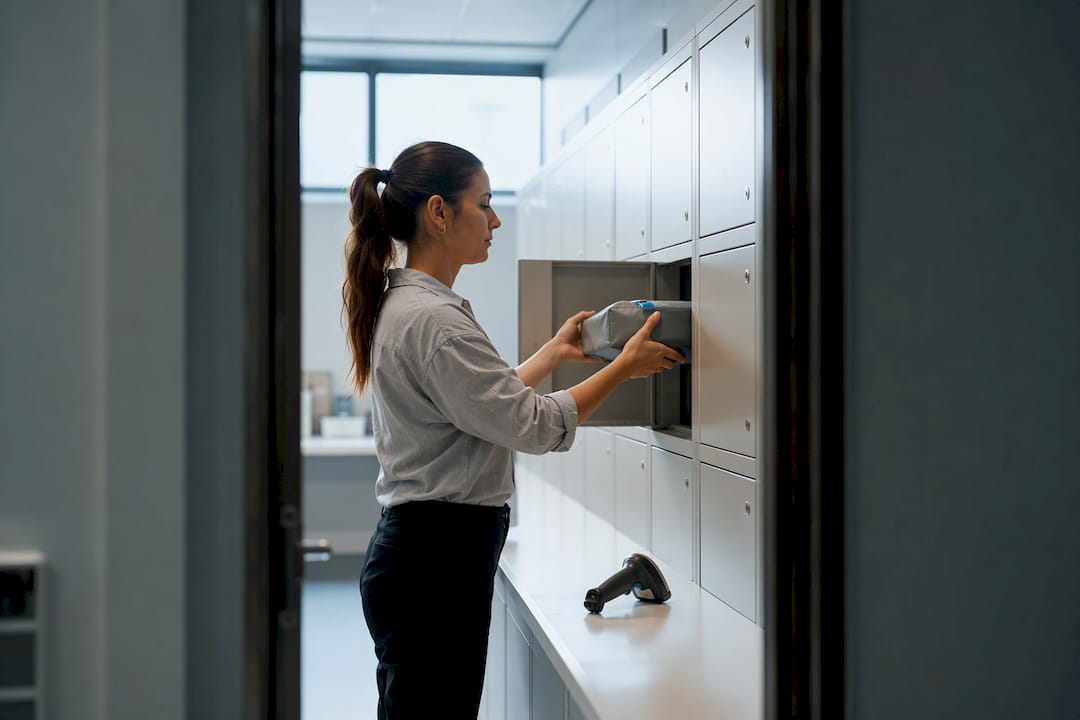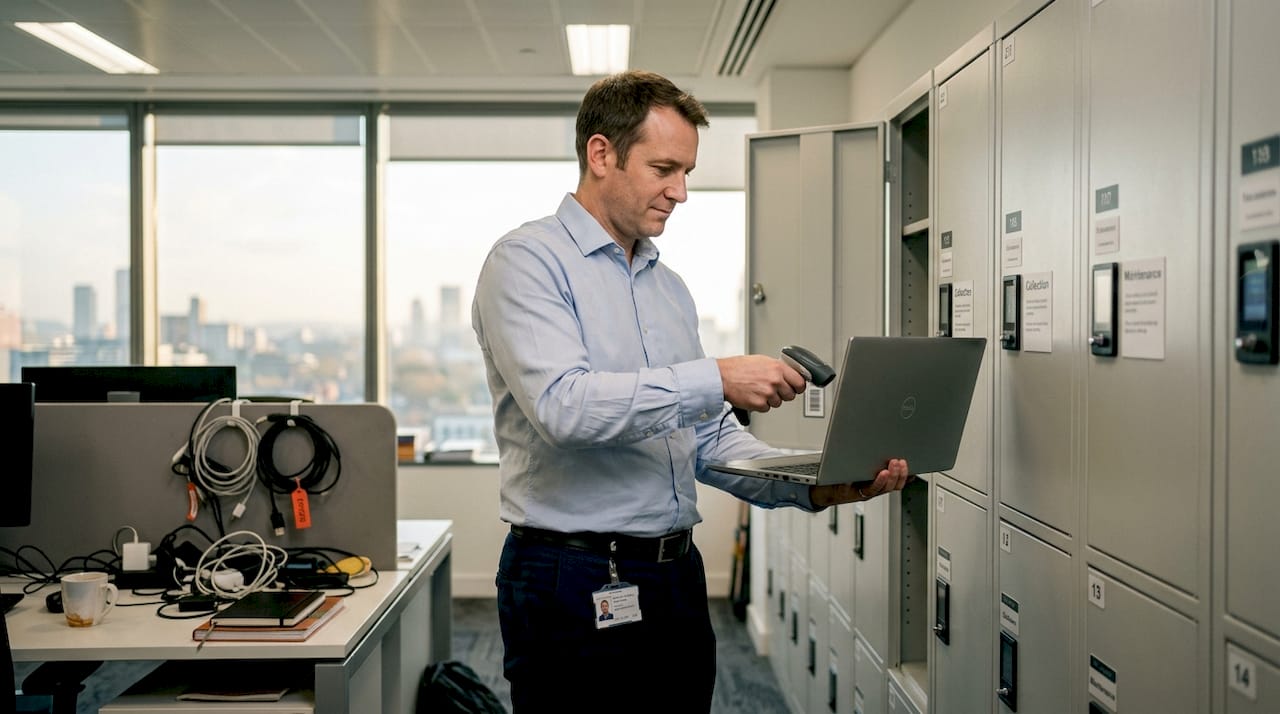
Why secure asset dispensing transforms enterprise IT
TL;DR:
- Unsecured device handovers lead to data breaches, asset loss, and compliance failures.
- Secure asset dispensing uses smart lockers with multi-factor authentication and real-time tracking.
- Implementing these systems enhances IT efficiency, reduces costs, and provides strategic data insights.
Most IT leaders assume their current device distribution process is secure enough. It probably is not. When assets change hands through informal handovers, paper logs, or unmonitored storage rooms, the gaps in accountability are significant and the costs are real. Unsecured dispensing exposes enterprises to device losses, data breaches, compliance failures, and the kind of audit gaps that surface at exactly the wrong moment. This article breaks down the risks, defines what secure asset dispensing actually means in a large enterprise context, and gives you a practical framework for selecting and deploying the right solution.
Table of Contents
- The risks of unsecured asset dispensing
- What is secure asset dispensing in an enterprise context?
- How secure asset dispensing improves IT operations
- Selecting the right secure asset dispensing solution
- A fresh perspective: beyond compliance, a strategic advantage
- Take the next step with smart IT asset dispensing
- Frequently asked questions
Key Takeaways
| Point | Details |
|---|---|
| Reduces risk | Secure asset dispensing drastically cuts losses, theft, and data breach risk in enterprise IT environments. |
| Boosts efficiency | Automation enables faster, trackable device distribution and recovery, improving operational performance and compliance. |
| Enhances employee experience | Self-service and prompt device access reduce IT support delays for staff in any location. |
| Future-proofs IT | Flexible, scalable secure dispensing systems easily adapt to new technologies and business models. |
The risks of unsecured asset dispensing
Let’s start with an uncomfortable truth. Most enterprise IT teams are managing device distribution the same way they did a decade ago: spreadsheets, manual sign-out sheets, and a cupboard somewhere that only one technician has the key to. It works until it doesn’t.
The consequences of unsecured dispensing are well-documented. Recent breach statistics from Verizon’s 2025 Data Breach Investigations Report confirm that physical device loss and theft remain significant contributors to enterprise data incidents. When a laptop leaves your building without a proper chain-of-custody record, you have no way of knowing where it went, who has it, or what data is on it.
Here is what unsecured asset dispensing typically looks like in practice:
- No verified identity check at the point of collection, meaning anyone can pick up a device
- Paper-based logs that are incomplete, illegible, or simply not maintained
- No automated alerts when assets are overdue for return
- Manual reconciliation that takes days and still misses items
- No audit trail for compliance reporting or internal investigations
The financial impact compounds quickly. Device replacement costs, lost productivity while employees wait for replacements, and regulatory penalties for data protection failures all add up. In sectors such as financial services, healthcare, and government, a single compliance failure can trigger investigations that cost far more than the device itself.
There is also a reputational dimension. Security compliance issues erode trust with regulators, customers, and employees alike. As the same source confirms, unsecured dispensing leads to increased device losses and data breaches, making the case for a more structured approach impossible to ignore.
Understanding why smart locker systems matter begins here: not as a nice-to-have, but as a direct response to risks that are already costing your organisation money and credibility.
What is secure asset dispensing in an enterprise context?
Secure asset dispensing is the controlled, tracked, and authenticated distribution and recovery of IT equipment across an organisation. It combines physical access controls with digital audit trails to ensure that every device movement is recorded, verified, and reportable.
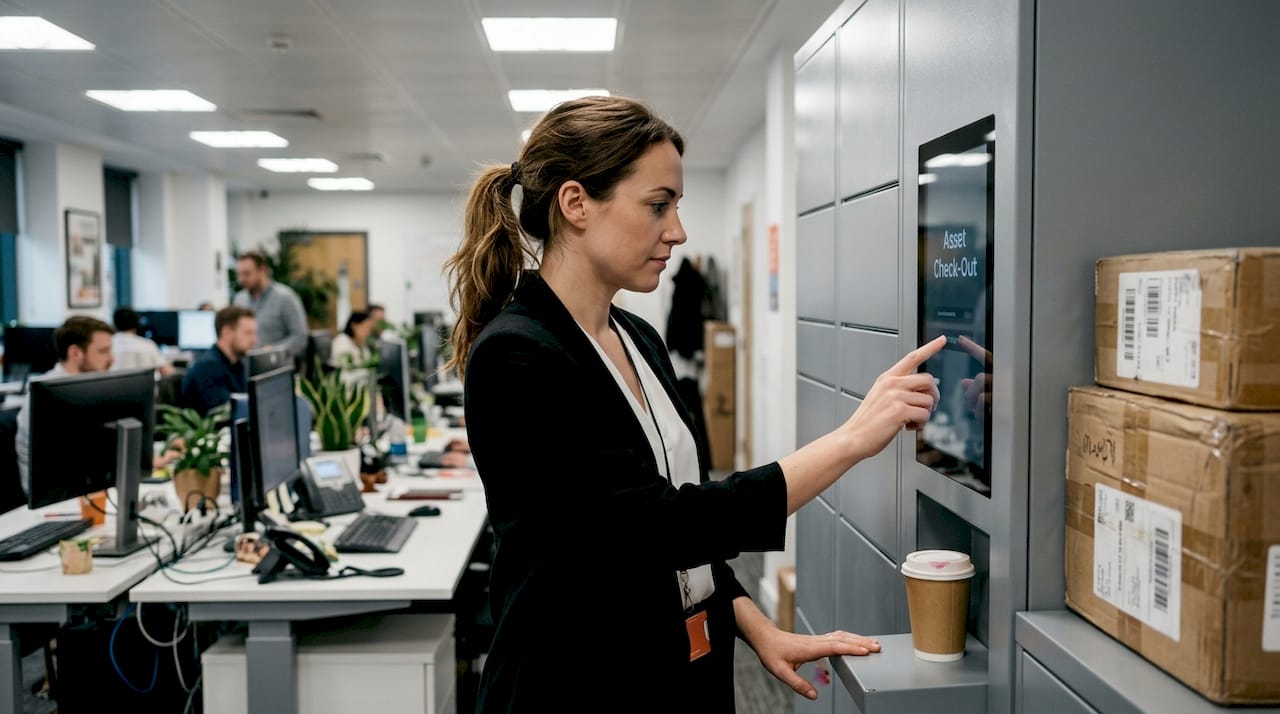
In large enterprises, this typically involves smart lockers and automated vending machines positioned at key workplace locations. IT support with smart lockers means employees can collect a replacement laptop, peripheral, or accessory at any time, without waiting for a technician. As confirmed by Velocity’s own research, smart lockers and automated vending are at the core of secure asset dispensing in modern IT environments.
The core features that define a genuinely secure system include:
- Multi-factor authentication at the point of collection (employee ID, PIN, or SSO integration)
- Real-time asset logging with timestamps and user attribution
- Time-based release controls that prevent assets sitting uncollected indefinitely
- Automated alerts for overdue returns or unauthorised access attempts
- Digital and physical audit trails that satisfy both internal and regulatory requirements
Understanding the smart locker components that make this possible is important before evaluating any solution. Not every system offers the same depth of logging or integration capability.
From a physical security standards perspective, Gartner defines physical security as the protection of personnel, hardware, and data from physical actions that could cause harm. Secure asset dispensing sits squarely within this definition, bridging the gap between physical hardware management and digital compliance.
| Feature | Traditional dispensing | Secure asset dispensing |
|---|---|---|
| Identity verification | None or manual | Automated, multi-factor |
| Audit trail | Paper-based | Digital, real-time |
| Availability | Business hours only | 24/7 self-service |
| Compliance reporting | Manual and slow | Automated and instant |
| Loss prevention | Reactive | Proactive with alerts |
The employee experience improvement is equally significant. Self-service access means no more waiting for IT to be available, no more queuing at a helpdesk, and no more delays that ripple into lost working hours across the business.
How secure asset dispensing improves IT operations
The operational benefits of secure asset dispensing extend well beyond loss prevention. For IT leaders managing large, distributed workforces, the gains are measurable across cost, speed, and service quality.
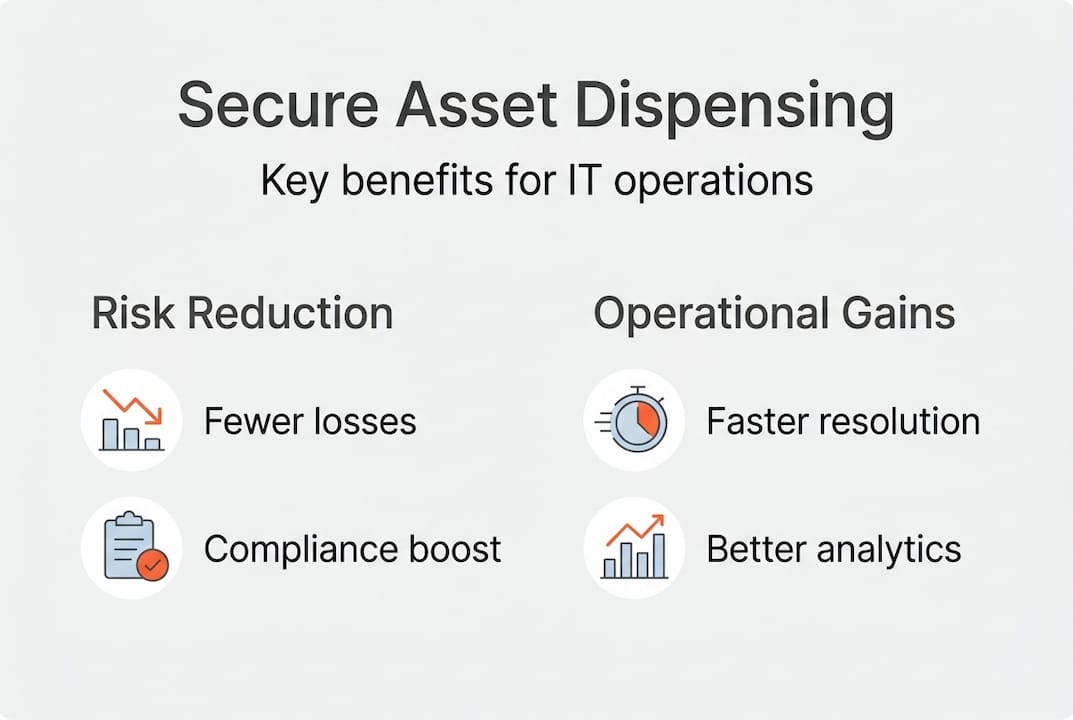
Faster break/fix resolution is one of the most immediate wins. When an employee’s device fails, a replacement can be available within minutes rather than hours or days. Automated solutions reduce IT support effort and speed up device distribution, freeing your technicians to focus on complex issues rather than manual handovers.
| Metric | Manual process | Automated dispensing |
|---|---|---|
| Average device collection time | 2 to 4 hours | Under 10 minutes |
| IT technician time per handover | 15 to 30 minutes | Near zero |
| Asset loss rate | High | Significantly reduced |
| SLA compliance | Inconsistent | Consistently tracked |
Cost savings emerge across several areas. Fewer lost devices means lower replacement spend. Reduced technician involvement in routine handovers frees up capacity. And better SLA compliance reduces the risk of penalty clauses in managed service agreements.
The employee experience with smart lockers also improves measurably. Employees who can resolve their own device issues quickly are more productive and less frustrated. That matters in a competitive talent market where friction in day-to-day tooling affects retention.
Centralised analytics are another underrated benefit. When every asset movement is logged, IT leaders gain visibility into demand patterns, failure rates, and location-specific issues. That data informs procurement decisions, support staffing, and SLA design in ways that gut instinct simply cannot.
Pro Tip: Before deploying, map your highest-volume asset request locations. Positioning dispensing units at those points first delivers the fastest measurable return and builds internal confidence in the programme.
For hybrid workplace benefits, secure dispensing is particularly valuable. Employees working across multiple sites or returning from remote work need reliable, consistent access to equipment without depending on a specific technician being present.
Selecting the right secure asset dispensing solution
Choosing a secure asset dispensing system is not a simple procurement exercise. The wrong choice creates new problems: poor integration, inadequate reporting, and a user experience that drives employees back to informal workarounds.
Here is a structured approach to evaluation:
- Assess your current pain points by reviewing incident data, asset loss reports, and technician time logs. Quantify the problem before you evaluate solutions.
- Define your integration requirements early. Your dispensing system must connect with your existing ITSM platform, ideally natively, to avoid data silos and manual re-keying.
- Run a pilot at a single high-volume location before full deployment. This surfaces edge cases and user behaviour patterns you cannot anticipate on paper.
- Evaluate reporting depth carefully. Basic logging is not enough. You need configurable dashboards, exportable audit trails, and alerting that integrates with your existing monitoring tools.
- Plan for scale from day one. A system that works for one building must be able to expand to ten sites without architectural rework.
As component selection impacts long-term system value, it is worth investing time in understanding exactly what each vendor’s hardware and software stack includes. Not all dispensing automation is created equal, and customisation alongside integration are vital differentiators.
Pro Tip: Ask every vendor for a live demonstration of their audit trail and compliance reporting. If they cannot show you exactly how a regulator would access the data they need, that is a red flag.
The best smart locker systems are not just hardware. They are workflow engines that connect physical asset movement to digital service management, creating a closed loop that is auditable, scalable, and genuinely useful.
Common pitfalls include underestimating user adoption challenges, selecting systems with poor mobile or SSO support, and failing to build the business case for smart lockers with enough financial rigour to secure ongoing investment. Following device management best practices during selection reduces the risk of these missteps significantly.
A fresh perspective: beyond compliance, a strategic advantage
Most IT leaders frame secure asset dispensing as a compliance requirement. Get the audit trail right, reduce device losses, satisfy the regulator. That framing is not wrong, but it is limiting.
The organisations that get the most from secure dispensing are those that treat it as a strategic lever. When employees trust that they can get the equipment they need, quickly and without friction, their relationship with IT changes. IT stops being a bottleneck and starts being an enabler. That shift in perception has real consequences for talent attraction and retention, particularly among digitally native employees who have zero patience for broken tooling.
There is also a data advantage that most organisations leave on the table. Every dispensing event generates information about how your workforce uses technology. Which devices fail most often? Which locations have the highest demand? Which asset categories are consistently understocked? That intelligence, used well, feeds directly into procurement strategy and service design.
Forward-thinking IT leaders view smart lockers as an investment in organisational capability, not just a security control. The compliance benefit is real, but the competitive advantage comes from using dispensing data to run a smarter, more responsive IT operation that the rest of the business actually values.
Take the next step with smart IT asset dispensing
If the risks and operational gaps described in this article sound familiar, the good news is that modern platforms make adoption far more straightforward than most IT leaders expect. Secure asset dispensing no longer requires complex bespoke infrastructure or lengthy implementation projects.
Velocity Smart Technology’s solutions, including smart IT support kiosks and our ServiceNow-native Velocity Smart Collect platform, are designed specifically for large enterprises that need to move fast without compromising on security or compliance. If you want to understand how automation can reshape your IT support model, explore our automation solutions for IT and see what a fully integrated, auditable dispensing programme looks like in practice.
Frequently asked questions
What is the primary purpose of secure asset dispensing?
The main purpose is to ensure IT assets are delivered, tracked, and recovered securely, reducing losses and supporting compliance. Smart lockers enhance security and trackability of IT assets across the full asset lifecycle.
How does secure asset dispensing improve the employee experience?
It provides 24/7 self-service access to devices and peripherals, eliminating delays and reducing downtime when equipment fails or needs replacing. Employee satisfaction rises measurably when self-service smart lockers replace manual IT handovers.
Is secure asset dispensing suitable for hybrid and remote workforces?
Yes, it is particularly well-suited to hybrid environments because it provides consistent, location-independent access to equipment without requiring a technician to be present. Smart lockers offer crucial support for hybrid working models across distributed sites.
What features should IT consider when choosing a secure asset dispensing system?
Prioritise audit trails, native ITSM integration, remote monitoring capability, and scalability across multiple sites. Component selection impacts long-term system value, so evaluate each element carefully before committing.
Recommended
See what Smart Collect® could save you
Model your savings in two minutes, or book a 60-minute workshop to pressure-test the numbers against your estate.