Predictive device replacement.
A failing disk is spotted early, and a replacement could be waiting in a locker before the user notices anything is wrong.

Tools you may already run, plus the one that hands the device over.
From the first signal to a device in hand.
Nexthink sees a disk at risk and a remote fix fails, confirming a hardware fault.
ServiceNow approves a replacement by policy and Microsoft Intune assigns a pre-built laptop to the user.
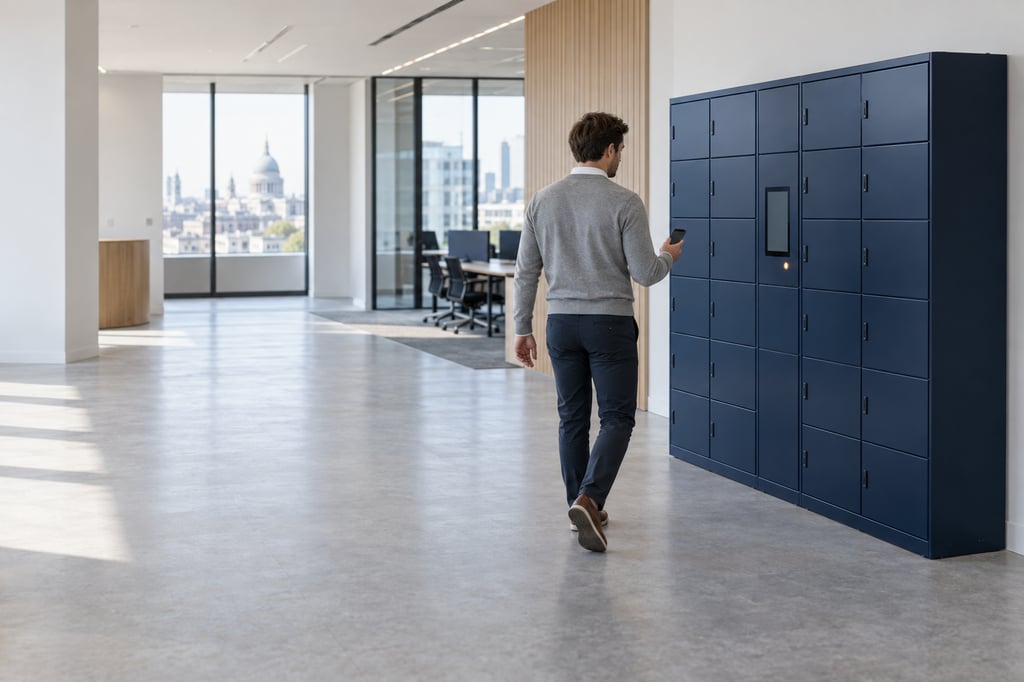
The laptop waits in a locker. The user swaps it in under a minute and leaves the old one in the same cell.
The full sequence
- Nexthink sees a disk health problem on a laptop, for example rising disk errors or a falling health score.
- A Nexthink remote action tries a fix. If it fails, the fault is treated as hardware.
- Nexthink raises an incident in ServiceNow with the device and the evidence.
- A ServiceNow flow checks the device against policy: age, warranty, model and any holds.
- If approved, Smart Collect® reserves a pre-built laptop of the right model in the nearest locker.
- Intune assigns the new laptop to the user, so it is ready at first sign-in.
- The user is told a replacement is waiting, with a code and a reminder to make sure files are synced.
- The user swaps devices in one cell. The returned laptop is flagged for repair or disposal, and restock is triggered.
What you need in place
- Nexthink with its ServiceNow integration in place, or ready to be configured
- Microsoft Intune managing your Windows laptops; Windows Autopilot is recommended
- Laptops recorded as hardware assets in ServiceNow
- Smart Lockers on site, holding a stock of pre-built laptops
How the pieces connect
- Nexthink
- Raises or updates ServiceNow incidents through Nexthink's ServiceNow connector, with device health evidence attached.
- Microsoft Intune
- Called from ServiceNow through the IntegrationHub Microsoft Intune spoke to assign and prepare the replacement.
- Smart Collect®
- Runs inside the same ServiceNow instance, so the reservation is a native record, not an external call.
The physical steps stay the same, whichever system makes the decision.
Run this recipe from a standard ServiceNow workflow today, and let AI take the decision later. Nothing on the physical side changes.
One record of what was decided, and what physically happened.
A reference design for your technical team.
The Blueprint shows how this recipe would work in your ServiceNow instance and what a build would involve. It is a design, not a step-by-step installation guide.
- What you need in place. Nexthink with its ServiceNow integration in place, or ready to be configured · Microsoft Intune managing your Windows laptops; Windows Autopilot is recommended · Laptops recorded as hardware assets in ServiceNow · Smart Lockers on site, holding a stock of pre-built laptops
- How the pieces connect. The role of Nexthink, ServiceNow and Microsoft Intune and Smart Collect®, and what stays in your instance
- Step by step. All 8 steps, from the first signal to the returned device
- Approval and policy. Approve automatically when the device is under warranty or due for refresh, and stock is available.
- Handover rules and exceptions. Reservations, codes, expiry, returns, and what happens when stock runs out or nobody collects
- What to measure. Share of replacements made before the user reported a problem · Time from first signal to device in hand · Engineer touches per replacement · User downtime per replacement
- What a build involves. The questions to settle first, the roles involved, and how we would scope a six to eight week pilot
Request the Blueprint
A four-page reference design for your technical team. Tell us who you are and the Blueprint downloads straight away.
Before you ask
What happens to the user's files?
The Blueprint assumes files are synced to OneDrive or similar, so the new laptop picks them up at sign-in. Where local data is likely, the flow adds a backup prompt before the swap.
Is this an off-the-shelf integration?
No. It is a recipe concept that shows what becomes possible when these tools are combined with Smart Collect®. We build it with you, and where needed with the vendor, when it fits your estate.
Where does the data live?
In your own ServiceNow instance. Smart Collect® does not keep a separate database of your users or devices.
Do we need AI for this?
No. A standard ServiceNow workflow can run every step today. Otto or Flow can take over the decision later without changing anything on the physical side.