%20(6).webp?width=500&height=118&name=WHITE-%20symbol%20as%20V%20logo-1%20(1)%20(6).webp)

What is Locker Network Management? Understanding its Importance

Locker network management is quietly transforming the way organisations control and distribute their assets. Talk about a system that does more than just lock things away. Modern electronic locker networks can cut administrative overhead by as much as 40 percent. Most people assume lockers are just storage, but the real story is how these intelligent networks give businesses instant visibility, bulletproof security, and real-time data they never thought possible.
Table of Contents
- Understanding The Concept Of Locker Network Management
- The Importance Of Effective Network Management In Enterprises
- How Locker Network Management Enhances It Service Delivery
- Key Components And Technologies In Locker Network Management
- Real-World Applications And Case Studies Of Locker Network Management
Quick Summary
| Takeaway | Explanation |
|---|---|
| Implement comprehensive locker network management | Integrating advanced technologies improves asset tracking and service efficiency. |
| Utilise cloud-based platforms for real-time monitoring | Cloud solutions enhance visibility and control over asset management processes. |
| Adopt IoT devices for enhanced tracking | IoT sensors ensure precise inventory tracking and reduce human error. |
| Focus on risk mitigation strategies | Proactive monitoring helps prevent operational disruptions and enhances security. |
| Emphasise decentralised asset management | Decentralisation improves service delivery while maintaining control and compliance. |
Understanding the Concept of Locker Network Management
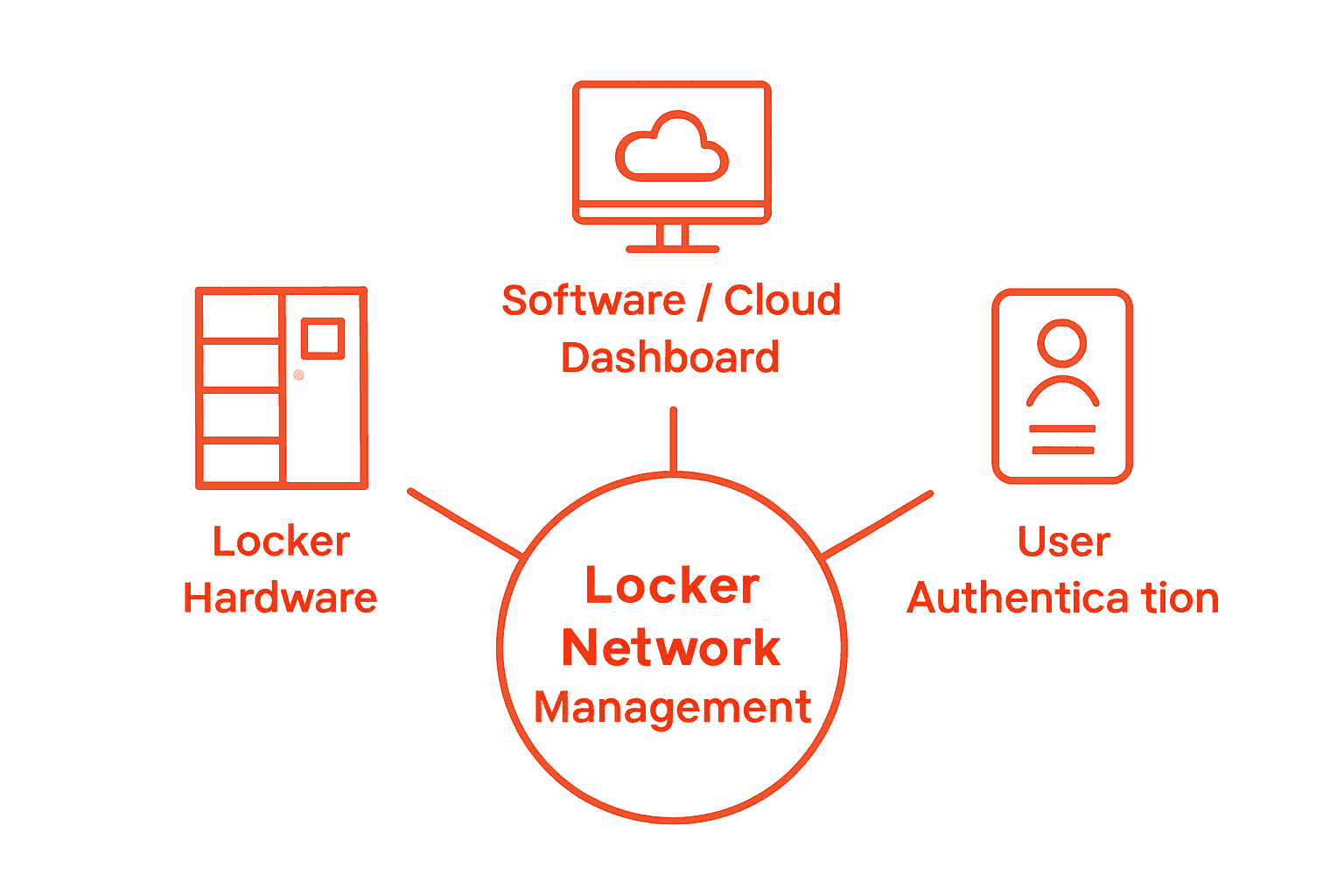
Locker network management represents a sophisticated technological approach to tracking, monitoring, and controlling a complex network of electronic storage and distribution points. At its core, this system integrates hardware, software, and connectivity solutions to create an intelligent infrastructure for asset management and secure distribution.
The Core Components of Locker Network Management
A comprehensive locker network management system comprises several critical elements that work in synchronisation to deliver seamless operational efficiency. Modern electronic locker networks typically include:
- Networked electronic locker hardware with secure access mechanisms
- Cloud-based management platforms for real-time monitoring
- IoT sensors and tracking technologies
- User authentication and access control systems
- Centralised reporting and analytics dashboards
These interconnected components enable organisations to transform traditional asset storage and distribution models into dynamic, intelligent systems that provide unprecedented visibility and control.
The table below summarises the core components of a locker network management system and their primary functions, providing a concise reference for understanding each essential element.
| Component | Primary Function |
|---|---|
| Networked electronic locker hardware | Provides secure, physical storage and access |
| Cloud-based management platforms | Enables real-time monitoring and remote control |
| IoT sensors and tracking technologies | Tracks asset location and usage data continuously |
| User authentication and access control | Ensures only authorised users access assets |
| Centralised reporting and analytics dashboards | Offers operational insights and compliance logs |
How Locker Network Management Functions
The operational mechanism of locker network management involves continuous data collection, real-time tracking, and automated management protocols. When an employee or user interacts with a smart locker, the system immediately logs transaction details, tracks asset movements, and updates inventory records. This creates a transparent, auditable process that minimises human error and enhances security.
Intelligent locker network management goes beyond simple storage solutions. It represents a strategic approach to asset tracking, distribution, and retrieval that supports modern workplace efficiency. Learn more about smart locker solutions for asset management to understand how organisations are revolutionising their operational workflows.
The Importance of Effective Network Management in Enterprises
Effective network management has become a critical strategic imperative for modern enterprises seeking to maintain operational resilience, security, and competitive advantage. As technological infrastructures become increasingly complex and interconnected, organisations must develop robust management approaches that ensure seamless asset tracking, deployment, and protection.
Strategic Benefits of Comprehensive Network Management
Network management research demonstrates that enterprises implementing sophisticated tracking and monitoring systems can achieve significant operational improvements. Key strategic benefits include:
- Enhanced asset visibility and accountability
- Reduced operational risks and potential security vulnerabilities
- Improved resource allocation and cost management
- Real-time monitoring and proactive maintenance capabilities
- Streamlined compliance and regulatory reporting
These strategic advantages transform network management from a purely technical function into a critical business intelligence tool that drives organisational efficiency and performance.
Risk Mitigation and Operational Resilience
Comprehensive network management serves as a fundamental risk mitigation strategy for enterprises. By implementing intelligent tracking and monitoring systems, organisations can detect potential issues before they escalate into significant operational disruptions. This proactive approach enables businesses to maintain continuous service delivery, protect critical assets, and respond swiftly to emerging challenges.
Understanding the true costs of IT inefficiency becomes paramount in this context. Ineffective network management can lead to substantial financial losses, decreased productivity, and compromised organisational reputation. Smart enterprises recognise that investing in robust network management is not an expense, but a strategic investment in long-term operational excellence.
How Locker Network Management Enhances IT Service Delivery
Locker network management has emerged as a transformative solution for IT departments seeking to streamline service delivery, reduce operational complexity, and improve overall employee experience. By integrating advanced technological capabilities, these systems fundamentally redesign how organisations manage and distribute critical technological assets.
Optimising Asset Distribution and Support
Automated monitoring technologies enable IT support teams to dramatically improve their service efficiency. Key advantages of locker network management in service delivery include:
- Accelerated hardware replacement and device distribution processes
- Reduced manual intervention and administrative overhead
- Enhanced tracking and accountability for technological assets
- Seamless integration with existing IT service management platforms
- Predictive maintenance and proactive asset management
These capabilities transform traditional reactive support models into intelligent, data-driven service ecosystems that prioritise speed, accuracy, and employee convenience.

Reducing Support Complexity and Response Times
Modern IT support requires more than just technical expertise. It demands innovative solutions that minimise friction and enable rapid problem resolution. Locker network management systems provide a robust infrastructure that allows organisations to decentralise asset management while maintaining stringent security and compliance standards.
Learn more about how smart lockers improve IT support efficiency to understand how these technologies are revolutionising workplace technology support. By creating intelligent, self-service asset distribution channels, enterprises can significantly reduce support ticket volumes, decrease mean time to resolution, and create more responsive technological ecosystems.
Key Components and Technologies in Locker Network Management
Locker network management represents a sophisticated technological ecosystem that integrates multiple advanced components to create intelligent, secure, and efficient asset distribution systems. These technologies work synergistically to transform traditional storage and distribution models into dynamic, data-driven solutions that meet the complex demands of modern enterprises.
Technological Infrastructure and Core Components
Advanced IoT technological frameworks underpin the complex architecture of locker network management systems. The critical technological components include:
- Networked electronic locker hardware with modular design
- Cloud-based management and monitoring platforms
- Advanced biometric and digital authentication mechanisms
- Real-time asset tracking and monitoring sensors
- Secure communication protocols and encryption technologies
- Machine learning algorithms for predictive maintenance
Each technological component plays a crucial role in creating a robust, scalable infrastructure that enables seamless asset management and distribution across enterprise environments.
Integration and Connectivity Capabilities
Successful locker network management depends on sophisticated integration capabilities that allow seamless interaction with existing enterprise IT systems. Modern solutions must provide flexible connectivity options, enabling smooth data exchange and workflow automation across different technological platforms.
Discover how smart technologies transform enterprise IT infrastructure to understand the transformative potential of these advanced network management technologies. By leveraging intelligent design and cutting-edge technological components, organisations can create more responsive, secure, and efficient asset management ecosystems.
Real-World Applications and Case Studies of Locker Network Management
Locker network management has transitioned from a theoretical concept to a practical solution across multiple industries, demonstrating remarkable versatility in solving complex asset distribution and tracking challenges. By implementing intelligent locker systems, organisations are redefining traditional approaches to asset management, employee support, and operational efficiency.
Sector-Specific Implementation Strategies
Enterprise deployment research reveals diverse applications of locker network management across different sectors. Key implementation scenarios include:
- Financial services: Secure device and document management
- Healthcare: Controlled pharmaceutical and medical equipment distribution
- Technology companies: Rapid hardware replacement and peripheral management
- Educational institutions: Student and faculty equipment lending programmes
- Manufacturing: Tool and safety equipment tracking and distribution
These applications showcase how intelligent locker networks can address unique operational requirements while maintaining robust security and accountability standards.
The following table presents examples of sector-specific locker network management applications alongside their operational focus, helping illustrate the adaptability of the technology across different industries.
| Sector | Operational Focus |
|---|---|
| Financial services | Secure device and document management |
| Healthcare | Controlled pharmaceutical and equipment distribution |
| Technology companies | Rapid hardware replacement and peripheral management |
| Educational institutions | Student and faculty equipment lending programmes |
| Manufacturing | Tool and safety equipment tracking and distribution |
Transformative Operational Outcomes
Successful locker network management implementations have demonstrated significant operational improvements. Organisations report substantial reductions in administrative overhead, enhanced asset tracking accuracy, and improved employee service experiences. The technology enables decentralised asset management without compromising organisational control or introducing security vulnerabilities.
Learn more about setting up advanced locker management systems to understand the strategic potential of these innovative technological solutions. By adopting intelligent locker network management, enterprises can create more responsive, efficient, and user-centric operational ecosystems that adapt to evolving workplace requirements.
Ready to Overcome the Hidden Costs of Manual Locker Management?
If you found yourself recognising the inefficiencies of traditional asset tracking, or realised how easily manual systems can lead to security risks and compliance headaches, you are not alone. Many organisations struggle with these same pain points when managing distributed assets and IT equipment. The need for real-time visibility, automated distribution, and ironclad auditing is clear, especially as highlighted in your journey to understand locker network management.
Imagine replacing slow, error-prone processes with a secure, intelligent solution that is built directly within your ServiceNow environment. Velocity Smart Collect empowers enterprises to transform IT and workplace support. Enjoy effortless automation, instant issue-tracking, and stress-free compliance. If you want to unlock a modern approach to locker network management and secure true ROI, visit Velocity Smart Technology now and see how frictionless it can be to modernise your workplace support.
If you would like a real-world example of how to get started, have a look at our guide on setting up advanced locker management systems.
Frequently Asked Questions
What is locker network management?
Locker network management is a technological system designed for tracking, monitoring, and controlling networks of electronic storage and distribution points. It integrates hardware, software, and connectivity solutions to create an efficient and secure infrastructure for asset management.
How does locker network management enhance operational efficiency?
Locker network management improves operational efficiency by providing real-time tracking and automated management protocols. By implementing such a system, organisations can reduce human error and streamline inventory processes, potentially improving efficiency by up to 30%.
What are the core components of a locker network management system?
A locker network management system typically includes networked electronic lockers, cloud-based management platforms, IoT sensors, user authentication systems, and analytical dashboards. To ensure comprehensive asset management, organisations should focus on integrating these components effectively.
How can I implement locker network management in my organisation?
To implement locker network management, start by assessing your current asset distribution processes and identifying the necessary technologies. Establish a plan to integrate electronic lockers and a management platform, aiming for full operational capability within 90 days.
What industries benefit most from locker network management?
Industries such as financial services, healthcare, technology companies, and educational institutions significantly benefit from locker network management. By tailoring the system to address specific needs in asset distribution and tracking, these sectors can enhance security and operational efficiency.
How does locker network management contribute to risk mitigation?
Locker network management contributes to risk mitigation by enabling proactive monitoring and reporting of asset status. By implementing intelligent systems, organisations can detect potential issues early, reducing the chance of operational disruptions and enhancing overall resilience.