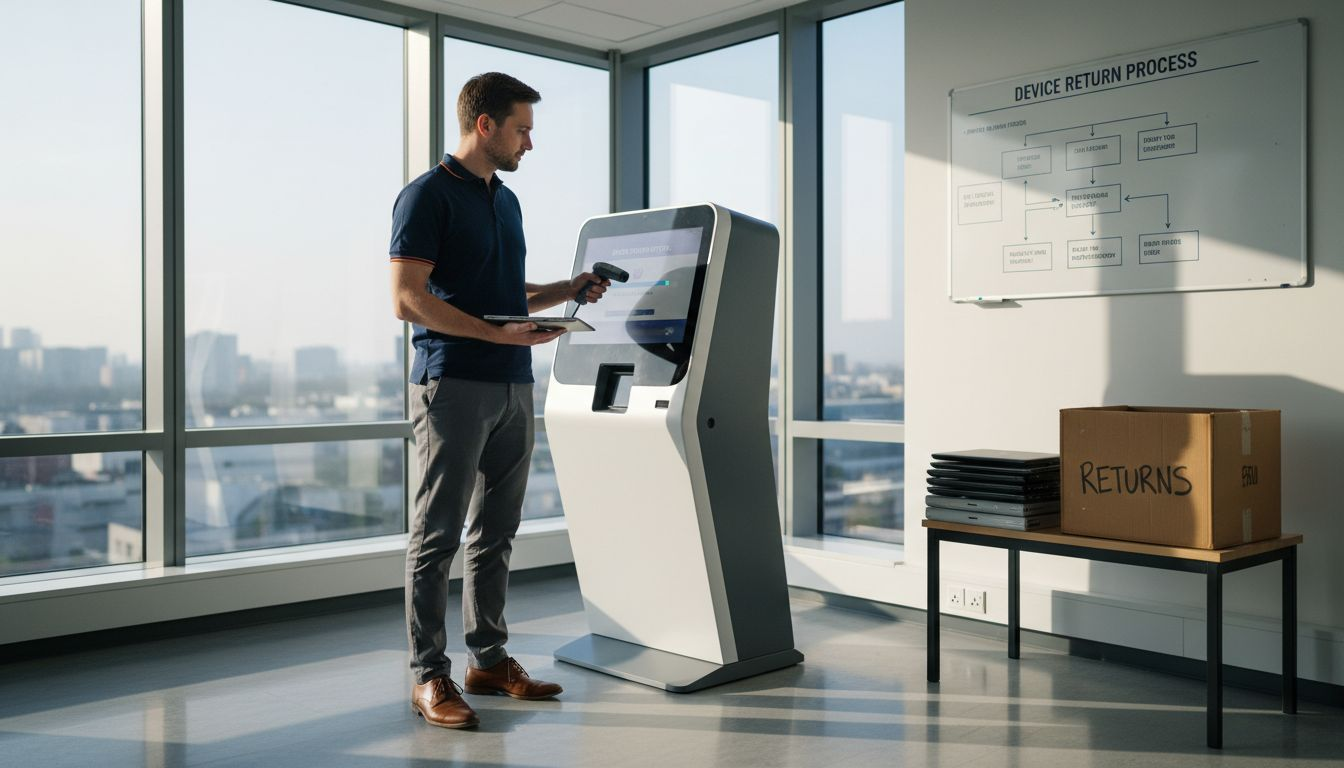
Best Ways to Automate Device Returns in Enterprises
Managing device returns across a global enterprise often reveals unexpected barriers, especially when multi-device usage patterns expose gaps in efficiency and employee satisfaction. For IT Operations Directors, these fragmented workflows can lead to manual delays, missed assets, and frustrated teams. Assessing your current process is the first step toward adopting a ServiceNow-integrated automation solution, empowering your organisation with smarter device return management and real-time visibility.
Table of Contents
- Step 1: Assess Existing Device Return Workflows
- Step 2: Integrate Smart Locker Solutions With Servicenow
- Step 3: Configure Automated Device Tracking And Notifications
- Step 4: Streamline Approval And Compliance Processes
- Step 5: Verify Return Completion And Update Asset Records
Quick Summary
| Key Message | Explanation |
|---|---|
| 1. Assess Device Return Workflows | Map out current processes to identify inefficiencies and potential for automation in device return procedures. |
| 2. Integrate Smart Lockers with ServiceNow | Connect smart lockers to ServiceNow to automate and streamline asset management and device return workflows. |
| 3. Configure Automated Tracking Notifications | Implement real-time tracking systems that provide proactive monitoring and alerts for device status changes. |
| 4. Streamline Approval and Compliance Processes | Establish automated approval workflows to enhance transparency and reduce administrative bottlenecks in device returns. |
| 5. Verify and Update Asset Records | Ensure thorough verification and accurate record-keeping after device returns for improved asset management and audit trails. |
Step 1: Assess existing device return workflows
Effectively assessing device return workflows requires a systematic approach to understanding current processes and identifying inefficiencies. By mapping out the entire device return journey, organisations can pinpoint bottlenecks and opportunities for automation.
Begin by conducting a comprehensive workflow audit that examines how multi-device usage patterns currently function within your enterprise. This involves tracking the complete lifecycle of device returns, from initial employee notification to final asset management.
Key steps in workflow assessment include:
- Document every manual touchpoint in the current return process
- Interview IT staff and employees about existing return procedures
- Measure average time taken for device return and processing
- Identify repetitive administrative tasks
- Review current technology and systems used
Your assessment should reveal critical insights about workflow complexity and potential automation opportunities. Pay special attention to:
- Locations where manual data re-entry occurs
- Variations in return procedures across different departments
- Current tracking and verification mechanisms
- Employee compliance and satisfaction with existing processes
A thorough workflow assessment is the foundation for successful device return automation.
Pro tip: Create a visual process map during your assessment to help stakeholders clearly understand current device return workflows and potential improvement areas.
Step 2: Integrate smart locker solutions with ServiceNow
Integrating smart locker solutions with ServiceNow transforms your device return and management processes, creating a seamless automated workflow for enterprise IT asset handling. This integration eliminates manual tracking and reduces administrative overhead by connecting physical hardware directly with your service management platform.
To successfully implement this integration, leverage smart locker workflow automation capabilities that streamline device management. The process involves several critical steps:
- Verify ServiceNow platform compatibility with your smart locker hardware
- Install the appropriate ServiceNow integration application
- Configure workflow rules for device return and tracking
- Set up user authentication and access permissions
- Test integration with pilot group before full deployment
Key integration considerations include establishing automated notifications, creating digital audit trails, and enabling employee self-service options. Your smart locker system should synchronise with ServiceNow to:
- Log device returns automatically
- Generate maintenance tickets
- Track asset lifecycle
- Provide real-time inventory updates
Successful ServiceNow integration transforms smart lockers from simple storage units into intelligent asset management systems.
Pro tip: Conduct thorough testing across different device types and departmental workflows to ensure seamless integration and minimal disruption.
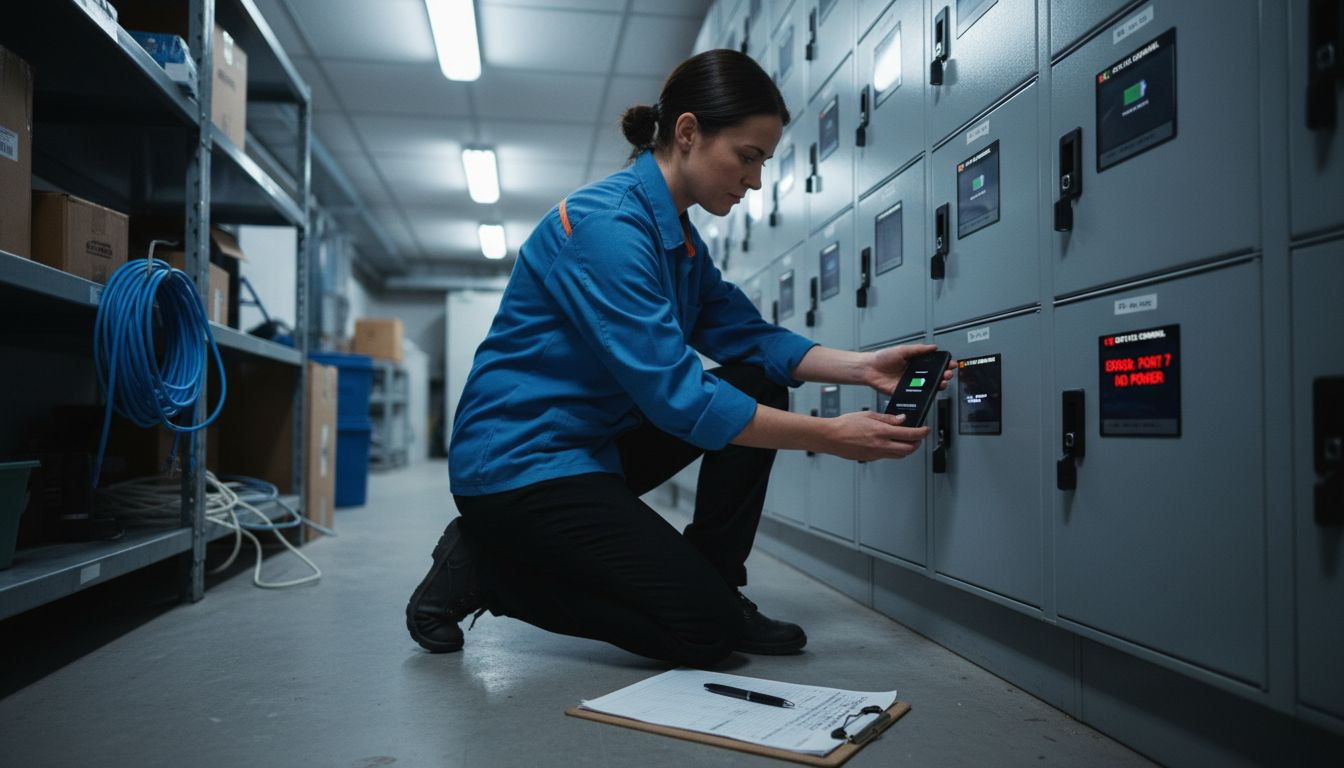
Step 3: Configure automated device tracking and notifications
Configuring automated device tracking transforms enterprise asset management by providing real-time visibility and proactive monitoring across your organisation. This critical step ensures comprehensive oversight of your device ecosystem, enabling intelligent management and rapid response to potential issues.
Implement comprehensive IT asset tracking strategies that combine multiple technological approaches. Your configuration should encompass several key technologies and notification mechanisms:
- Integrate QR code tracking systems
- Implement network discovery protocols
- Enable GPS location monitoring
- Configure remote management capabilities
- Set up automated compliance alerts
Device tracking configurations should focus on creating intelligent notification frameworks that capture critical events. Key notification parameters include:
- Automatic alerts for device status changes
- Real-time offline device detection
- Policy violation warnings
- Geofencing breach notifications
- Unauthorized access attempts
Effective device tracking transforms passive asset management into a dynamic, responsive system.
Pro tip: Validate your notification thresholds with key stakeholders to balance comprehensive monitoring with operational practicality.
Step 4: Streamline approval and compliance processes
Streamlining approval and compliance processes is crucial for reducing device return complexity and minimising organisational risk. By implementing intelligent workflow mechanisms, you can transform potential administrative bottlenecks into efficient, transparent processes.
Implement document approval workflows that establish clear authorisation protocols and reduce compliance risks. Your strategy should focus on creating robust, automated verification systems:
- Define precise approval roles and permissions
- Establish multi-tier review mechanisms
- Create automated notification triggers
- Implement digital audit trail capabilities
- Configure role-based access controls
Key compliance process improvements include:
These solutions can significantly enhance device return management:
| Technology Solution | Main Function | Added Value |
|---|---|---|
| Smart locker & ServiceNow | Automated asset handover | Cuts manual errors and saves time |
| QR code tracking | Device identification | Quick, precise locating of assets |
| Network discovery protocols | Inventory mapping | Real-time device visibility |
| GPS monitoring | Location verification | Prevents unauthorised removal |
| Digital approval workflow | Authorisation management | Streamlines compliance verification |
- Standardising approval documentation
- Reducing manual intervention points
- Ensuring consistent policy enforcement
- Enabling real-time tracking of approval status
- Maintaining comprehensive documentation logs
Effective approval workflows transform compliance from a burden into a strategic advantage.
Pro tip: Periodically review and refine your approval workflows to ensure they remain aligned with evolving organisational requirements and regulatory standards.
Step 5: Verify return completion and update asset records
Verifying device return completion and maintaining accurate asset records represents the final critical phase in your automated device management workflow. This process ensures comprehensive tracking and provides a definitive audit trail for your enterprise’s technology ecosystem.
Utilise enterprise asset management platforms to streamline record verification and update processes. Your verification protocol should encompass multiple comprehensive validation steps:
- Physically inspect returned device condition
- Confirm device functionality and integrity
- Scan unique device identifier
- Cross-reference against original asset records
- Document any observable wear or damage
Key record update requirements include:
- Marking device status as ‘returned’
- Updating current physical location
- Recording maintenance or repair history
- Refreshing device condition rating
- Triggering subsequent workflow actions
Precise asset record management transforms administrative tasks into strategic intelligence.
Pro tip: Implement a standardised checklist for device returns to ensure consistent and thorough verification across all departments.
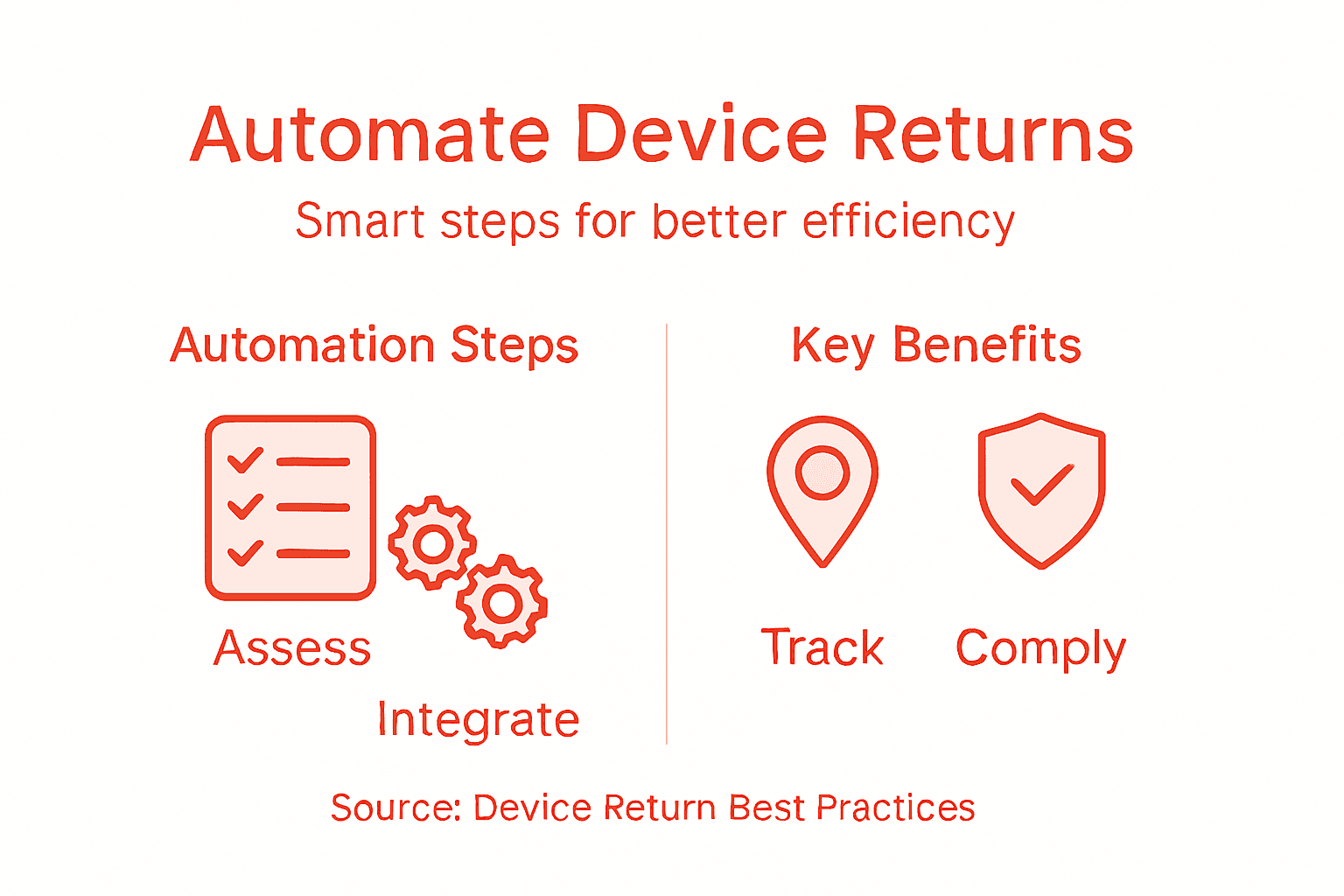
Here’s a summary of automation benefits achieved in each step of the device return process:
| Workflow Step | Key Automation Benefit | Business Impact |
|---|---|---|
| Assessment | Bottleneck identification | Improved process transparency |
| Integration | Real-time asset syncing | Reduced administrative overhead |
| Tracking | Automated alerts | Enhanced response readiness |
| Compliance | Digital approvals | Consistent policy enforcement |
| Verification | Audit trail creation | Strengthened record reliability |
Transform Your Enterprise Device Returns with Velocity Smart Technology
The article highlights the challenge enterprises face in automating device returns while ensuring seamless integration, real-time tracking, strict compliance and accurate verification. Key pain points such as eliminating manual data re-entry, reducing administrative burdens, configuring automated notifications and streamlining approval processes demand innovative solutions tailored to modern IT environments. By leveraging concepts like ServiceNow integration and smart locker automation, organisations can overcome these hurdles to improve asset management and employee experience.
Velocity Smart Technology offers a proven answer with our ServiceNow-certified smart locker solution, Velocity Smart Collect, built natively to operate within your existing ServiceNow platform. This unique approach removes GDPR concerns, eliminates inefficient data rekeying and empowers your workflows with full automation capabilities trusted by major enterprises worldwide. With Velocity Smart, you can effectively automate device returns and administration steps described in the article – from secure asset handover and automated tracking to digital approval workflows and precise audit trails.
Are you ready to modernise your device return process and unlock greater efficiency, cost savings and compliance assurance today?
Discover how Velocity Smart Collect can streamline your enterprise IT asset management. Visit Velocity Smart Technology now to learn more and start transforming your workplace support systems with technology designed for your ServiceNow environment.
Frequently Asked Questions
What are the key steps to automate device returns in my enterprise?
To automate device returns, begin by assessing your existing workflows, integrating smart locker solutions, configuring automated tracking systems, streamlining approval processes, and verifying return completion. Each step ensures that your asset management is efficient and transparent.
How can I assess my current device return workflows?
Conduct a comprehensive workflow audit that documents all manual touchpoints and measures the average time taken for returns. Interview IT staff and employees to gather insights, which can help identify bottlenecks and areas for potential automation.
What role do smart lockers play in automating device returns?
Smart lockers provide a physical solution that integrates with your service management platform, allowing for automated tracking of device returns and reducing manual errors. Install and configure the integration effectively to enable automatic logging of device returns and generate maintenance tickets.
How do I configure automated notifications for device returns?
To set up automated notifications, integrate technologies like QR codes and GPS monitoring to alert you to critical events in your device tracking. Configure parameters for alerts such as device status changes and policy violations to ensure proactive monitoring of your assets.
Why is it important to streamline compliance processes in device returns?
Streamlining compliance processes reduces administrative bottlenecks and enhances overall efficiency in device returns. Implementing automated approval workflows ensures consistent policy enforcement and allows for real-time tracking of approval statuses, ultimately minimising organisational risk.
How can I verify return completion and maintain accurate asset records?
To verify return completion, physically inspect devices, confirm functionalities, and document their condition. Update asset records to reflect the status as ‘returned’ and ensure all related information, such as maintenance history, is accurately recorded for comprehensive tracking.
Recommended
See what Smart Collect® could save you
Model your savings in two minutes, or book a 60-minute workshop to pressure-test the numbers against your estate.