Locker companies for ServiceNow: what CIOs need to know
For regulated UK enterprises, the right answer is a ServiceNow-native smart-locker platform that runs inside your tenant, creates CMDB-native asset records, and requires no data synchronisation to a parallel database. Generic locker suppliers and API-integrated hardware vendors cannot meet this bar. The procurement decision turns on integration architecture, not enclosure specification.
Before shortlisting any vendor, confirm these minimum requirements:
- ServiceNow Store listing: the application must be certified and listed on the ServiceNow Store, not merely “compatible”
- CMDB-native asset records: device state, location, ownership history, and handoff events must sit as native configuration items, queryable without export
- RBAC inheritance: the platform must adopt your existing ServiceNow roles and groups without a separate identity layer
- Multi-form-factor orchestration: procurement should cover Element Series smart lockers, IDEA Series smart vending, and Smart Kiosk™ under one platform and one support contract
- Auditable handoff trail: every collection, return, and exchange must generate a timestamped, tamper-evident record inside ServiceNow
Velocity Smart Collect® meets all five criteria. It is ISO 9001 and ISO 27001 certified, listed on the ServiceNow Store, and deployed across regulated industries including pharma, energy, defence, and financial services.
Key takeaways
ServiceNow-native smart-locker platforms are the only architecture that preserves CMDB integrity, tenant RBAC, and a single audit trail for regulated UK enterprises automating device distribution.
| Point | Details |
|---|---|
| ServiceNow-native is the pass/fail gate | Any platform that replicates data outside your tenant fails the compliance and audit test. |
| Published outcomes set the baseline | Regulated deployments have achieved 500%+ throughput uplift and 90% equipment-loss reduction under standard ITSM workflows. |
| Pilot to enterprise rollout: 6 weeks to 24 months | Budget for hidden costs: site access windows, installer vetting, and cross-border hardware duty. |
| CMDB readiness states are mandatory | A CMDB entry does not confirm device readiness; define explicit states and a handoff checklist in your acceptance criteria. |
| Velocity-smart meets all five procurement gates | Velocity Smart Collect® is ServiceNow Store-certified, ISO 27001/9001 accredited, and deployed across pharma, energy, and defence. |
Table of Contents
- Why does ServiceNow-native integration matter for regulated enterprises?
- Which hardware form factor fits your use case?
- What operational KPIs should you expect from a ServiceNow-native deployment?
- Procurement checklist: how should you evaluate locker companies?
- What does a realistic deployment timeline look like?
- What security and compliance controls must UK regulated organisations require?
- What are the most common implementation risks and how do you mitigate them?
- What does enterprise case-study evidence show about ServiceNow-native deployments?
- Why this is an operations decision, not a hardware one
- Velocity Smart Collect® for procurement teams evaluating ServiceNow-native options
- Sources
Why does ServiceNow-native integration matter for regulated enterprises?
The compliance argument is structural, not cosmetic. A ServiceNow-native platform avoids data-sync entirely, which means no parallel database, no third-party data-sharing agreement, and no additional attack surface for your security team to review. Asset state changes write directly to the CMDB. Change history is preserved in the same audit trail your internal auditors already query.
For organisations operating under FCA, MHRA, or MoD supply-chain controls, this distinction is material. A middleware-integrated locker creates a data-replication event every time a device changes state. Each replication is a potential compliance gap: a record that exists in the locker vendor’s system but not yet in your CMDB, or vice versa.
The operational benefits compound the compliance case:
- Native change and incident workflows mean a broken-device swap can open, progress, and close a ServiceNow incident without human intervention
- Performance Analytics dashboards consume locker telemetry as first-class ServiceNow data, not an imported feed
- RBAC mapping is inherited automatically; no manual role synchronisation when staff join, move, or leave
Physical-handoff automation converts what was a skilled-labour task into a self-service flow, recovering engineer time for work that genuinely requires human judgement.
Pro Tip: Require a live demonstration inside your own test tenant, not a vendor sandbox. Ask the vendor to create a CMDB asset record in real time and export the audit log. Screenshots and pre-recorded demos do not validate native operation.
Which hardware form factor fits your use case?
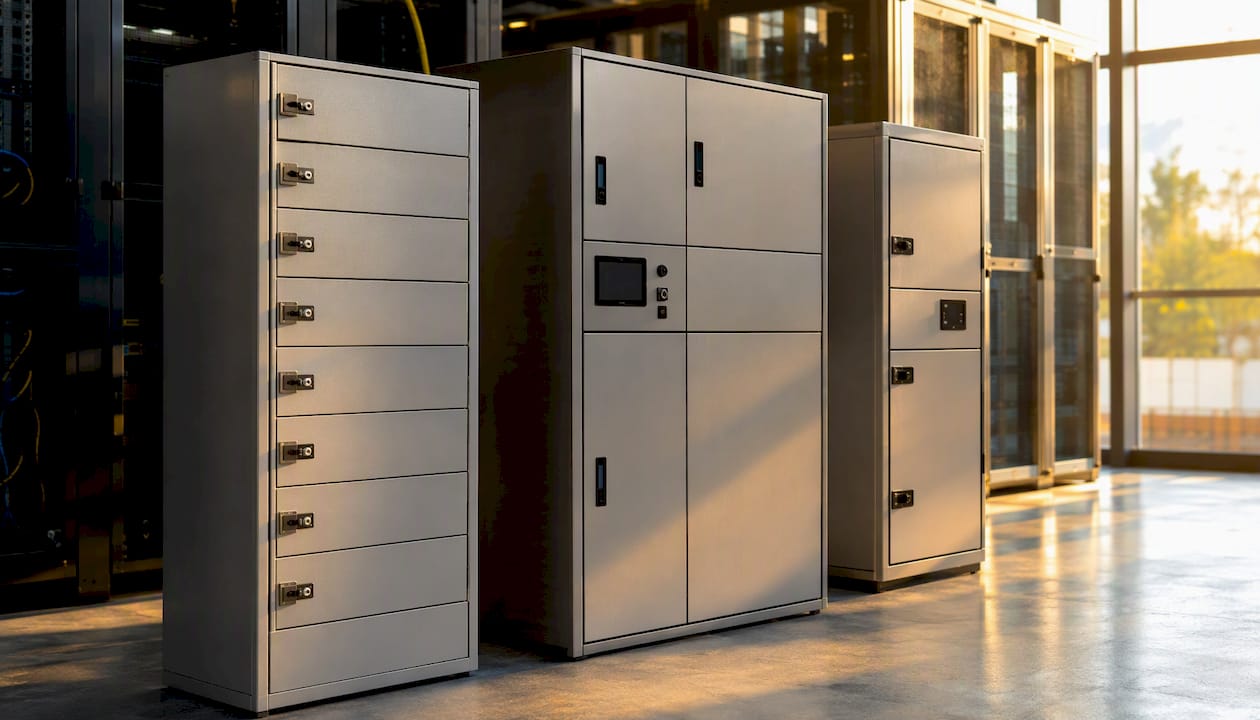
The verdict: use smart lockers for managed device pools and secure returns, smart vending for consumables and packaged spare kits, and kiosks where guided or assisted workflows are operationally necessary. The form factor follows the workflow, not the other way round.
| Use case | Form factor | Velocity Smart product family |
|---|---|---|
| New-starter kit delivery, break/fix laptop swap | Smart locker | Element Series |
| Peripheral and consumable dispensing, 24/7 | Smart vending | IDEA Series |
| Walk-up support, guided troubleshooting, contractor check-out | Smart kiosk | Smart Kiosk™ |
| Shared loaner pool, contractor equipment | Smart locker | Element Series |
Operational considerations that affect site survey and TCO:
- Compartment sizing: full-device lockers require larger bays; confirm laptop dimensions and docking-station requirements before ordering
- In-compartment charging: essential for break/fix pools where devices must be ready for immediate use
- Network and power footprint: each unit requires a stable wired or Wi-Fi connection and a dedicated power circuit; factor this into site-readiness costs
- Indoor vs. sheltered outdoor: confirm IP rating requirements for plant, warehouse, or campus deployments
Smart lockers supporting hybrid and remote workers increasingly serve distributed sites where no IT desk exists, making form-factor selection a workforce-model decision as much as a hardware one.
What operational KPIs should you expect from a ServiceNow-native deployment?
Published customer metrics from ServiceNow-native deployments set a credible baseline. A global pharma customer achieved a significant uplift in IT service throughput and substantially faster fulfilment. A nuclear energy operator cut onsite tickets substantially and reclaimed a large portion of IT staff time. A UK utility reduced shared-equipment loss and damage drastically.
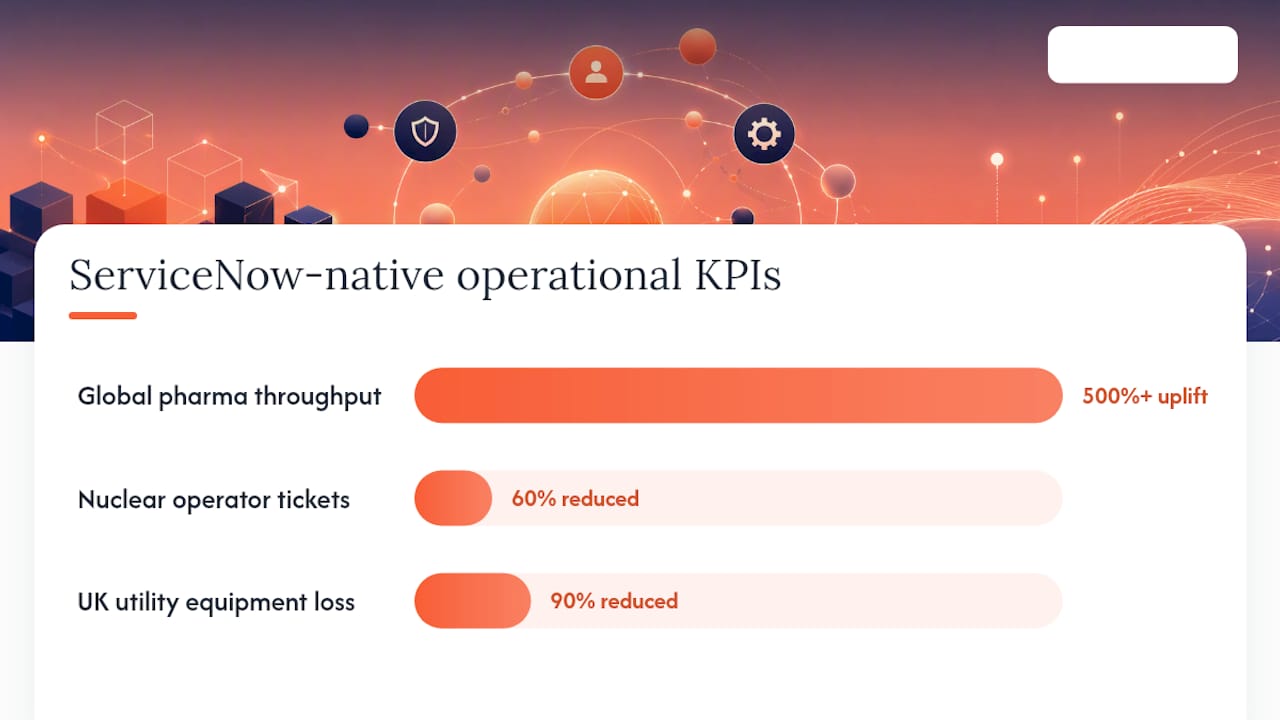
These outcomes were produced under traditional ITSM workflows, before agentic-AI orchestration. As Now Assist matures, they represent a floor.
Minimum telemetry and reporting to insist on from any supplier:
- Transaction-level audit logs exportable from ServiceNow (not from a vendor portal)
- CMDB state-change events for every collection, return, and failed authentication
- Performance Analytics dashboards covering throughput, dwell time, and compartment utilisation
- SLA breach alerts routed through native ServiceNow notification workflows
- Monthly availability and uptime reports per unit, per site
Note that a CMDB entry alone does not confirm device readiness. As Itsm, teams should define explicit readiness states — such as “Configuring” and “Verified” — and enforce a handoff checklist before a fulfilment ticket closes. Build these states into your acceptance criteria.
Procurement checklist: how should you evaluate locker companies?
Pass/fail test: the vendor must demonstrate ServiceNow-native operation inside your tenant and produce CMDB asset records without data duplication. Any vendor that cannot do this in a live tenant demo fails the gate.
Mandatory checklist items
- ServiceNow Store certification (verify the listing directly)
- RBAC mapping to existing ServiceNow roles, with no separate identity store
- CMDB asset model mapping, including mobile CI fields (IMEI, SIM status, EMM enrolment state where applicable — ServiceNow HAM often lacks these natively)
- Incident and change lifecycle flows for handoff events
- ISO 27001 and ISO 9001 certificates (current, not expired)
- Data residency options and encryption at rest and in transit
- On-site installation, commissioning, and spares support
- Managed services and training options
Procurement practicalities
- Define proof-of-concept acceptance criteria before the pilot begins, including CMDB record creation, audit log export, and SLA response times
- Include penetration testing evidence and ISO audit reports in the security questionnaire
- Confirm warranty terms, maintenance SLAs, and uplift charges for additional compartments or sites
- Request a sample RFP or SOW template from the vendor; a mature supplier will have one
What does a realistic deployment timeline look like?
Typical timeline: pilot (6–10 weeks) → limited rollout (3–6 months) → enterprise rollout (6–24 months), depending on site count and integration complexity.
Deployment phases
- Discovery and site survey: network and power assessment, compartment-sizing confirmation, security-vetting for installers
- Tenant integration and configuration: CMDB field mapping, RBAC configuration, workflow build and testing inside your ServiceNow instance
- Hardware delivery and installation: lead times vary by form factor and volume; confirm customs and duty implications for cross-border hardware
- Pilot acceptance: run against pre-agreed acceptance criteria; validate CMDB records, audit logs, and SLA response
- Scale rollout and optimisation: phased by site priority; Performance Analytics baseline established in pilot informs optimisation targets
Principal cost drivers to budget:
- Hardware per compartment (varies by form factor and specification)
- Installation and site works, including power and network provisioning
- Software subscription (per locker, per site, or enterprise licence)
- Integration engineering inside ServiceNow
- Training, first-line support, and managed services
Hidden costs that frequently surprise programmes: site access windows in secure facilities, security vetting for third-party installers, and customs or import duty for hardware shipped across borders. Installation project management platforms can help coordinate multi-site commissioning and reduce programme slippage.
What security and compliance controls must UK regulated organisations require?
The non-negotiable baseline: CMDB-native records, tenant RBAC, and no unauthorised data replication. For organisations subject to UK GDPR, FCA, or sector-specific controls, these are not preferences — they are audit requirements.
Controls checklist:
- ISO 27001 certificate with current scope statement covering the locker platform
- Encryption at rest and in transit for all data the platform handles
- Strong RBAC mapping to ServiceNow roles, with no shadow admin accounts
- Tamper logs for compartment access, retained in ServiceNow
- Integration audit trails covering every API call and state change
- Physical site hardening requirements (power redundancy, CCTV integration where required)
- Data residency options for UK-only tenants
During evaluation, request a sample audit log export, a change history for a test asset disposition, and evidence of a secure firmware update process. The ServiceNow Store listing is a baseline trust signal, but it does not substitute for your own security questionnaire.
What are the most common implementation risks and how do you mitigate them?
The highest-impact risk is misaligned readiness definitions between the CMDB and the physical device state — a device marked “Available” in ServiceNow that is not charged, enrolled, or configured.
| Risk | Mitigation |
|---|---|
| Mis-inventory / phantom assets | Enforce serial-number verification at collection; add “Verified” readiness state to CMDB workflow |
| Network outage at site | Configure offline-capable firmware with local authentication fallback; define manual override procedure |
| Low user adoption | Appoint local champions per site; publish clear return and replacement SLAs before go-live |
| Site readiness delays | Complete power and network survey during discovery, not during installation week |
| Vendor lock-in | Require open API documentation and CMDB export capability in the contract |
Change management is where most rollouts underperform. A hybrid workplace deployment succeeds when employees understand the return SLA and trust the replacement process. Without that, utilisation stays low and the business case erodes. Assign a named local champion at each site, run a short pre-go-live briefing, and publish the SLA visibly near each unit.
For critical sites, define a contingency plan for network or power failure: local authentication logs, a manual override key held by a named site contact, and an escalation path to your service desk.
What does enterprise case-study evidence show about ServiceNow-native deployments?
ServiceNow-native rollouts have produced measurable throughput and downtime improvements across regulated industries. The metrics below come from Velocity Smart Collect® deployments, documented in enterprise case studies and the 2026 Smart Locker whitepaper.
- Global pharma (multi-country): 500%+ IT service throughput uplift, 83% faster fulfilment, 74% reduction in employee downtime — delivered through 24/7 self-service locker collection replacing engineer-dispatched handovers
- US nuclear energy operator: 60% reduction in onsite tickets, 31–42% of IT staff time reclaimed — principal change was automating break/fix exchanges via CMDB-integrated lockers
- UK utility: 90% reduction in shared-equipment loss and damage — achieved through CMDB-tracked loaner pools with automated return enforcement
- US aerospace and defence (34+ sites): 35% reduction in IT staff travel — multi-site locker deployment eliminated the majority of physical dispatch events
These outcomes were achieved under traditional ITSM workflows. As agentic-AI orchestration matures within ServiceNow, the same physical infrastructure becomes the endpoint for AI-driven ticket resolution — the results above are the baseline, not the ceiling.
Why this is an operations decision, not a hardware one
The procurement framing that leads organisations astray is treating smart lockers as a facilities or hardware purchase. The enclosure is a commodity. The integration model is the decision.
A ServiceNow-native platform means your CMDB is the system of record for every device, at every site, in every state. Your existing governance, audit processes, and security posture extend to the physical layer without modification. A middleware-integrated alternative creates a second system of record, a second vendor relationship, and a second compliance surface — and it does so invisibly, until an auditor asks for a complete asset disposition history.
The AI–Physical Bridge framing matters here. Ticket automation is already well advanced inside ServiceNow. The next step — where an AI agent closes a physical-handover ticket without dispatching an engineer — requires a hardware endpoint that is genuinely native to the same platform. That endpoint does not exist in a locker product bolted on via API. It exists only when the locker platform and the ITSM platform share a single tenant, a single CMDB, and a single audit trail. Procurement teams that understand this distinction will make a fundamentally different shortlist from those who evaluate on enclosure specification alone.
Velocity Smart Collect® for procurement teams evaluating ServiceNow-native options
Velocity Smart Collect® is a ServiceNow-certified application, listed on the ServiceNow Store, that runs natively inside your tenant. There is no middleware, no data sync, and no parallel database. Asset records, handoff events, and audit trails sit in your CMDB as native configuration items.
The platform supports Element Series smart lockers, IDEA Series smart vending, and Smart Kiosk™ — all managed from one ServiceNow interface, with RBAC inherited from your existing roles and Performance Analytics consuming locker telemetry as first-class data. Velocity Smart is ISO 9001 and ISO 27001 certified, UK-headquartered, and deployed across pharma, energy, defence, legal, and financial services globally.
When you book a demo, ask for: a live tenant demonstration with CMDB asset creation in real time; an audit log export from the demo environment; installation and support SLA documentation; and ISO certificate copies. Download the Smart Locker whitepaper for deployment templates and case evidence, or review the Why Velocity Smart page for a full account of enterprise outcomes and certifications.
Sources
Recommended
See what Smart Collect® could save you
Model your savings in two minutes, or book a 60-minute workshop to pressure-test the numbers against your estate.