Employee self-service for device distribution: a CIO guide
ServiceNow-native employee self-service, implemented through Smart Collect®, lets enterprises automate device distribution, collection, vending and onsite IT fulfilment entirely inside their own ServiceNow tenant, with a full audit trail and no external data sync. The result is 24/7 physical IT fulfilment that inherits your existing RBAC, CMDB and approval workflows without a parallel vendor database or a fresh security review.
Key takeaways
ServiceNow-native physical fulfilment through Smart Collect® is the only approach that keeps device distribution, audit trail and RBAC inside a single tenant, eliminating the governance overhead of hybrid integrations.
| Point | Details |
|---|---|
| Tenant residency is the primary criterion | Confirm the app runs in your ServiceNow tenant with native CMDB writes before evaluating any other feature. |
| Three hardware form factors, one platform | Smart Lockers, Smart Vending and Smart Kiosk™ are all managed from Smart Collect® inside ServiceNow. |
| Vendor-reported outcomes | A global pharma customer reported 500%+ throughput uplift and 83% faster fulfilment; a nuclear energy operator cut tickets by 60%. |
| Pilot KPIs to track | Measure fulfilment throughput per labour hour, MTTR for hardware fulfilment, and percentage of tickets closed without technician travel. |
| Velocity-smart | UK-headquartered, ISO 9001 and ISO 27001 certified, Built on Now; the recommended starting point for a ServiceNow-native physical fulfilment pilot. |
Table of Contents
- What does ‘ServiceNow-native employee self-service’ mean for device distribution?
- What workflows does Smart Collect® support inside ServiceNow?
- How does the ServiceNow-native architecture work technically?
- What operational models work for multi-site UK deployments?
- What outcomes have CIOs measured with Smart Collect®?
- What should you budget for a UK deployment?
- How should you evaluate a ServiceNow-native offering?
- The case for treating physical fulfilment as a first-class ITSM workflow
- Smart Collect® for ServiceNow-native physical IT fulfilment
- Useful sources
What does ‘ServiceNow-native employee self-service’ mean for device distribution?
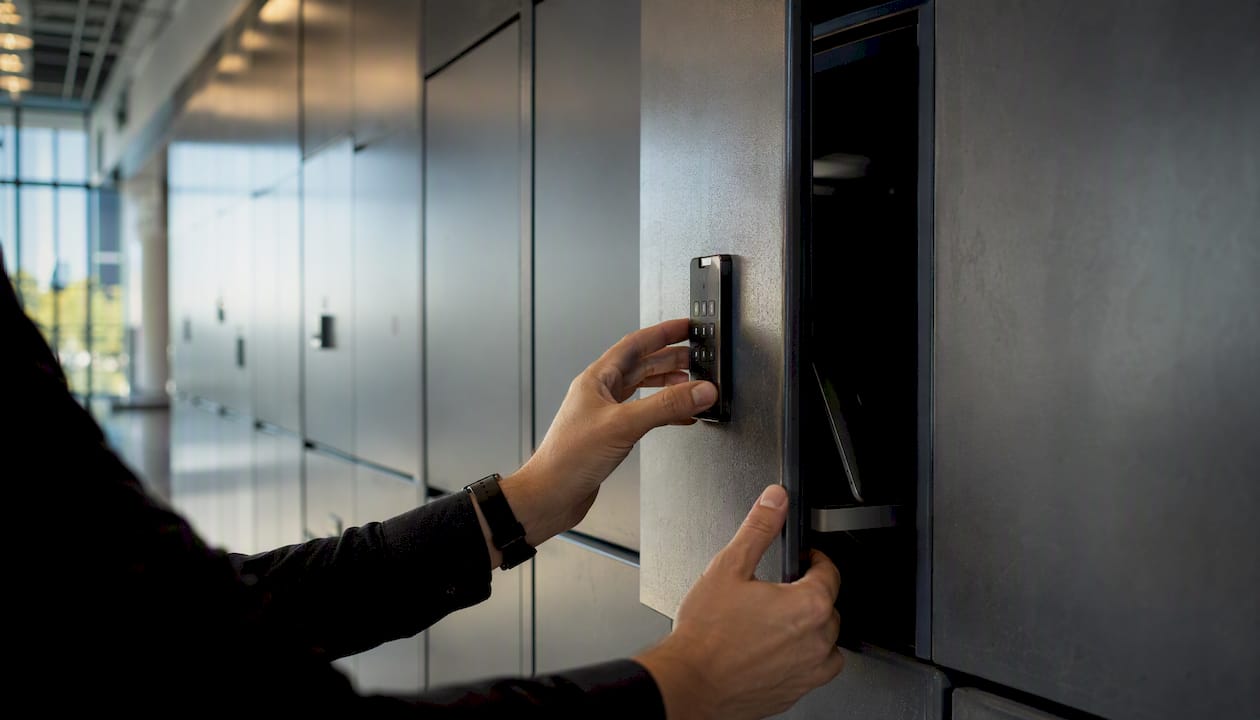
The phrase “employee self-service” covers a wide range of HR and IT portal experiences. In the context of enterprise device distribution and onsite IT fulfilment, it refers specifically to ServiceNow-native workflows that let employees order, collect, return, borrow and exchange physical hardware through automated hardware endpoints — without raising a ticket that requires a technician to attend.
The supported hardware form factors are:
- Velocity Smart Lockers™ (Element Series and other ranges): full-device handovers, new-starter kit delivery, broken-laptop swaps and equipment loans
- Velocity Smart Vending™ (IDEA Series): on-demand dispensing of peripherals, consumables and accessories, 24/7
- Smart Kiosk™: a virtual tech-bar with an AI-assisted video resolver group, replacing the traditional walk-up help desk
Smart Collect® is described in the ServiceNow Store as the world’s first Built on Now application to control smart lockers and vending machines directly from ServiceNow. That distinction matters operationally: the app runs inside your tenant, not alongside it. Asset state, device location and ownership history sit in your CMDB as native configuration records. There is no middleware, no API bridge and no vendor-managed data store to audit separately.
The practical difference between a ServiceNow-native approach and a third-party integration becomes visible at audit time. With tenant residency, every transaction — collection, return, restock, vending dispense — writes to the same audit log your ITSM team already queries. Role-based access control (RBAC) and approval flows are inherited, not replicated.
What workflows does Smart Collect® support inside ServiceNow?
Order and collect
An employee raises a request through the ServiceNow portal. Smart Collect® generates a barcode notification and assigns a geo-aware pickup location — the nearest available locker bank or vending unit. The employee collects using an existing QR code or RFID corporate credential; no separate app or credential is required. The transaction closes the ServiceNow record and updates the CMDB asset record simultaneously.
Borrow and return
Loan periods are configured inside ServiceNow. Smart Collect® sends automated reminders as the return deadline approaches and flags overdue loans to the asset manager’s dashboard. Ownership tracking persists throughout the loan lifecycle, so the CMDB reflects actual device location at every point.
Restock and personalised stocking
Restock workflows notify the relevant team when locker or vending inventory falls below a defined threshold. Pre-stocking rules allow asset managers to load specific devices for named individuals — useful for new-starter provisioning or hardware refresh cycles. Geo-aware collection means the system can direct an employee to the nearest stocked unit across a multi-site estate.
Vending allowances
Smart Collect® supports legacy monetary and quantity allowance modes alongside newer product-specific allowances and one-time product request features. A one-time allowance, for example, lets a manager approve a single headset dispense for a contractor without opening a standing entitlement. This vending allowance control is a meaningful governance lever for regulated environments.
Hardware refresh and JML
Joiners, movers and leavers (JML) eligibility rules are configured in ServiceNow. A new joiner’s device is pre-staged in a locker; the workflow triggers collection notification on day one. Leavers trigger a return workflow automatically. Deferred retrieval rules handle cases where a device cannot be returned immediately.
This gives asset managers a recovery window before a device is flagged overdue, and it reduces the volume of escalation tickets generated by last-minute returns.
How does the ServiceNow-native architecture work technically?
Smart Collect® runs entirely within the customer’s ServiceNow tenant. There is no external application server, no data synchronisation to a vendor cloud, and no separate identity store. The architecture connects three layers: the ServiceNow application layer (workflows, approvals, CMDB, dashboards), the Velocity Smart Cloud™ device management layer, and the physical hardware endpoints (lockers, vending units, kiosks).
Velocity Smart Cloud™ and Velocity Smart Lockers™ are required components. The Cloud layer handles device-level communication — door release signals, inventory counts, sensor data — and surfaces that data back into ServiceNow as native records. Customers can continue using existing QR code or RFID credentials for vending workflows, which removes a common deployment blocker.
The table below covers the key integration points and what to verify during procurement.
| Integration point | What Smart Collect® does | What to verify |
|---|---|---|
| CMDB model records | Creates and updates CI records on every transaction | Confirm model-record mapping matches your asset taxonomy |
| RBAC and ACLs | Inherits tenant roles; no separate permission store | Review role definitions against your access governance policy |
| Approval workflows | Uses native ServiceNow approval chains | Map existing approval groups before go-live |
| Audit trail | Writes to ServiceNow audit log natively | Confirm log retention aligns with your compliance period |
| Notifications | ServiceNow notification engine (email, Teams, etc.) | Test notification routing in UAT environment |
For a detailed walkthrough of CMDB model mapping and configuration steps, the ServiceNow integration guide published by Velocity-smart covers practical configuration considerations. Velocity Smart Technology is ISO 9001 and ISO 27001 certified and UK-headquartered, which simplifies the vendor security assessment for UK-regulated deployments.
What operational models work for multi-site UK deployments?
Three models cover most enterprise configurations.
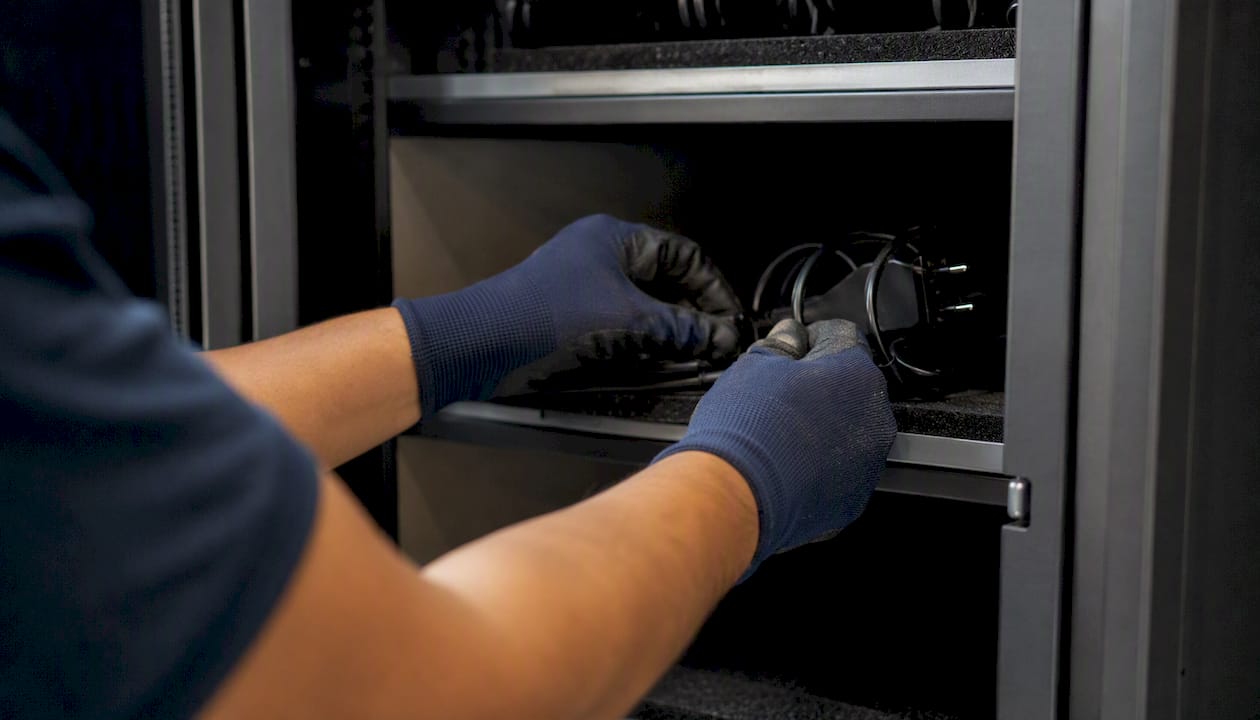
- Centralised fulfilment: a single stockroom serves multiple locker banks via scheduled restock runs. Works well for campuses or dense office estates where logistics distances are short. Requires a dedicated asset manager and a reliable restock cadence.
- Distributed site restock: each site holds a local spare pool, replenished from a regional depot. Suited to geographically dispersed UK estates where same-day courier logistics are impractical. Geo-aware pickup rules direct employees to the nearest stocked unit automatically.
- Hybrid with on-demand courier: kiosks and vending handle peripherals and consumables locally; full-device handovers are fulfilled via a courier-to-locker model for remote sites. This model works well for organisations with a mix of dense urban offices and remote or field-based workers.
For the first 90 days, a practical runbook covers three phases. During weeks 1–6 (pilot), focus on CMDB model-record mapping, RBAC configuration, UAT for order/collect and return workflows, and restock threshold calibration. Weeks 7–16 (production readiness) add vending allowance configuration, JML workflow testing and notification routing. From week 17 onward (scale), introduce additional sites using geo-aware pickup rules, expand spare-pool sizing based on pilot throughput data, and run the first formal audit-trail review.
Digital onboarding workflows benefit significantly from pre-staged locker provisioning, particularly for distributed joiners who cannot attend a central IT desk on day one.
What outcomes have CIOs measured with Smart Collect®?
The headline figures come from vendor-published case evidence, delivered using traditional ITSM workflows before agentic AI was driving the process. These are the floor, not the ceiling.
A global pharmaceutical customer reported significant improvements in IT service throughput, faster fulfilment times and reduced employee downtime after deploying Smart Collect® — outcomes achieved without Now Assist or agentic-AI orchestration in the workflow.
A US nuclear energy operator reduced on-site tickets by around 60% and reclaimed 31–42% of IT staff time. A UK utility substantially reduced shared-equipment loss and damage. A US university processed a large volume of transactions with substantial IT staff time recovered on late returns.
The KPIs that matter most to CIOs building a business case are fulfilment throughput per labour hour, mean time to resolution (MTTR) for hardware fulfilment, and the percentage of tickets closed without technician travel. These three metrics map directly to the cost levers a CFO will scrutinise: labour cost per fulfilment, travel overhead and asset loss rate. The pharma case study provides the most detailed published evidence across all three dimensions.
What should you budget for a UK deployment?
A typical UK pilot to first-site roll-out runs across roughly 6–10 weeks for the pilot phase, with production readiness achieved by week 16 and multi-site scale from week 17 onward.
| Phase | Duration | Key cost items |
|---|---|---|
| Pilot | Weeks 1–6 | ServiceNow app subscription, locker/vending hardware, cabling, installation labour, UAT |
| Production readiness | Weeks 7–16 | Velocity Smart Cloud™ service, CMDB configuration, notification setup, staff training |
| Scale | Week 17 onward | Additional hardware units, site installation, spare-pool stock, ongoing support SLA |
UK-specific cost considerations include installation labour rates (which vary by region and building type), data sovereignty requirements for regulated sectors (tenant residency addresses this by default), and cabling infrastructure for locker banks in older building stock. The business case guide from Velocity-smart covers ROI modelling in detail.
How should you evaluate a ServiceNow-native offering?
The single most important criterion is whether the application runs inside your ServiceNow tenant with native CMDB and RBAC integration. Everything else is secondary.
- Tenancy: does the app run in your tenant, or does it require an external vendor-managed instance for core data?
- CMDB mapping: can the vendor demonstrate model-record creation and CI updates on a live transaction in your UAT environment?
- Vending allowance controls: does the platform support product-specific and one-time allowances, not just legacy monetary/quantity modes?
- Audit trail: are all transactions written to the ServiceNow audit log natively, with no separate export required?
- Restock notifications: are low-inventory alerts triggered through the ServiceNow notification engine, or via a separate vendor portal?
- Hardware lifecycle support: does the vendor support JML eligibility rules and deferred retrieval natively in ServiceNow?
- Scalability: can geo-aware pickup rules route employees across multiple UK sites without manual configuration per site?
Red flags to watch for: a requirement for an external tenant to hold core asset or transaction data; no SKU-level vending controls; audit trail data that lives outside ServiceNow and requires a separate export for compliance review. The AI workplace support model also highlights that kiosk-based AI assistants should route complex issues to human teams rather than attempt full resolution — a capability worth testing in any PoC.
The case for treating physical fulfilment as a first-class ITSM workflow
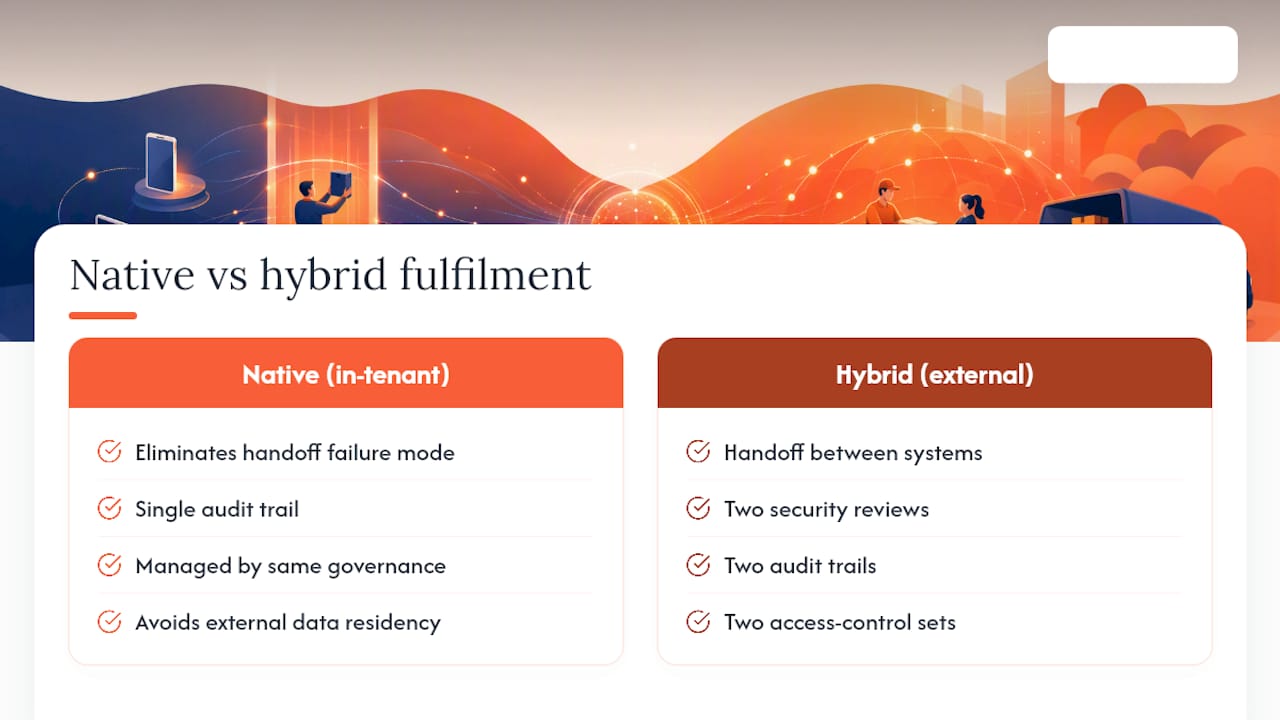
The governance argument for ServiceNow-native physical fulfilment is stronger than most IT leaders initially expect. When the physical layer runs inside the same tenant as ITSM, you eliminate the most common failure mode in hybrid integrations: the handoff between systems where audit continuity breaks. A locker transaction that writes to an external database and syncs back to ServiceNow is not the same as one that writes to ServiceNow directly. The former requires two security reviews, two audit trails and two sets of access controls to maintain in parallel.
The vendor lock-in concern is legitimate but often overstated. A Built on Now application tracks ServiceNow’s release schedule by design, which means upgrade risk is managed by the same governance process you already apply to the rest of your ServiceNow estate. The more material risk is choosing a platform that requires external data residency — that decision is genuinely difficult to reverse once asset history accumulates outside your tenant.
ROI timelines for physical fulfilment automation tend to be shorter than IT leaders expect, because the baseline cost is high. Hardware fulfilment tickets handled by a technician cost roughly three times more than digital tickets, and that ratio widens as AI reduces the cost of digital resolution. Organisations that defer physical automation are not holding steady; they are watching their cost-per-ticket gap grow.
Smart Collect® for ServiceNow-native physical IT fulfilment
Smart Collect® is the Built on Now application that integrates Velocity Smart Lockers™, Velocity Smart Vending™ and Smart Kiosk™ into ServiceNow workflows, running entirely inside your tenant. For CIOs who have completed the evaluation criteria above, the practical next step is a structured pilot scoped to one site, three workflows (order/collect, return, vending dispense) and four weeks of throughput data.
Velocity-smart’s IT support survey provides current benchmarking data for hardware fulfilment operations, useful for setting PoC KPIs against peer organisations. For kiosk-led deployments, the Smart Kiosk™ product page covers the AI-assisted resolver group model and walk-up support workflows in detail. To discuss a pilot scoped to your ServiceNow environment, contact Velocity-smart directly through the website.
Useful sources
The following sources support the technical claims and procurement guidance in this article.
- Velocity Smart Collect™ on the ServiceNow Store — vendor listing confirming Built on Now status, supported workflows and hardware requirements. Vendor asset.
- Integrating Smart Lockers with ServiceNow: A Guide — practical configuration guidance covering CMDB model mapping and deployment steps. Vendor asset.
- Velocity Smart Technology — company profile, ISO certifications, partner status and vendor-published case outcomes. Vendor asset.
- AI Workplace Support Knowledge Centre — independent guidance on AI-assisted kiosks and physical fulfilment workflows. Third-party resource.
- Smart vending application features — product detail on vending allowance controls, transaction types and reporting. Vendor asset.
Recommended
See what Smart Collect® could save you
Model your savings in two minutes, or book a 60-minute workshop to pressure-test the numbers against your estate.