 Managed IT Services: Transforming Enterprise Support">
Managed IT Services: Transforming Enterprise Support
British enterprises increasingly rely on managed IT services, with over 60 percent of large organisations outsourcing at least some aspect of their technological infrastructure. The complexity of modern business demands more than occasional troubleshooting, pushing companies to seek solutions that offer real-time support, strategic guidance, and reliable security. This guide breaks down what sets managed IT services apart for British businesses, highlighting their role in driving efficiency, cutting costs, and enabling growth on a competitive global stage.
Table of Contents
- Defining Managed IT Services For Enterprises
- Types Of Managed IT Services And Solutions
- How Managed IT Services Integrate With ITSM
- Key Features Driving ROI And Efficiency
- Risks, Compliance, And Data Security Considerations
Key Takeaways
| Point | Details |
|---|---|
| Managed IT Services Optimise IT Operations | Enterprises can shift from reactive problem-solving to proactive technological strategies through managed IT services. |
| Specialised Expertise is Accessible | Partnering with a Managed Services Provider (MSP) grants access to advanced technological skills without the burden of extensive in-house teams. |
| Predictable Costs Drive Budgeting | Managed IT services offer predictable operational costs, enabling better financial planning and resource allocation. |
| Integration with ITSM Enhances Efficiency | Aligning managed IT services with IT Service Management (ITSM) creates streamlined processes that improve overall organisational efficiency. |
Defining Managed IT Services for Enterprises
Managed IT services represent a strategic approach for enterprises to outsource complex technological infrastructure management to specialised third-party providers. These comprehensive services go beyond traditional break-fix models, offering proactive monitoring, strategic planning, and continuous technological support. Managed IT services entail delegating IT responsibilities to professional organisations that can handle an organisation’s entire technological ecosystem.
At their core, managed IT services encompass a wide range of critical technological functions. These typically include network infrastructure management, cybersecurity protocols, cloud computing solutions, data backup and recovery systems, help desk support, and strategic technology planning. By partnering with a managed services provider (MSP), enterprises can transform their IT departments from reactive problem-solvers to proactive business enablers. The goal is not merely maintaining technological systems, but leveraging technology as a strategic asset that drives organisational performance and innovation.
The primary value proposition of managed IT services lies in their ability to deliver specialised expertise, advanced technological capabilities, and predictable operational costs. Enterprises gain access to cutting-edge technological resources without the substantial overhead of maintaining an extensive in-house IT team. This model allows organisations to scale their technological capabilities rapidly, adapt to changing business requirements, and maintain robust security postures without significant capital investments.
The following table contrasts managed IT services with traditional in-house IT support:
| Aspect | Managed IT Services | In-house IT Support |
|---|---|---|
| Cost Structure | Predictable monthly fees | Variable, often higher costs |
| Expertise Level | Access to specialists | Limited by team knowledge |
| Scalability | Rapid and flexible | Slow, requires hiring/training |
| Security Approach | Proactive threat detection | Reactive to incidents |
Pro Tip: Strategic Partner Selection: When evaluating managed IT service providers, prioritise those with proven expertise in your specific industry, robust compliance credentials, and demonstrable track records of technological innovation and client success.
Types of Managed IT Services and Solutions
Managed IT services represent a comprehensive suite of technological solutions designed to address the complex infrastructure needs of modern enterprises. These services encompass a diverse range of critical technological functions, strategically tailored to support organisational objectives and technological resilience. The landscape of managed IT services has evolved dramatically, moving beyond simple maintenance to become a sophisticated ecosystem of integrated technological support.
The primary categories of managed IT services typically include:
- Network and Infrastructure Management: Comprehensive monitoring, maintenance, and optimisation of an organisation’s technological backbone
- Cybersecurity Services: Proactive protection, threat detection, and incident response mechanisms
- Cloud Services: Management of cloud infrastructure, migration strategies, and hybrid cloud integration
- Data Backup and Disaster Recovery: Robust solutions ensuring business continuity and data preservation
- Communication Services: Unified communication platforms, VoIP systems, and collaborative technological ecosystems
Each service type represents a critical component in building a resilient, efficient technological infrastructure. By leveraging these specialised services, organisations can transform their IT departments from reactive cost centres to strategic business enablers. The modular nature of managed IT services allows businesses to customise their technological support precisely to their unique operational requirements, ensuring scalability and flexibility.
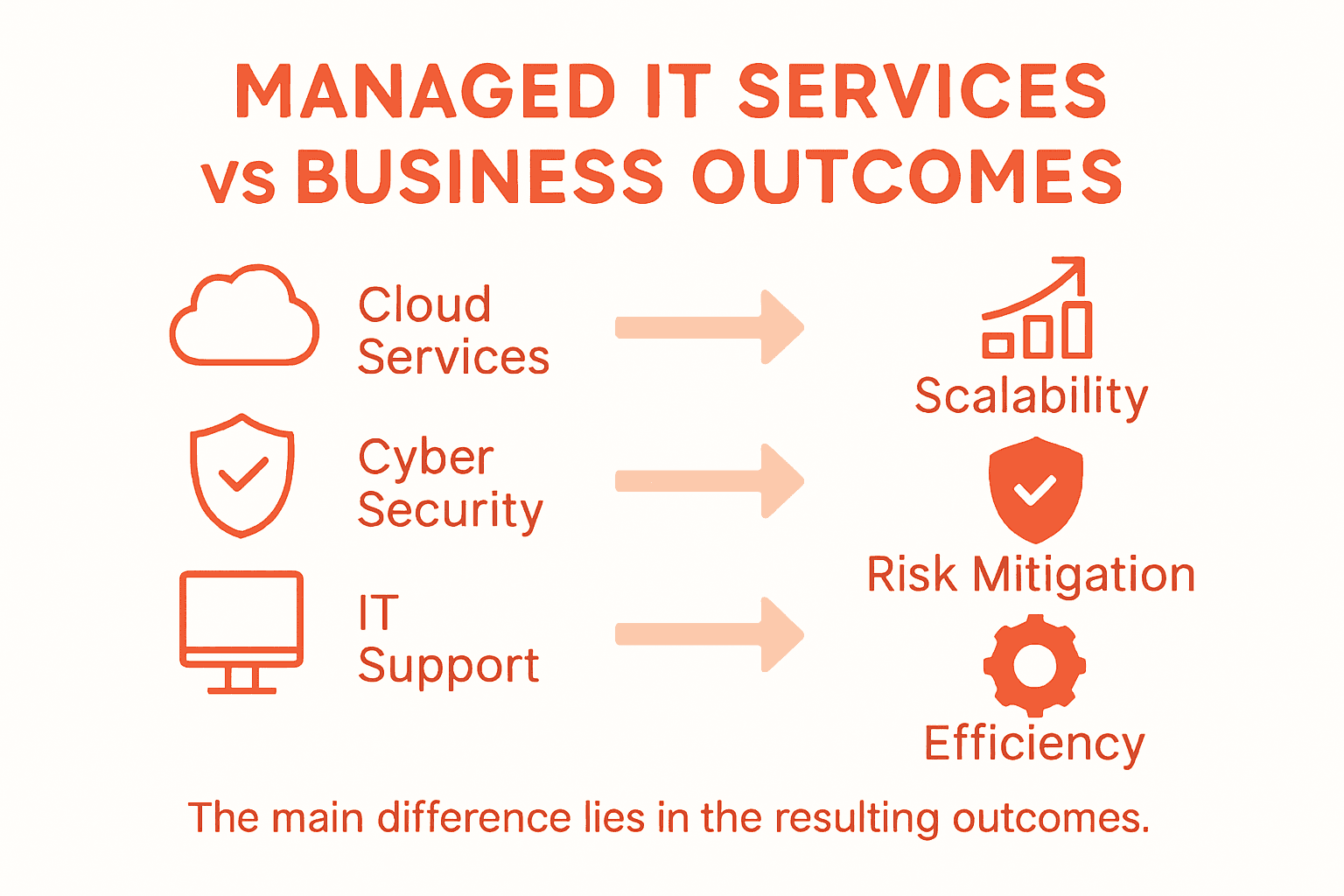
Here is a summary of how managed IT service types benefit various enterprise priorities:
| Service Type | Main Benefit | Typical Business Outcome |
|---|---|---|
| Network Management | Improved stability | Fewer outages, better performance |
| Cybersecurity Services | Enhanced risk mitigation | Stronger protection, compliance |
| Cloud Service Management | Seamless scalability | Faster growth, cost optimisation |
| Data Backup & Recovery | Business continuity | Reduced downtime, data preservation |
| Communication Services | Advanced collaboration | Improved productivity, connectivity |
Pro Tip: Service Portfolio Alignment: When selecting managed IT services, conduct a comprehensive audit of your current technological landscape and future strategic goals to ensure the chosen services provide not just support, but genuine technological advancement for your organisation.
How Managed IT Services Integrate with ITSM
The integration of managed IT services with Information Technology Service Management (ITSM) represents a sophisticated approach to technological infrastructure support. IT as a Service (ITaaS) is an operational model that aligns service delivery with core ITSM principles, transforming how enterprises manage and deliver technological resources. This integration creates a seamless, strategic framework that enables organisations to move beyond traditional reactive support models.
Key integration points between managed IT services and ITSM include:
- Workflow Standardisation: Establishing consistent processes and procedures across technological support channels
- Incident and Problem Management: Developing proactive strategies for identifying, tracking, and resolving technological challenges
- Service Level Agreement (SLA) Alignment: Creating precise metrics and performance indicators for technological support
- Asset and Configuration Management: Implementing comprehensive tracking and management of technological resources
- Continuous Improvement Mechanisms: Developing data-driven approaches to enhance technological service delivery
The strategic alignment of managed IT services with ITSM frameworks enables organisations to transform their technological support from a cost centre to a value-generating operational unit. By leveraging mobile device management practices that enhance device supportability and security, enterprises can create more responsive, adaptable technological ecosystems that directly support business objectives. This integration allows for greater visibility, control, and efficiency in technological resource management.
Pro Tip: Integration Strategy: Conduct a comprehensive audit of your current ITSM processes and managed IT service capabilities, identifying potential integration points and developing a phased approach to seamless technological support alignment.
Key Features Driving ROI and Efficiency
Managed IT services enhance business efficiency through a sophisticated array of technological capabilities designed to transform organisational performance. These services go beyond traditional support models, offering strategic approaches that directly impact an enterprise’s bottom line. By reimagining technological infrastructure as a dynamic, responsive ecosystem, managed IT services create substantial value through intelligent resource allocation and proactive management.
Key features driving ROI and efficiency include:
- Proactive Monitoring and Maintenance: Preventing technological issues before they disrupt operations
- Predictive Analytics: Leveraging data-driven insights to forecast and mitigate potential system challenges
- Scalable Infrastructure: Enabling rapid technological adaptation without significant capital investment
- Specialised Expertise: Access to high-level technological skills without maintaining extensive in-house teams
- Automated Service Delivery: Reducing manual intervention and minimising human error
Continuous monitoring and system optimisation allow internal teams to redirect their focus from routine technological maintenance to strategic business initiatives. This transformation represents a fundamental shift in how organisations approach technological resources, converting traditional cost centres into value-generating strategic assets. By implementing intelligent managed IT services, enterprises can achieve remarkable efficiency gains, reduce operational costs, and create more agile, responsive technological ecosystems.
Pro Tip: Efficiency Measurement: Develop clear, quantifiable metrics that track technological performance improvements, ensuring your managed IT services deliver tangible, measurable business value beyond traditional support models.
Risks, Compliance, and Data Security Considerations
Managed IT services introduce complex considerations around data security, regulatory compliance, and technological risk management. The IASME Governance standard provides a comprehensive framework for information assurance, offering enterprises a structured approach to mitigating potential vulnerabilities in their technological ecosystems. Understanding these critical dimensions is paramount for organisations seeking to protect their digital assets while maintaining operational efficiency.
Key risk and compliance considerations include:
- Data Protection: Ensuring robust mechanisms for securing sensitive organisational information
- Regulatory Compliance: Adhering to industry-specific legal and technological standards
- Contractual Risk Management: Establishing clear accountability and liability frameworks
- Privacy Protection: Implementing stringent controls around personal and corporate data
- Cybersecurity Resilience: Developing proactive defence strategies against evolving digital threats
Cloud computing adoption frameworks offer structured approaches to addressing security challenges, highlighting the importance of comprehensive risk assessment and mitigation strategies. Enterprises must develop nuanced approaches that balance technological innovation with rigorous security protocols. This requires a holistic perspective that considers not just technological capabilities, but also the broader organisational and regulatory context within which digital services operate.
Pro Tip: Risk Assessment Strategy: Conduct regular, comprehensive security audits that evaluate your managed IT services against current regulatory requirements and emerging technological threats, ensuring continuous alignment with best practice standards.
Elevate Your Enterprise IT Support with Velocity Smart Technology
The article highlights the complexities enterprises face in managing IT infrastructure through traditional models that can be costly, reactive, and limited in scalability and security. Your organisation deserves proactive solutions that transform IT departments into strategic business enablers by seamlessly integrating managed IT services with efficient workflows and robust security standards. Velocity Smart Technology understands these challenges by delivering innovative automation for equipment and device management designed to work natively within your ServiceNow environment. This approach eliminates data-sharing concerns, reduces manual effort, and unlocks the full potential of your IT service management processes.
Key benefits include:
- Enhanced operational efficiency through automated asset issuance and tracking
- Compliance with stringent security and GDPR requirements, addressing critical risk and data protection concerns
- Scalable solutions perfectly aligned with enterprise goals for dynamic technological support
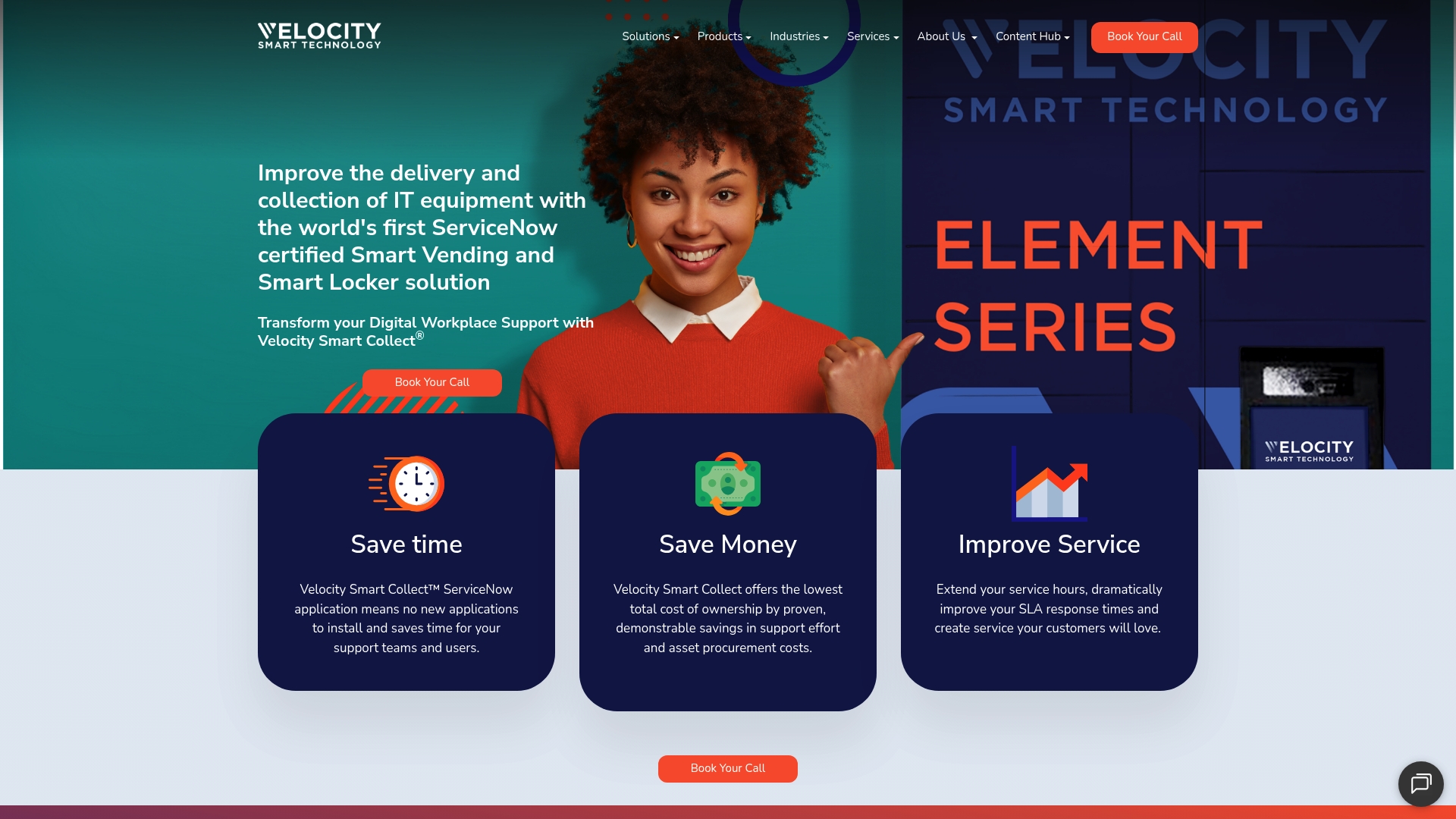
Discover how Velocity Smart Collect, the only ServiceNow-certified smart locker and vending application, revolutionises your workplace support to reduce costs and improve employee experience. Visit Velocity Smart Technology to explore our cutting-edge solutions that power modern managed IT services. Learn more about our flagship Velocity Smart Collect and how it integrates with your enterprise IT service management to deliver measurable ROI.
Unlock the full capabilities of your IT infrastructure today. Transform your support operations with proven, smart automation from Velocity Smart Technology and gain the strategic advantage your enterprise needs now. Visit Velocity Smart Technology to start your journey.
Frequently Asked Questions
What are managed IT services?
Managed IT services refer to the practice of outsourcing IT management and support to third-party providers, allowing enterprises to focus on core business objectives while ensuring technological systems are proactively monitored and maintained.
How do managed IT services differ from traditional in-house IT support?
Managed IT services provide predictable monthly fees, access to specialised expertise, rapid scalability, and proactive security measures, whereas in-house IT support often comes with variable costs, limited knowledge, and a reactive approach to technological issues.
What types of functions do managed IT services typically include?
Managed IT services typically encompass network infrastructure management, cybersecurity services, cloud solutions, data backup and recovery, and communication services, aimed at enhancing overall technological resilience for organisations.
How can enterprises measure the ROI of managed IT services?
Enterprises can measure the ROI by developing quantifiable metrics that track improvements in technological performance, cost savings, and increased efficiency, ensuring that the managed IT services deliver tangible business value beyond traditional support methods.
Recommended
See what Smart Collect® could save you
Model your savings in two minutes, or book a 60-minute workshop to pressure-test the numbers against your estate.