 What Is Digital Workplace? Enterprise Impact Explained">
What Is Digital Workplace? Enterprise Impact Explained
Over 60 percent of British businesses are accelerating their shift toward digital workplace solutions to stay competitive. Adapting to this modern approach is no longer a choice but a necessity as employees expect seamless collaboration and flexibility at every level. This article breaks down the digital workplace, highlights why it matters for British organisations, and uncovers key features that drive productivity and protect company data in a rapidly evolving business environment.
Table of Contents
- Digital Workplace Defined And Core Concepts
- Types Of Digital Workplace Solutions
- Key Features And Benefits For Enterprises
- How Digital Workplace Transforms It Support
- Compliance, Security, And Gdpr Considerations
- Maximising Roi And Avoiding Common Pitfalls
Key Takeaways
| Point | Details |
|---|---|
| Digital Workplace Definition | A digital workplace transforms traditional work approaches, utilising technology to enhance productivity and collaboration in both physical and virtual environments. |
| Types of Solutions | Key digital workplace solutions include smart office platforms, collaborative tools, and immersive technologies that streamline workflows and improve employee experiences. |
| Employee Training Importance | Investing in employee digital skills and capabilities is crucial to ensure successful adoption of digital workplace technologies and maximise their benefits. |
| Strategic Implementation | A comprehensive change management strategy is essential alongside technology adoption to address cultural shifts and ensure user acceptance. |
Digital Workplace Defined and Core Concepts
A digital workplace represents a holistic, technology-enabled environment that transforms traditional work approaches, integrating digital tools, platforms, and strategies to enhance productivity and collaboration. Unlike conventional office settings, this modern framework empowers employees to work seamlessly across physical and virtual spaces, leveraging advanced technological infrastructure.
The digital workplace encompasses more than simple technological implementation. Complex workplace transformation processes fundamentally reshape organisational structures, employee interactions, and workflow dynamics. By incorporating cloud-based platforms, collaborative software, and intelligent communication technologies, enterprises can create adaptable work environments that transcend geographical limitations and traditional operational constraints.
Critical to successful digital workplace implementation is understanding employee digital capabilities. Research demonstrates that digital self-efficacy and technological agility are paramount, enabling workers to navigate increasingly sophisticated technological ecosystems. Organisations must invest not just in technological infrastructure, but in comprehensive training programmes that equip staff with necessary digital skills and confidence.
Pro Workplace Strategy Tip: Develop a structured digital skills assessment and training roadmap that continuously evaluates and upgrades employee technological competencies, ensuring your workforce remains adaptive and technologically proficient.
Types of Digital Workplace Solutions
Digital workplace solutions encompass a diverse range of technological platforms and tools designed to enhance organisational productivity, collaboration, and employee experience. These solutions can be broadly categorised into several key technological frameworks that address different aspects of modern work environments.
One prominent category involves smart office solutions integrating microservice architectures with IoT technologies, which create personalised and adaptive workspaces. These intelligent systems leverage sensor networks, cloud computing, and real-time data analytics to dynamically adjust workspace configurations, monitor environmental conditions, and support flexible working arrangements.
Another emerging solution category focuses on immersive technological experiences. Virtual and augmented reality technologies are increasingly being integrated into workplace environments, offering transformative approaches to remote collaboration, training, and spatial computing. These solutions enable organisations to transcend traditional geographical limitations, creating interactive and engaging work experiences that blend physical and digital interactions.
The primary types of digital workplace solutions include collaborative platforms, cloud-based communication tools, intelligent automation systems, remote work technologies, and advanced employee experience management software. Each solution aims to streamline workflows, enhance connectivity, and provide flexible, efficient work environments that adapt to changing organisational needs.
Pro Technology Integration Tip: Conduct a comprehensive audit of your current technological infrastructure before implementing new digital workplace solutions, ensuring seamless integration and identifying potential compatibility challenges.
Here is a summary comparing main types of digital workplace solutions and their core business value:
| Solution Type | Key Technology | Primary Benefit |
|---|---|---|
| Smart office platforms | IoT, microservices | Adaptive work environments |
| Collaborative platforms | Cloud, chat, video | Real-time team communication |
| Immersive experience solutions | Virtual/augmented reality | Enhanced training and spatial computing |
| Intelligent automation systems | AI, workflow bots | Streamlined repetitive tasks |
| Employee experience management | Analytics, feedback tools | Improved workplace satisfaction |
Key Features and Benefits for Enterprises
Enterprises adopting digital workplace technologies gain substantial strategic advantages that fundamentally transform traditional operational models. These technological ecosystems provide comprehensive solutions that address critical organisational challenges, enabling more agile, efficient, and responsive business environments.

Digital technologies serve as sophisticated environments for informal workplace learning, significantly enhancing knowledge work and employee development processes. By creating interconnected platforms that facilitate continuous learning, knowledge sharing, and skill development, organisations can cultivate more adaptive and resilient workforce capabilities.
Moreover, advanced digital workplace assistants are increasingly designed to manage complex time, task, and information workflows, dramatically improving individual and collective productivity. These intelligent systems provide personalised support by streamlining administrative tasks, automating routine processes, and enabling employees to focus on high-value strategic work.
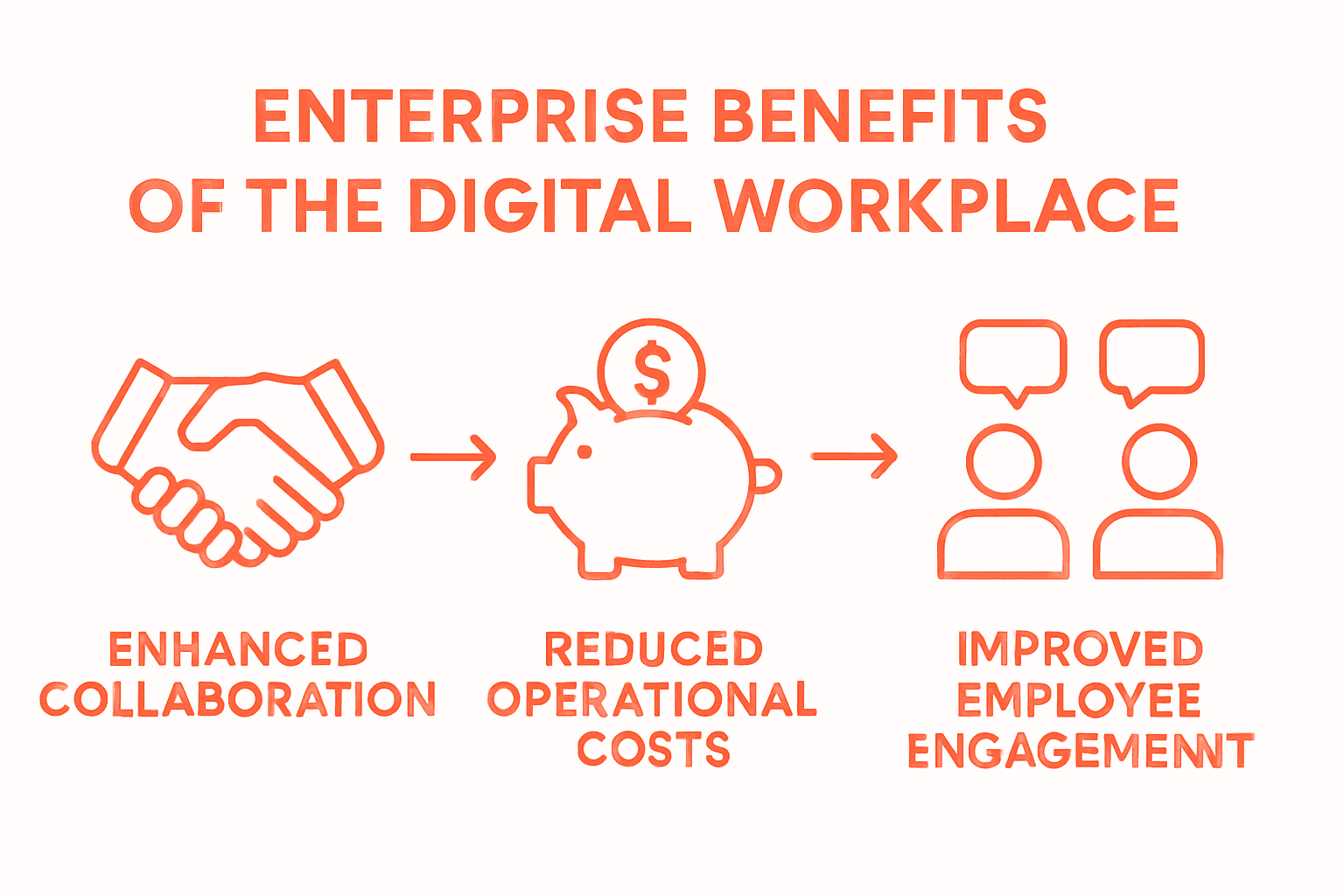
Key benefits for enterprises include enhanced collaboration, reduced operational costs, improved employee engagement, accelerated innovation, and greater organisational flexibility. Digital workplace solutions enable seamless communication across geographically dispersed teams, provide real-time data insights, and create more responsive, adaptive organisational structures that can quickly pivot in dynamic business environments.
Pro Strategic Implementation Tip: Develop a comprehensive change management strategy alongside digital workplace technology adoption, ensuring employee training, cultural alignment, and continuous feedback mechanisms to maximise technological investment and user acceptance.
How Digital Workplace Transforms IT Support
The digital workplace fundamentally revolutionises traditional IT support models, shifting from reactive problem-solving to proactive, intelligent service delivery. This transformation represents a strategic reimagining of how technological resources are managed, deployed, and supported across organisational ecosystems.
Advanced AI systems are increasingly assessing the autonomy and generality of workplace technological support, dramatically changing how IT departments operate. These intelligent frameworks enable more predictive, adaptive support mechanisms that anticipate technological needs before they become critical issues, reducing downtime and enhancing overall organisational efficiency.
Digital workplace assistants are transforming routine IT support processes through sophisticated automation, enabling support teams to move beyond manual interventions. By automating standard troubleshooting, device management, and configuration tasks, IT professionals can redirect their expertise towards strategic technological initiatives that drive organisational innovation and competitive advantage.
Key transformative elements include self-service support portals, intelligent ticket routing systems, predictive maintenance algorithms, and automated device provisioning workflows. These technologies enable IT support to become a more strategic partner in organisational growth, shifting from a cost centre to a value-generation function that directly contributes to employee productivity and technological resilience.
Pro IT Transformation Tip: Implement a phased digital workplace support strategy that gradually introduces automation, ensuring comprehensive staff training and maintaining robust human oversight during technological transition periods.
Compliance, Security, and GDPR Considerations
Digital workplace implementations require comprehensive security strategies that address complex regulatory landscapes and protect sensitive organisational data across increasingly distributed technological environments. Enterprises must develop robust frameworks that balance technological innovation with rigorous compliance requirements.
Digital self-efficacy and organisational agility are critical for navigating emerging security challenges, enabling organisations to adapt rapidly to evolving regulatory demands. This dynamic approach ensures that technological implementations remain compliant while maintaining operational flexibility and technological responsiveness.
Artificial intelligence technologies are increasingly reshaping compliance and security protocols, introducing sophisticated mechanisms for risk assessment and management. These advanced systems enable more proactive identification of potential vulnerabilities, implementing intelligent monitoring and predictive security measures that transcend traditional reactive approaches.
Key considerations for enterprises include implementing end-to-end encryption, developing comprehensive data protection protocols, ensuring transparent user consent mechanisms, maintaining granular access controls, and creating audit trails that demonstrate regulatory compliance. These strategies must address multiple regulatory frameworks, including GDPR, industry-specific regulations, and international data protection standards.
The following table highlights how digital workplace features drive enterprise value:
| Feature | Business Impact | Example Outcome |
|---|---|---|
| Intelligent assistants | Reduce manual effort | Faster task completion |
| Predictive IT support | Prevents downtime | Fewer technology outages |
| Automated compliance monitoring | Lowers regulatory risk | Better data integrity |
| Continuous learning platforms | Accelerates skill development | Agile workforce capabilities |
| Real-time analytics | Improve decision-making | Quicker business adaptation |
Pro Security Integration Tip: Conduct regular comprehensive security audits that assess technological infrastructure, employee training programmes, and compliance mechanisms, ensuring a holistic approach to digital workplace security management.
Maximising ROI and Avoiding Common Pitfalls
Maximising return on investment in digital workplace strategies requires a sophisticated approach that goes beyond simple technological implementation. Enterprises must develop comprehensive frameworks that align technological investments with strategic organisational objectives, ensuring meaningful and measurable outcomes.
Digital environments can be strategically leveraged for informal learning, significantly enhancing employee performance and organisational productivity, directly contributing to return on investment. By creating adaptive learning ecosystems that enable continuous skill development, organisations can transform technological investments into tangible competitive advantages.
Understanding user needs and potential implementation challenges is crucial for developing effective digital workplace assistants, helping organisations avoid common pitfalls in technological adoption. Successful implementations require nuanced approaches that prioritise user experience, addressing potential resistance and ensuring seamless integration with existing workflows.
Key strategies for maximising ROI include conducting thorough needs assessments, implementing phased technological rollouts, developing comprehensive training programmes, establishing clear performance metrics, and maintaining continuous feedback mechanisms. Organisations must view digital workplace technologies as dynamic, evolving systems rather than static infrastructure investments.
Pro Investment Optimisation Tip: Develop a comprehensive digital workplace maturity model that enables periodic assessment of technological investments, allowing for iterative improvements and strategic realignment based on measurable organisational outcomes.
Unlock the Full Potential of Your Digital Workplace Today
Modern enterprises face critical challenges highlighted in the article such as inefficient IT support, complex workplace transformations, and safeguarding compliance within digital environments. Concepts like digital self-efficacy, intelligent automation, and integration with core platforms like ServiceNow emphasise the need for seamless, secure, and automated workplace solutions that enhance employee experience while cutting operational costs.
Velocity Smart Technology offers the perfect complement to these insights through our flagship solution, Velocity Smart Collect. Native to ServiceNow and trusted by leading Fortune 500 companies, it automates equipment issuance and tracking, eliminating manual errors and GDPR concerns. By embedding directly within your digital workflows this trusted smart locker solution accelerates your transition to an adaptive, efficient digital workplace.
Start transforming your IT and workplace support challenges into strategic advantages now. Explore how Velocity Smart Technology can empower your enterprise to modernise operations, improve workforce agility, and maximise the ROI of your digital workplace initiatives. Visit us today and take the first step towards smarter, more secure workplace automation.
Frequently Asked Questions
What is a digital workplace?
A digital workplace is a technology-enabled environment that integrates digital tools and platforms to enhance productivity and collaboration, allowing employees to work seamlessly across physical and virtual spaces.
How does a digital workplace impact organisational efficiency?
A digital workplace enhances organisational efficiency by streamlining workflows, improving collaboration among distributed teams, and enabling agile responses to changing business needs through real-time data insights.
What are the key types of digital workplace solutions?
Key types of digital workplace solutions include smart office platforms, collaborative tools, immersive experience technologies, intelligent automation systems, and employee experience management software, each designed to optimise various aspects of the work environment.
How can enterprises ensure the successful adoption of digital workplace technologies?
Enterprises can ensure successful adoption by conducting needs assessments, providing comprehensive training programmes, developing clear performance metrics, and maintaining continuous feedback mechanisms to adapt to user experiences and evolving needs.
Recommended
See what Smart Collect® could save you
Model your savings in two minutes, or book a 60-minute workshop to pressure-test the numbers against your estate.