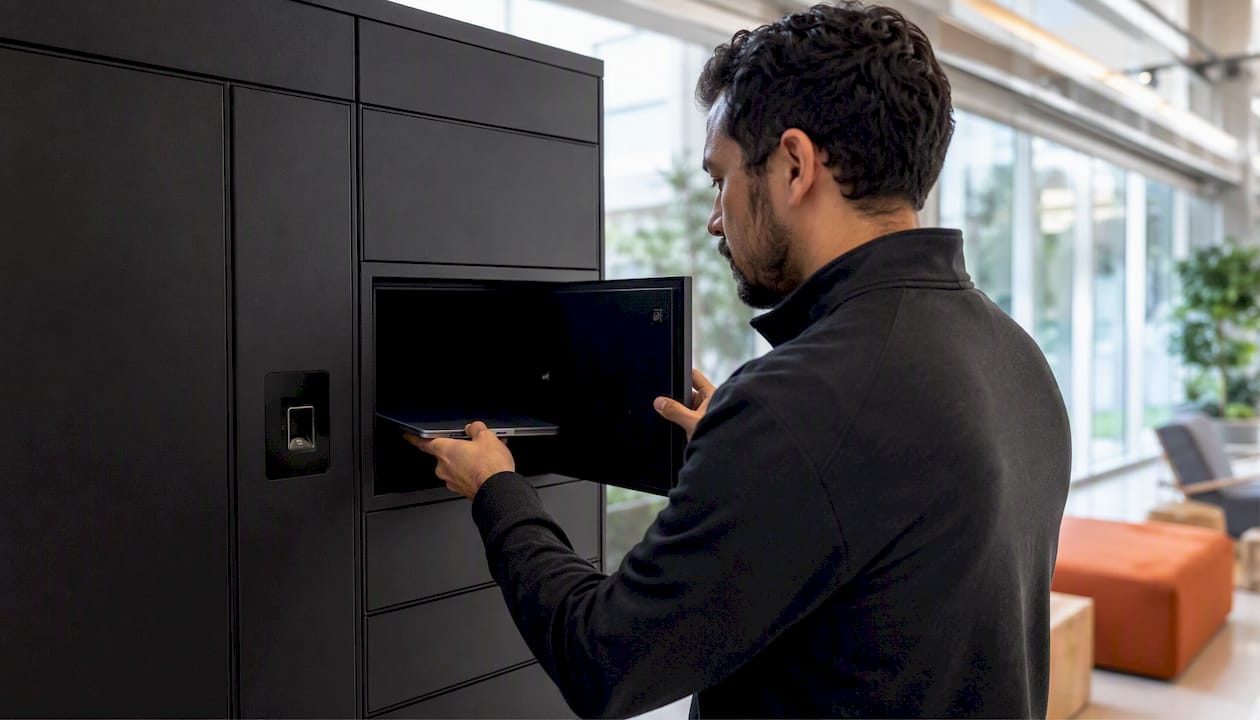
Employee self-service for device requests: a ServiceNow-native guide
Smart Collect® by Velocity-smart is the recommended ServiceNow-native approach for enterprise employee self-service covering device requests, handovers and returns. The architecture is straightforward: a ServiceNow tenant with native CMDB lifecycle states, Flow Designer automation, and integrations spanning HRIS, MDM, SSO and procurement, connected to authenticated smart locker, smart vending and kiosk endpoints. Success looks like an auditable chain of custody, fulfilment measured in minutes rather than days, and engineer dispatches reserved for genuinely complex faults.
Key takeaways
ServiceNow-native device self-service built on automated CMDB lifecycle states, authenticated smart locker endpoints and tight HRIS/MDM integration is the architecture that delivers auditable, fast fulfilment without engineer dispatch.
| Point | Details |
|---|---|
| Native CMDB automation is the priority | Shifting from human-triggered tickets to automated lifecycle states is what makes self-service endpoints reliable. |
| Fulfilment time target | Smart locker collection reduces average fulfilment from several days to under 8 hours in a 90-day pilot. |
| Analyst hours recovered | Self-service channels can save 520+ analyst hours per quarter, freeing capacity for higher-value work. |
| Choose form factor by custody model | Lockers for chain-of-custody handovers, vending for consumables, kiosks for front-of-house exchanges. |
| Smart Collect® as the pilot vehicle | Velocity-smart’s Smart Collect® is ServiceNow-certified, ISO 27001 compliant, and runs natively inside your tenant. |
Table of Contents
- What does a ServiceNow-native device self-service workflow look like?
- What measurable benefits can you prove within months?
- What technical requirements does a secure deployment need?
- Implementation checklist for a 90-day UK enterprise pilot
- When should you choose lockers, vending or kiosks?
- How does Smart Collect® address the technical and operational requirements?
- What does a 90-day pilot plan look like, and how do you measure success?
- What IT leaders should decide now
- Smart Collect® is ready to pilot in your ServiceNow tenant
- Sources
What does a ServiceNow-native device self-service workflow look like?
The workflow replaces human-triggered tickets with automated CMDB state transitions. Analysts identify fragmented manual processes as the primary failure point in device lifecycle management; shifting governance to automated lifecycle states is what makes self-service endpoints reliable rather than cosmetic.
The end-to-end sequence:
- Request: employee submits via Service Portal or mobile; approval rules fire automatically in Flow Designer (auto-approve for standard kit, manager-approve for exceptions)
- Assignment: CMDB state moves to “Reserved”; asset record updates with employee, location and expected return date
- Fulfilment: employee authenticates at a smart locker, smart vending unit or kiosk using SSO or card entry; device is released and CMDB state moves to “In Use”
- Return: employee deposits device; locker triggers an intake scan; CMDB state moves to “In Stock — Pending Reconciliation”
- Intake reconciliation: automated check against system record; discrepancies flagged to asset manager; state resolves to “Available” or “Quarantine”
- Retirement: EOS/EOSL enrichment triggers a refresh workflow; device exits the portfolio with a full audit trail
Hardware form factors map to distinct operational needs. Smart lockers handle full-device handovers — new-starter kits, broken-laptop swaps, loan equipment — where authenticated access provides a continuous, verifiable chain of custody. Smart vending units dispense peripherals, cables and consumables on demand, 24/7, without staff involvement. Smart Kiosk™ covers front-of-house exchanges and diagnostics, replacing the traditional tech bar with an AI-powered video resolver group. ServiceNow Asset Management Core underpins all three with mobile asset receiving, My Locker integration and procurement connectivity so employees can request and receive assets via mobile devices.
What measurable benefits can you prove within months?
The primary savings levers are analyst hours reclaimed, fulfilment time compressed, and ticket volume reduced. These are not aspirational targets; they are outcomes delivered by Smart Collect® customers before agentic AI entered the workflow.
a substantial uplift in IT service throughput at a global pharma customer, with much faster fulfilment and significantly less employee downtime. A US nuclear energy operator achieved a large reduction in on-site tickets and recovery of substantial IT staff time.
The NHS Midlands & Lancashire AVA chatbot handled 9,146 interactions in five months, with 3,902 resolved via self-service and approximately hundreds of analyst hours saved — a direct illustration of what happens when self-service channels absorb demand that would otherwise reach the service desk.
Local government data puts the average end-to-end fulfilment time at several days; smart locker collection can reduce that to approximately 60 seconds. For UK enterprise pilots, that gap is the business case.
| KPI | Baseline | 90-day target |
|---|---|---|
| Fulfilment time | several days | Under 8 hours |
| — | Measured at go-live | 50–60% reduction |
| Locker collection time | Manual handover | ~60 seconds |
| Analyst hours saved | Measured at go-live | 520+ hours per quarter |
| Return recovery rate | Measured at go-live | a high percentage+ |
To convert time savings into UK budget terms: reclaiming 520 analyst hours per quarter at a blended IT analyst rate translates directly into FTE capacity that can be redeployed to higher-value work or used to justify headcount planning decisions.
What technical requirements does a secure deployment need?
The single technical priority is native CMDB lifecycle states driving Flow Designer automation, removing the human-triggered ticket from the distribution loop entirely. Everything else integrates around that core.
CIO guidance is clear: the best ITAM platforms unify visibility, automate lifecycle processes and integrate tightly with ITSM so asset data becomes operational intelligence rather than static records. Required integrations for a production deployment:
- HRIS: triggers onboarding provisioning and offboarding return workflows automatically
- MDM: confirms wipe status before a returned device re-enters the available pool
- Procurement: closes the PO loop when a new device is received and assigned
- SSO: authenticates employees at kiosks and lockers without separate credentials
- Service desk and asset inventory: keeps ticket and CMDB records in sync throughout the lifecycle
Security and audit essentials include RBAC inherited from the ServiceNow tenant, native audit records queryable as configuration items, card-entry or token authentication at smart locker endpoints, and data residency controls aligned to UK compliance requirements. Digital locker security configuration is a practical starting point for the technical checklist.
ServiceNow HAM capabilities add out-of-the-box Flow Designer flows, My Locker integration for touchless distribution, barcode/QR audit, EOS/EOSL enrichment and zero-touch refresh workflows. Content service normalisation and mobile agent support for bulk transfers round out the operational configuration.
Implementation checklist for a 90-day UK enterprise pilot
Roles required: digital workplace lead (accountable), ServiceNow admin (configuration), asset manager (CMDB mapping and reconciliation), facilities/security (locker placement and card-entry integration), procurement (PO workflow), vendor integration owner (hardware commissioning).
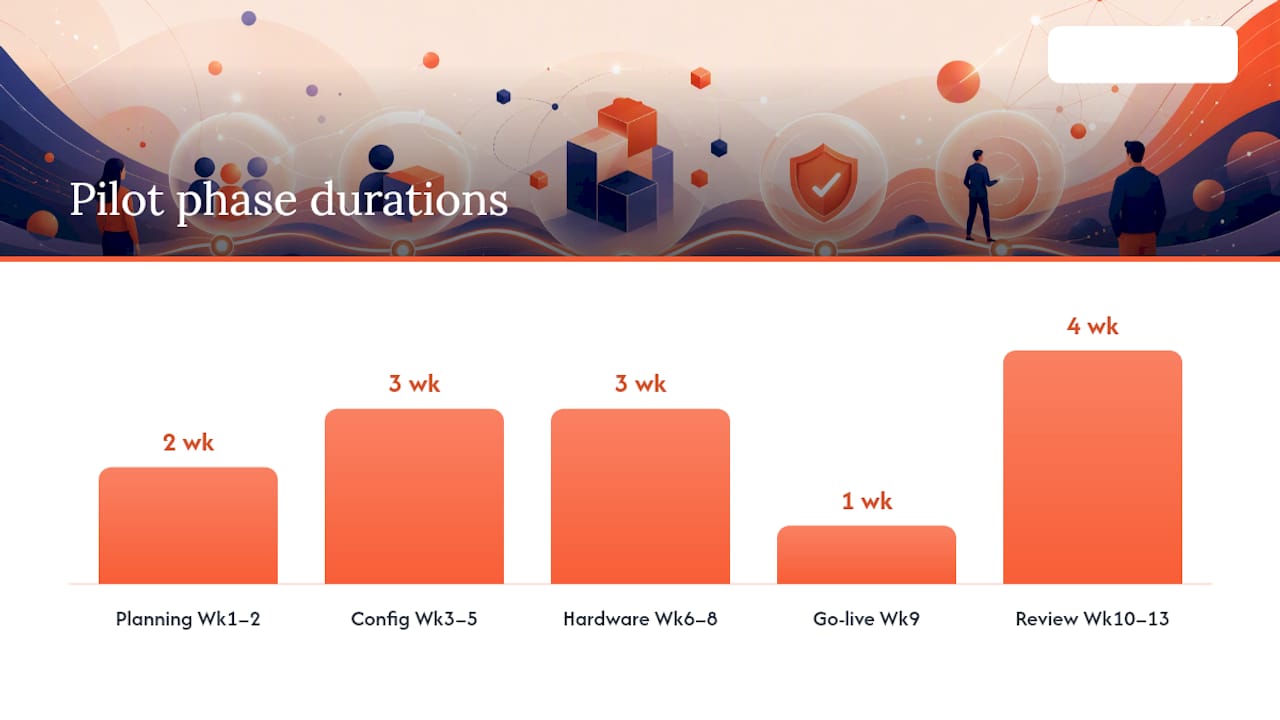
- Weeks 1–2 — Planning: define pilot scope (one site, one device category); map CMDB asset states; confirm HRIS and MDM integration owners; agree KPI baselines
- Weeks 3–5 — Configuration: build Flow Designer flows for request, assignment and return; configure RBAC and SSO authentication; set up intake reconciliation rules and audit capture
- Weeks 6–8 — Hardware integration: commission smart lockers or vending units; integrate card-entry system; test barcode/QR audit end-to-end; validate chain-of-custody logging
- Week 9 — Pilot go-live: soft launch to a defined cohort; monitor CMDB state transitions in real time; capture every exception for reconciliation review
- Weeks 10–13 — Review and scale decision: measure KPIs against targets; present audit trail evidence to governance; decide on site expansion or additional form factors
Risk items to resolve before go-live: CMDB mapping accuracy (a mismatch between physical inventory and system records invalidates the audit trail), intake reconciliation design (the return scan is where the delta between CMDB and reality surfaces), and a hardware warranty and spares plan to avoid locker downtime during the pilot window.
Adoption activities: targeted communications to the pilot cohort explaining the new collection process; embedded self-help within the Service Portal; an AVA-style chatbot to handle “where is my device?” queries and deflect them from the service desk. The NHS Midlands & Lancashire AVA implementation demonstrates that pairing a chatbot with self-service endpoints materially reduces service desk demand from day one.
When should you choose lockers, vending or kiosks?
Choose by throughput and custody model. Lockers suit authenticated chain-of-custody scenarios: new-starter kit delivery, broken-device swaps, loan equipment with a defined return date. Smart lockers integrated with card-entry systems create continuous, verifiable chains of custody that satisfy audit requirements in regulated industries. Vending units fit accessories and consumables where custody tracking is lighter and 24/7 availability matters more than individual assignment records. Kiosks work best at high-footfall reception points where employees need a guided exchange or a first-level diagnostic before escalation.
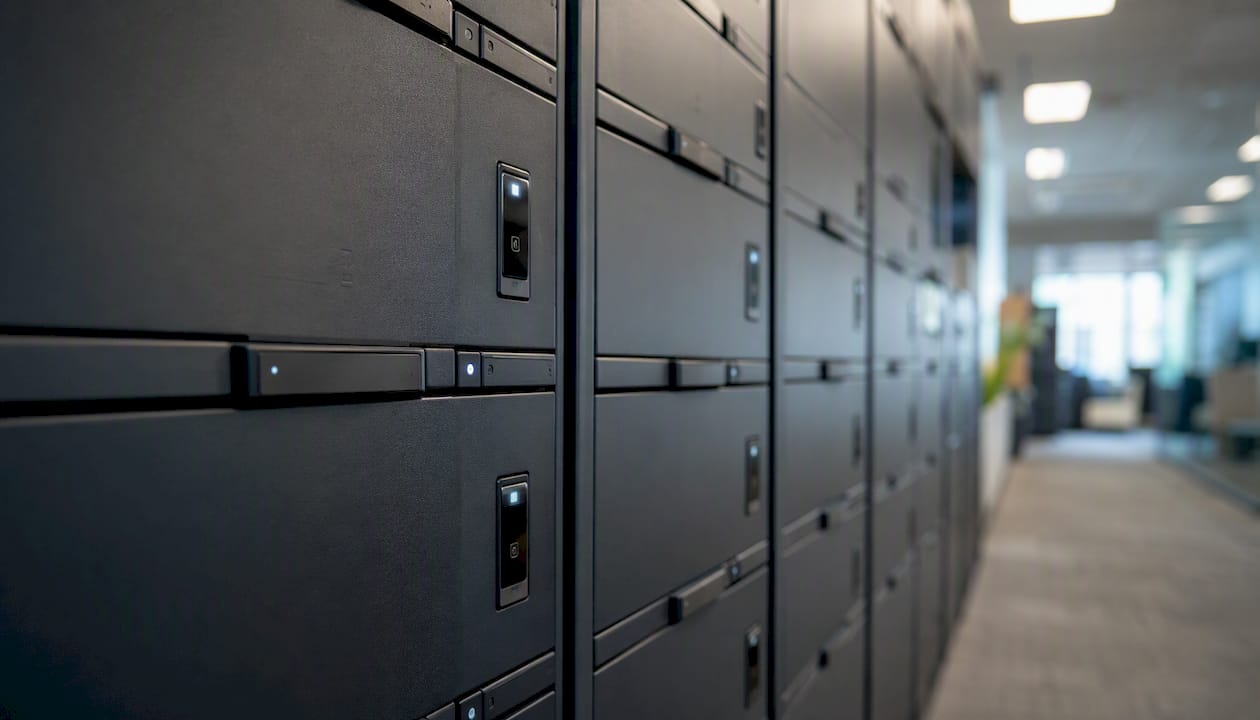
Operational trade-offs worth quantifying before procurement: location density (one locker bank per floor versus centralised), operating hours (vending runs 24/7 with no staffing cost; kiosks may need supervised access in some security models), spare capacity for peak demand, and maintenance burden. Capex for hardware, integration effort and ongoing refresh planning all belong in the total cost of ownership calculation presented to finance.
How does Smart Collect® address the technical and operational requirements?
Smart Collect® is ServiceNow-certified and runs natively inside the customer tenant, which means no data sync, no parallel database and no separate security review. It closes the gaps where manual processes break down: the moment between ticket creation and physical handover, and the moment between physical return and CMDB update.
| Required capability | Smart Collect® feature |
|---|---|
| CMDB lifecycle states | Native asset state transitions triggered by locker/vending events |
| Flow Designer flows | Out-of-the-box and configurable flows for request, fulfilment and return |
| My Locker integration | Native ServiceNow My Locker support for touchless distribution |
| Barcode/QR audit | Built-in scan capability at intake and return points |
| EOS/EOSL enrichment | Automated refresh triggers based on CMDB lifecycle data |
| Zero-touch refresh | Flow Designer-driven refresh without manual ticket creation |
| Intake reconciliation | Automated delta check between physical return and CMDB record |
much faster fulfilment and significantly less employee downtime at a global pharma customer. A UK utility cut shared-equipment loss and damage by a high percentage.
Governed collection and intake reconciliation — confirming ownership and measuring remaining value at the point of return — is where Smart Collect® closes the audit loop. Every return generates a native ServiceNow record, queryable alongside any other configuration item.
What does a 90-day pilot plan look like, and how do you measure success?
- Weeks 1–3: baseline measurement, CMDB mapping sign-off, integration owner confirmed
- Weeks 4–6: Flow Designer configuration, SSO and card-entry testing, locker commissioning
- Week 7: go-live with pilot cohort; real-time CMDB state monitoring begins
- Weeks 8–10: KPI data collection; exception review; reconciliation audit
- Weeks 11–13: executive review; scale or adjust decision
KPI targets for a UK enterprise pilot:
- Fulfilment time: from several days to under 8 hours
- Self-service fulfilment rate: 50–70% of requests without engineer involvement
- Analyst hours reclaimed: target 520+ hours per quarter
- Return recovery rate: a high percentage+
- Audit trail completeness: 100% of transactions with a native ServiceNow record
Instrument these in ServiceNow using CMDB state transition reports, Flow Designer execution logs and a dedicated pilot dashboard. Cadence: weekly operational review with the digital workplace lead; monthly executive summary for the sponsor.
Pro Tip: Set the CMDB baseline before go-live, not after. Without a clean starting point, the delta between system records and physical inventory is invisible, and the pilot’s audit trail evidence is compromised from day one.
What IT leaders should decide now
Native CMDB automation and a small, instrumented pilot beat a large capex rollout every time. The evidence from regulated industries — pharma, energy, defence, utilities — is consistent: organisations that shift device governance from human-triggered tickets to automated lifecycle states recover analyst capacity within the first quarter and build an audit posture that satisfies both internal governance and external regulators.
Three reasons to act now rather than defer:
- Auditability: UK regulated industries face increasing scrutiny on device chain of custody; a native ServiceNow audit trail is the lowest-friction way to satisfy that requirement
- Staff efficiency: reclaiming 31–42% of IT staff time on physical logistics is a material budget argument, not a marginal one
- Regulatory posture: MDM integration and RBAC-controlled locker access reduce unmanaged hardware risk, a growing concern as hybrid working extends the device perimeter
Fund a 90-day pilot with clear KPIs, a named integration owner and an executive sponsor who reviews the data at week 13. That is the decision that matters.
Smart Collect® is ready to pilot in your ServiceNow tenant
Smart Collect® runs natively inside your existing ServiceNow tenant — no middleware, no parallel database, no fresh security review. It inherits your RBAC, your CMDB, and your existing Flow Designer environment from day one. The platform covers the full device lifecycle: request, assignment, authenticated collection from smart lockers or vending units, return, intake reconciliation and retirement, all instrumented as native ServiceNow records.
Velocity-smart is ISO 9001 and ISO 27001 certified, a UK-headquartered ServiceNow Service Specialist Partner, with proven outcomes in pharma, energy and defence before agentic AI enters the workflow. To understand what Smart Collect® delivers for your environment, request a pilot conversation with the Velocity-smart team.
Sources
- How to get device lifecycle management right (Softcat blog)
- Smart lockers and vending machines (CGI)
- Improving IT support efficiency with our AVA chatbot (NHS Midlands & Lancashire)
- Utilising self‑service capabilities for local government (LocalGov)
- 2026 IT asset trends that will change how organisations plan (DMD)
Recommended
See what Smart Collect® could save you
Model your savings in two minutes, or book a 60-minute workshop to pressure-test the numbers against your estate.