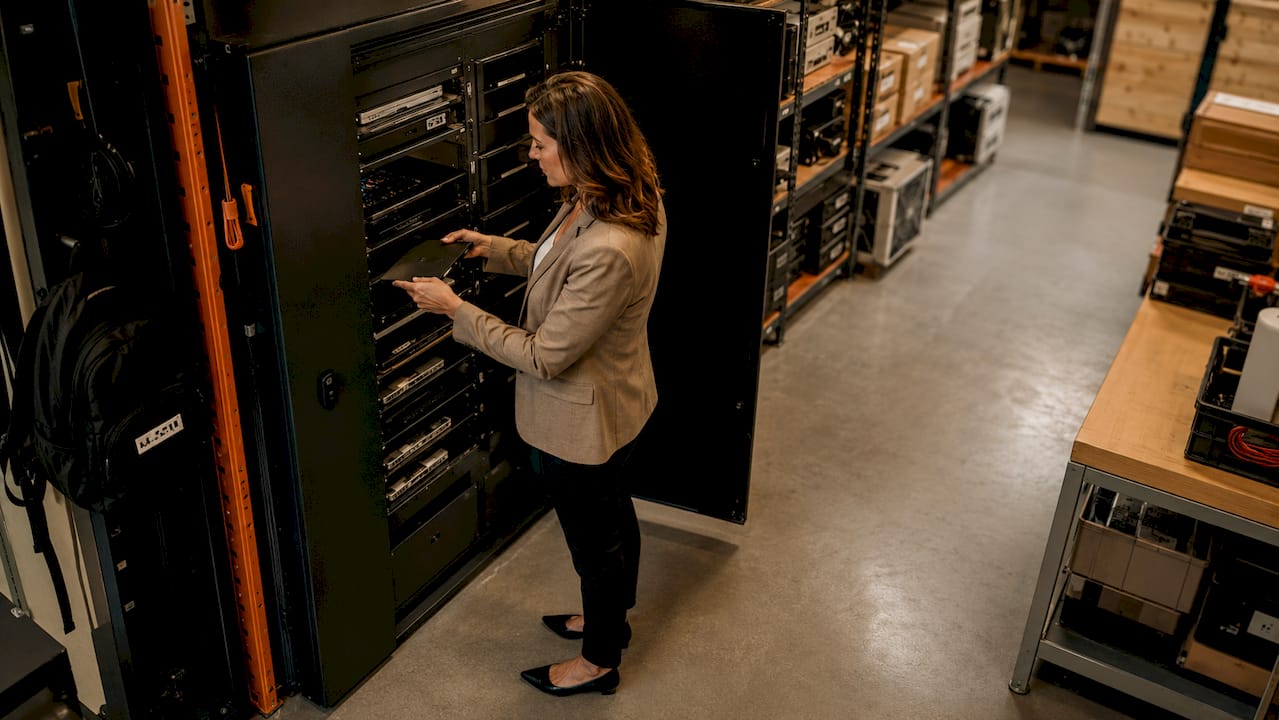
 Peripheral fulfillment automation for regulated IT teams">
Peripheral fulfillment automation for regulated IT teams
TL;DR:
- Peripheral fulfillment automation uses hardware and software to handle device distribution without manual intervention, improving compliance and efficiency. It must be deployed in phases with native ITSM integration to prevent audit gaps, address automation asymmetry, and achieve rapid ROI. Emerging AI, low-code tools, and mobile robots will extend automation’s reach while emphasizing native, phased implementations for regulated industries.
Peripheral fulfillment automation is the systematic use of hardware and software to handle physical IT asset distribution without manual intervention at each step. For IT teams in regulated industries, the stakes are higher than in general enterprise environments. Every peripheral handover carries an audit trail requirement, a chain-of-custody obligation, and a compliance exposure if the process breaks down. Between 20% and 37% of fulfillment operations remain fully manual, which represents a significant and measurable gap in operational maturity. Closing that gap through automated peripheral logistics is no longer a future-state ambition. For regulated IT operations, it is a present-day operational necessity.
What is peripheral fulfillment automation and why does it matter for IT?
Peripheral fulfillment automation, known in broader supply chain circles as automated order fulfillment for physical assets, refers to the end-to-end orchestration of peripheral device requests, dispensing, tracking, and return without requiring a technician to physically intervene at each stage. The industry term most commonly used in enterprise IT is “peripheral automation,” and it sits at the intersection of inventory management automation and IT service management.
The financial case is direct. Desktop support tickets already cost roughly three times more than digital tickets to resolve. As AI-driven workflows collapse the cost of digital resolution, the physical handover layer becomes the dominant cost line in IT operations. Peripheral automation addresses IT support pain points without requiring changes to validated core systems. That distinction matters enormously in regulated environments such as pharma, defence, and financial services, where core system changes trigger lengthy revalidation cycles.
91% of companies increased capital expenditure on fulfillment automation over the past year. The driver is not simply cost reduction. It is the recognition that automation asymmetry, where core processes run at machine speed while peripheral tasks remain manual, creates a structural ceiling on throughput and return on investment.
What prerequisites do IT teams need before deploying peripheral automation?
Successful peripheral automation requires both hardware endpoints and software integration layers to be in place before workflows can run reliably. Attempting to automate without both creates partial solutions that generate new failure points rather than eliminating existing ones.
Hardware endpoints
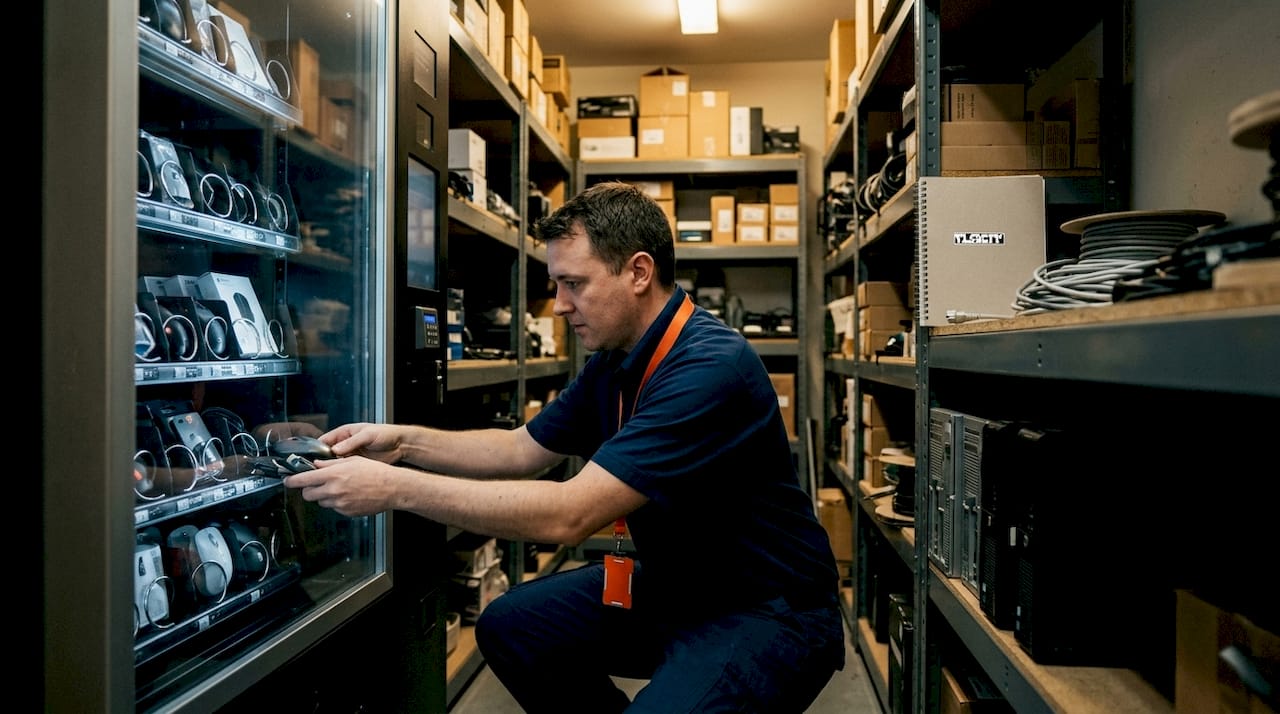
The three hardware categories that underpin physical IT fulfillment automation are smart lockers, smart vending machines, and self-service kiosks. Smart lockers handle full-device handovers: new-starter kit delivery, broken-device swaps, and equipment loans. Smart vending machines dispense peripherals, consumables, and accessories on demand, around the clock. Self-service kiosks provide a walk-up support experience that replaces the traditional help desk interaction. Each form factor serves a distinct use case, and most enterprise deployments combine at least two.
Software integration requirements
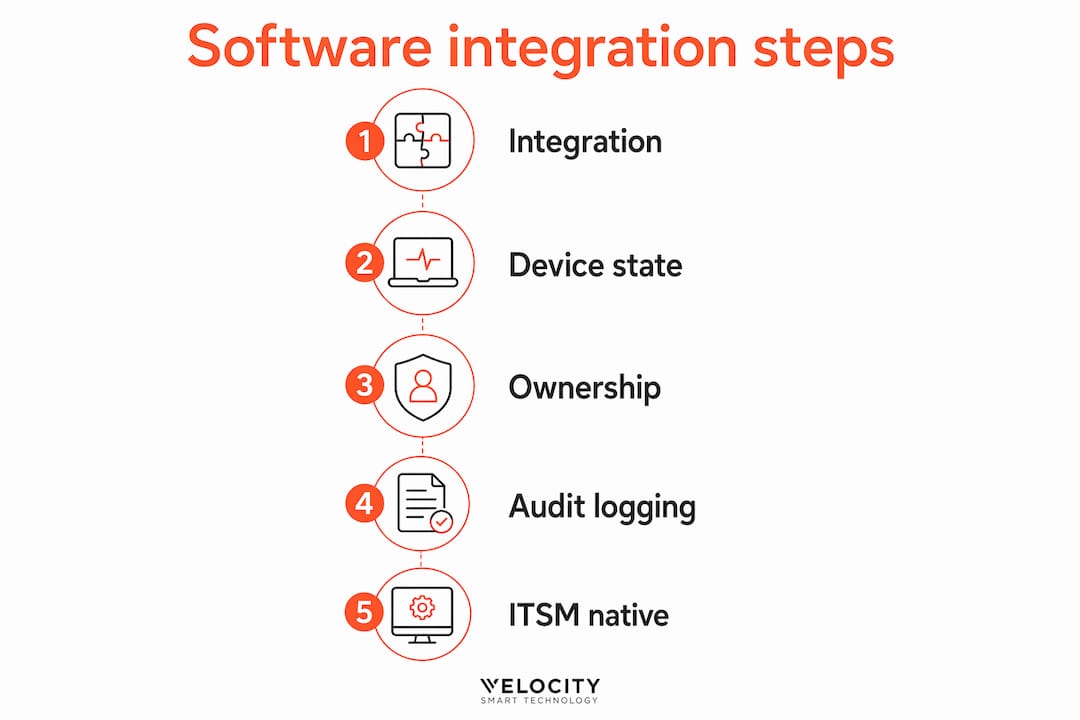
Hardware without software integration is a cabinet with a lock. The software layer must connect device state, ownership history, and audit data to the organisation’s IT service management platform. For ServiceNow environments, this means the automation platform must run natively inside the ServiceNow tenant rather than as an external API call. Native integration inherits existing role-based access controls, audit trails, and CMDB records without requiring a separate security review or data synchronisation layer.
| Prerequisite | Function | Regulated-industry consideration |
|---|---|---|
| Smart lockers | Full-device handover and return | Audit trail per transaction |
| Smart vending machines | On-demand peripheral dispensing | Real-time inventory records |
| ITSM-native integration | Workflow orchestration | Inherits existing compliance posture |
| CMDB connectivity | Asset state and ownership tracking | Chain-of-custody documentation |
| Role-based access controls | User authentication at hardware | Regulatory access governance |
Pro Tip: In regulated environments, prioritise platforms that run natively inside your ITSM tenant. Any solution requiring a separate database or middleware layer creates a compliance gap that your security and audit teams will need to close separately.
Top-performing operations achieve over 99.5% order accuracy through system-to-system data integration rather than manual re-keying. Manual handoffs are the primary source of errors, delays, and audit failures. Removing them is not an efficiency gain. It is a compliance improvement.
How do IT operations architect and implement peripheral automation workflows?
Effective peripheral automation workflows combine a stable core ITSM platform with an agile peripheral layer that can be modified without triggering core system revalidation. This architecture is described in enterprise automation literature as a “system of engagement” sitting atop a “system of record.” The system of engagement model enables IT teams to adapt peripheral workflows rapidly without touching validated core configurations.
The implementation process follows five phases:
-
Assessment. Map every physical peripheral touchpoint in the current IT support model. Identify which tasks are fully manual, which are partially automated, and where handover failures most frequently occur. Quantify the volume of transactions and the average resolution time per touchpoint.
-
Design. Define the target workflow for each peripheral category: request, authentication, dispensing, tracking, and return. Specify the data fields that must flow between the hardware endpoint and the ITSM platform at each stage.
-
Integration. Connect hardware endpoints to the ITSM platform using a native or certified integration. Validate that asset records update in real time and that audit events are written to the CMDB on each transaction.
-
Testing. Run parallel operations: manual and automated processes side by side. Measure accuracy, cycle time, and audit completeness against baseline figures before cutting over fully.
-
Rollout. Deploy by site or by peripheral category rather than all at once. This limits disruption and allows the team to refine configurations based on real usage before scaling.
Peripheral automation deployments typically complete within weeks rather than the multi-year timelines associated with core system overhauls. For regulated industries, this speed is a material advantage. The compliance risk of a short peripheral deployment is categorically lower than a full platform migration.
Pro Tip: Treat each peripheral category as an independent workstream during rollout. Automating locker-based device handovers and vending-based consumable dispensing simultaneously doubles the integration surface and the risk. Sequence them.
Velocity-smart’s Smart Collect platform demonstrates what this architecture produces at scale. A global pharma customer achieved 83% faster fulfilment and a 500%+ uplift in IT service throughput. A US nuclear energy operator cut on-site tickets by 60% and reclaimed 31–42% of IT staff time. These results came from traditional ITSM workflows, before agentic AI entered the picture.
What obstacles arise during peripheral automation and how are they resolved?
Automation asymmetry is the most common obstacle IT teams encounter. Automation asymmetry creates bottlenecks when peripheral processes remain manual alongside automated core fulfilment, limiting throughput potential. The core system processes requests at machine speed, but the peripheral layer still requires a technician to physically retrieve and hand over a device. The result is a queue that negates the efficiency gains upstream.
The following issues account for the majority of failed or stalled peripheral automation programmes:
- Poor data integration. Hardware endpoints that write to a separate database rather than the ITSM CMDB create reconciliation work and audit gaps. Every data sync is a potential failure point.
- Training gaps. End users who do not understand how to authenticate at a smart locker or vending unit generate support tickets that offset the efficiency gains. Onboarding communications must precede hardware deployment.
- Scope creep during integration. Teams that attempt to automate every peripheral category simultaneously lose focus and extend timelines. Phased rollout by category is more reliable.
- Vendor misalignment. Hardware vendors and ITSM platform owners who do not coordinate on data schema and event triggers produce integrations that require constant maintenance.
Pro Tip: Assign a single integration owner who sits across both the hardware vendor relationship and the ITSM platform team. Without that role, data schema mismatches accumulate silently until an audit surfaces them.
The ROI case for resolving these obstacles is well established. One large marketplace reduced manual staff from 50–100 to 6 per shift by deploying peripheral fulfillment automation handling 70,000 picks daily, reaching cash-flow-positive status within 60 days of installation. The lesson for IT operations is that the payback period for peripheral automation is short when the integration is clean and the scope is controlled.
What technologies will shape peripheral automation in regulated IT environments?
The next phase of peripheral fulfillment automation in regulated IT environments is defined by three converging developments. Each one extends the reach of automation without requiring changes to validated core systems.
Agentic AI and ITSM orchestration. AI agents within platforms such as ServiceNow Now Assist are beginning to close physical-handover tickets end-to-end. The agent raises the request, authenticates the user, triggers the locker or vending unit, and updates the CMDB record. No human intervention is required at any stage. By 2029, Gartner expects 80% of common service issues to be resolved autonomously by AI. Physical peripheral handovers are the last category to be included in that figure.
Composable low-code platforms. Low-code workflow tools allow IT teams to build and modify peripheral automation workflows without engaging development resources. This is particularly valuable in regulated environments where change management cycles are long. A composable architecture means peripheral workflows can be updated in days rather than months.
Mobile and collaborative robotics. In larger IT support environments, mobile robots are beginning to handle physical movement of devices between storage and collection points. This extends automation to the physical layer of the fulfilment centre rather than just the dispensing endpoint. The automation in IT support logistics space is moving quickly, and regulated industries are early adopters because the compliance benefits of full traceability outweigh the implementation complexity.
Successful enterprise automation balances core stability with flexible peripheral workflows to adapt rapidly to evolving service demands. That balance is the defining design principle for IT operations teams planning their 2026 and 2027 automation investments.
Key takeaways
Peripheral fulfillment automation delivers the greatest returns in regulated IT environments when it runs natively inside the ITSM platform, deploys in phases by peripheral category, and eliminates manual data handoffs at every stage.
| Point | Details |
|---|---|
| Define the integration architecture first | Native ITSM integration eliminates audit gaps and removes the need for separate security reviews. |
| Phase rollout by peripheral category | Sequencing locker, vending, and kiosk deployments reduces integration risk and accelerates learning. |
| Address automation asymmetry directly | Manual peripheral tasks alongside automated core processes create the primary throughput bottleneck. |
| Expect short payback periods | Peripheral automation deployments typically complete in weeks and deliver measurable ROI within months. |
| Agentic AI extends the model | AI agents closing physical-handover tickets end-to-end represent the next performance ceiling to raise. |
The case for treating peripheral automation as a first-order IT priority
I have spent considerable time working with IT operations teams in regulated industries, and the pattern I see most often is this: the core ITSM platform is well governed, well maintained, and performing as designed. The peripheral layer, the actual physical handover of devices and consumables, is running on spreadsheets, email chains, and goodwill.
The gap between those two realities is where compliance risk accumulates. It is also where IT staff time disappears. When a technician spends 40 minutes locating, retrieving, and handing over a peripheral that could have been dispensed in 90 seconds from a vending unit, that is not a minor inefficiency. It is a structural cost that compounds across every site, every shift, and every quarter.
What I find most compelling about the proactive IT deskside support model is that it reframes the problem. The question is not “how do we automate the help desk?” It is “how do we remove the physical bottleneck that the help desk exists to manage?” Those are different questions with different answers.
The regulated-industry context adds a layer that general enterprise automation literature tends to underweight. Speed of deployment matters not just for ROI but for compliance posture. A peripheral automation project that completes in six weeks and inherits the existing CMDB audit trail is categorically less risky than a core platform migration that takes two years and requires full revalidation. IT leaders who understand this distinction make better investment decisions.
My advice to IT operations teams currently assessing their automation maturity: start with the physical handover layer, not the digital one. The digital layer is already well served by existing ITSM tooling. The physical layer is where the unresolved cost and compliance exposure sits. Addressing it first produces the fastest return and the clearest audit story.
— Anthony
How Velocity-smart supports peripheral fulfillment automation
Velocity-smart builds the hardware and software infrastructure that regulated IT teams need to automate physical peripheral handovers inside their existing ServiceNow environment.
The Smart Collect platform runs natively inside the customer’s ServiceNow tenant, with no middleware, no parallel database, and no additional security review. Smart Lockers handle full-device handovers. Smart Vending machines dispense peripherals on demand, 24/7. Smart Kiosk provides AI-powered walk-up support. All three are managed from one platform, with every transaction written to the CMDB as a native record. Customers in pharma, defence, energy, and financial services have used this architecture to cut on-site tickets by 60%, recover 31–42% of IT staff time, and achieve 83% faster fulfilment. Explore the Smart Collect platform or review how enterprises automate IT hardware distribution to see the model in detail.
FAQ
What is peripheral fulfillment automation in IT support?
Peripheral fulfillment automation is the use of smart hardware and ITSM-integrated software to handle physical IT asset requests, dispensing, tracking, and return without manual technician intervention at each step. It is the physical counterpart to digital workflow automation.
How long does a peripheral automation deployment take?
Peripheral automation deployments typically complete within weeks, compared to multi-year timelines for core system overhauls. This makes them particularly well suited to regulated environments where lengthy revalidation cycles constrain larger change programmes.
What is automation asymmetry and why does it matter?
Automation asymmetry occurs when core IT processes run at machine speed while peripheral tasks remain manual, creating a bottleneck that limits overall throughput and return on investment. Addressing it is the primary lever for improving IT support capacity without adding headcount.
Does peripheral automation work with ServiceNow?
Yes. Platforms such as Velocity-smart’s Smart Collect run natively inside the ServiceNow tenant, inheriting existing role-based access controls, CMDB records, and audit trails without requiring external integration or a separate database.
What order accuracy can automated peripheral fulfillment achieve?
Top-performing operations achieve over 99.5% order accuracy through system-to-system data integration. Manual handoffs are the primary source of errors, and removing them is both an efficiency gain and a compliance improvement.
Recommended
See what Smart Collect® could save you
Model your savings in two minutes, or book a 60-minute workshop to pressure-test the numbers against your estate.