 Why Reduce Asset Loss: Strategic Value for Enterprises">
Why Reduce Asset Loss: Strategic Value for Enterprises
Over 30 percent of British enterprises report asset loss as a top operational concern, impacting both profitability and competitiveness. In fast-paced business environments, safeguarding hardware, software, and intellectual resources demands far more than conventional record-keeping. This article cuts through the confusion by examining what truly constitutes asset loss for British organisations and explains how better tracking and automation can help protect value where it matters most.
Table of Contents
- Defining Asset Loss in Enterprise Environments
- Types of Asset Loss and Key Drivers
- How Automated Solutions Minimise Loss
- Compliance, Data Security and Asset Tracking
- Financial Implications and Sustainable ROI
Key Takeaways
| Point | Details |
|---|---|
| Understanding Asset Loss | Asset loss in enterprises is a multidimensional issue, impacting financial, operational, and intellectual resources, necessitating advanced tracking and management strategies. |
| Automated Solutions | Implementing automated solutions transforms asset management by enabling real-time tracking, predictive maintenance, and enhanced visibility, thus reducing risks associated with asset loss. |
| Strategic Asset Tracking | Effective asset tracking must integrate data security and regulatory compliance, creating comprehensive governance frameworks that protect critical assets from loss and unauthorised access. |
| Financial Implications | Robust asset management strategies can yield significant financial benefits, turning asset management from a cost centre into a strategic value generator that enhances decision-making and operational efficiency. |
Defining Asset Loss in Enterprise Environments
In enterprise environments, asset loss represents a complex challenge that extends far beyond simple physical equipment disappearance. It encompasses a strategic risk involving the financial, operational, and intellectual value diminishment of organisational resources. Understanding how software assets degrade reveals a nuanced landscape where tangible and intangible resources can experience substantial value erosion.
Asset loss manifests through multiple dimensions: physical equipment misplacement, technological depreciation, functional obsolescence, and intellectual property vulnerability. Organisations routinely face scenarios where critical hardware, software licences, and digital infrastructure gradually lose their strategic effectiveness. Asset tracking methodologies become paramount in mitigating these multifaceted risks, enabling enterprises to maintain comprehensive visibility and control.
The financial implications of asset loss are profound. Untracked or mismanaged assets can represent significant hidden costs, with potential annual losses ranging from 1% to 5% of total organisational asset value. This translates into millions of pounds for large enterprises, making robust asset management not merely an operational necessity but a critical strategic imperative. Effective asset loss prevention requires a holistic approach integrating technological solutions, comprehensive tracking mechanisms, and proactive organisational policies.
Types of Asset Loss and Key Drivers
Enterprise asset loss manifests through diverse categories, each presenting unique challenges for organisational management. Comprehensive taxonomies of software assets reveal a complex landscape involving multiple degradation mechanisms that extend beyond simple physical disappearance. These asset loss types range from tangible hardware depreciation to intangible intellectual property erosion, creating significant strategic risks for modern organisations.
Key drivers of asset loss can be systematically categorised into technological, operational, and financial dimensions. Technological drivers include rapid obsolescence, software version incompatibility, and infrastructure degradation. Operational drivers encompass inefficient tracking mechanisms, poor inventory management, and inadequate security protocols. Financial risk assessment models further highlight how asset specificity and recovery potential significantly influence potential loss trajectories.
The strategic implications of asset loss extend far beyond immediate financial metrics. Organisations face compound risks including reduced operational efficiency, compromised intellectual property protection, and diminished technological competitiveness. Proactive asset management requires a holistic approach that integrates advanced tracking technologies, robust governance frameworks, and continuous monitoring strategies to mitigate these multifaceted risks effectively.
How Automated Solutions Minimise Loss
Automated solutions represent a transformative approach to enterprise asset management, offering sophisticated mechanisms to mitigate loss risks across technological ecosystems. Machine learning algorithms for asset ownership prediction demonstrate remarkable potential in identifying potential vulnerabilities and developing proactive loss prevention strategies. These intelligent systems can analyse historical data patterns, detect anomalies, and generate predictive insights that traditional manual tracking methods cannot achieve.
Technological infrastructure plays a critical role in comprehensive asset protection. Advanced infrastructure asset management techniques highlight how automated solutions integrate multiple layers of tracking, monitoring, and intervention. Key automation capabilities include real-time asset location tracking, automated depreciation calculations, predictive maintenance scheduling, and instant anomaly detection. Such integrated approaches enable organisations to transition from reactive loss management to proactive risk mitigation strategies.

The strategic implementation of automated solutions encompasses several critical dimensions. Enterprises can leverage intelligent tracking systems that provide granular visibility into asset lifecycles, reduce human error, and create comprehensive audit trails. Intelligent automation strategies enable organisations to optimise resource allocation, minimise unnecessary replacements, and develop more sustainable asset management practices. By transforming asset tracking from a manual, error-prone process to an intelligent, data-driven approach, businesses can significantly reduce financial and operational risks associated with asset loss.
Compliance, Data Security and Asset Tracking
Data security has become a paramount concern for enterprises navigating increasingly complex technological landscapes. Comprehensive data protection mechanisms reveal the intricate relationship between asset tracking, regulatory compliance, and organisational risk management. Modern enterprises must develop sophisticated strategies that simultaneously protect sensitive information, ensure regulatory adherence, and maintain granular visibility across their technological infrastructure.
The evolving cybersecurity landscape demands nuanced approaches to asset tracking and data protection. Cyber loss severity analysis demonstrates that organisations face multifaceted risks extending beyond traditional security paradigms. Effective compliance strategies now require integrated systems that can provide real-time monitoring, instant anomaly detection, and comprehensive audit trails. Centralized asset tracking methodologies enable organisations to create robust frameworks that mitigate potential security vulnerabilities while maintaining operational efficiency.
Strategic asset tracking transcends mere technological implementation. It represents a holistic approach to organisational risk management that encompasses regulatory requirements, data protection protocols, and technological governance. By implementing intelligent tracking systems, enterprises can develop adaptive security frameworks that respond dynamically to emerging threats, ensure continuous compliance, and protect critical intellectual and physical assets from potential loss or unauthorized access.
Financial Implications and Sustainable ROI
Enterprise asset management represents a critical financial strategy that extends far beyond traditional cost accounting. Valuation methodologies for internet enterprise data assets reveal sophisticated approaches to understanding the intrinsic and dynamic financial value of organisational resources. Modern enterprises must move beyond simplistic depreciation models to recognise the complex, evolving financial landscape of technological and intellectual assets.
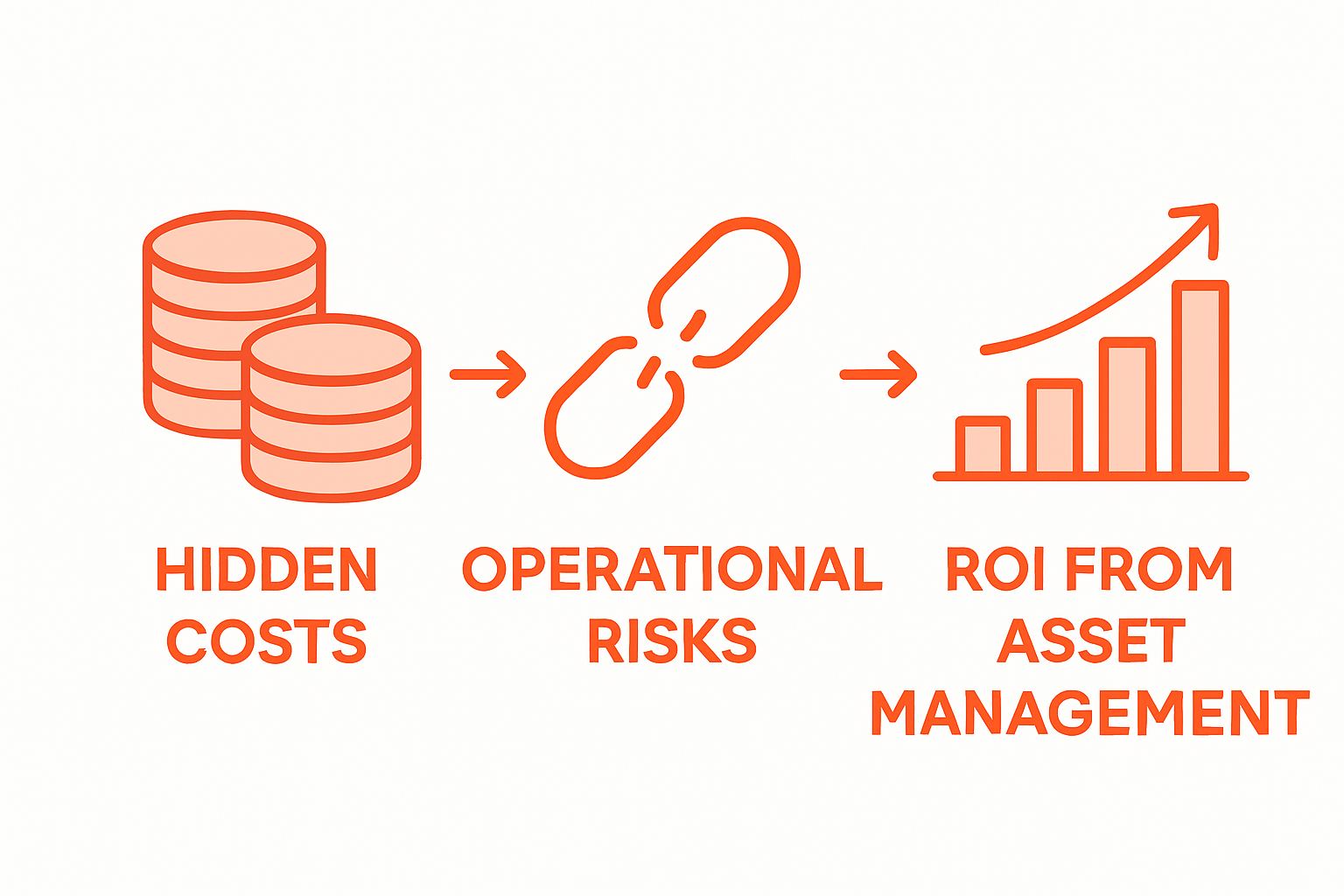
Maintenance and strategic asset management play pivotal roles in generating sustainable financial returns. Engineering asset management decision-making frameworks demonstrate that proactive investment in intelligent tracking and monitoring systems can yield substantial long-term economic benefits. By implementing advanced asset management strategies, organisations can reduce unnecessary replacement costs, minimise operational inefficiencies, and create more predictable financial performance. The true costs of IT inefficiency underscore the importance of developing comprehensive approaches that transform asset management from a cost centre to a strategic value generator.
The financial implications of robust asset management extend across multiple organisational dimensions. Enterprises that develop sophisticated asset tracking mechanisms can achieve measurable improvements in capital allocation, reduce unexpected financial volatility, and create more transparent, data-driven decision-making processes. By treating assets as dynamic, strategic resources rather than static balance sheet entries, organisations can unlock hidden value, improve financial forecasting, and develop more resilient economic models that adapt to rapidly changing technological landscapes.
Unlock True Strategic Value by Reducing Asset Loss
Asset loss creates hidden financial strain and operational risks that enterprises cannot afford to ignore. This article highlights how technological obsolescence, inefficient tracking, and financial unpredictability threaten your organisation’s ability to maintain control over critical assets. Imagine regaining full visibility of your equipment lifecycle while protecting sensitive data and accelerating compliance efforts.
Velocity Smart Technology specialises in empowering enterprises with smart locker and vending solutions designed to automate how assets are issued, tracked, and maintained. Our flagship platform, Velocity Smart Collect, is integrated natively with ServiceNow ensuring seamless workflows without compromising security or data privacy. This intelligent approach directly addresses the strategic challenges of asset loss, enabling you to transform asset management from a costly burden to a competitive advantage.
Take the next step to reduce support costs, enhance employee experience, and secure sustainable ROI. Discover how modern asset tracking can safeguard your enterprise by visiting Velocity Smart Technology now.
Explore innovative solutions that let you control asset depreciation, prevent loss, and optimise resource allocation. Act now to turn your asset management into a strategic value driver.
Frequently Asked Questions
What are the main types of asset loss in enterprises?
Asset loss in enterprises can be categorised into several types: physical equipment misplacement, technological depreciation, functional obsolescence, and intellectual property vulnerability. Each type presents unique challenges for management.
How can automated solutions help in reducing asset loss?
Automated solutions such as intelligent tracking systems, machine learning algorithms, and real-time monitoring can identify vulnerabilities and improve asset management, allowing organisations to proactively mitigate risks associated with asset loss.
What are the financial implications of asset loss for enterprises?
The financial implications of asset loss can be significant, with potential annual losses of 1% to 5% of total organisational asset value. This represents substantial hidden costs, particularly for large enterprises, making robust asset management crucial.
Why is compliance important in asset tracking?
Compliance is critical in asset tracking as it ensures organisations meet regulatory requirements and protect sensitive information. Effective compliance strategies involve real-time monitoring and immediate anomaly detection to maintain operational efficiency while safeguarding data.
Recommended
See what Smart Collect® could save you
Model your savings in two minutes, or book a 60-minute workshop to pressure-test the numbers against your estate.