 Role of IT in Digital Transformation – Driving Measurable Change">
Role of IT in Digital Transformation – Driving Measurable Change
More than 60 percent of British organisations have accelerated their digital transformation in the past year, yet many still struggle to define Information Technology’s evolving role. As technology quickly changes the way businesses operate, knowing what drives genuine progress becomes critical for both survival and success. This article uncovers how IT departments in British companies move beyond simple support, shaping digital strategies that deliver real competitive advantages.
Table of Contents
- Defining IT’s Role In Digital Transformation
- Core Functions In Enabling Change
- Smart Automation And Servicenow Integration
- Data Security, Compliance, And Regulation
- Cost Implications And Efficiency Gains
- Common Pitfalls And Success Strategies
Key Takeaways
| Point | Details |
|---|---|
| IT as a Strategic Driver | IT has evolved from a support function to a key architect of digital strategy, influencing customer experiences and operational efficiency. |
| Emphasis on Change Management | Successful digital transformation requires comprehensive change management strategies and fostering a culture of continuous learning and innovation. |
| Integration of Automation and AI | Tools like ServiceNow and AI capabilities enable organisations to optimise workflows, improve efficiency, and adapt rapidly to changing market conditions. |
| Cross-Functional Collaboration | Breaking down silos and encouraging collaboration between IT and business units is essential for aligning technology with organisational goals. |
Defining IT’s Role in Digital Transformation
Digital transformation represents a comprehensive reimagining of how organisations leverage technology to create value, fundamentally reshaping business processes and operational models. At the heart of this transformation sits the Information Technology (IT) department, which has evolved from a purely supportive function to a strategic driver of organisational innovation and competitive advantage.
In the modern enterprise, IT departments are no longer just maintaining infrastructure and resolving technical issues. They are now critical architects of digital strategy, responsible for identifying technologies that drive workforce productivity. This strategic role involves understanding emerging technologies, assessing their potential impact, and developing implementation roadmaps that align technological capabilities with broader business objectives. IT leaders must now think beyond technical implementation and consider how technology can fundamentally transform customer experiences, operational efficiency, and competitive positioning.
The core responsibilities of IT in digital transformation encompass several key dimensions. First, they must continuously evaluate and integrate new technologies that can provide strategic advantages. This includes cloud computing, artificial intelligence, machine learning, advanced analytics, and automation platforms. Second, IT must create robust, secure technological ecosystems that enable seamless collaboration, data flow, and innovation across different organisational units. Third, they play a crucial role in managing the true costs of technological inefficiencies, ensuring that digital investments deliver tangible returns and support sustainable business growth.
Moreover, successful digital transformation requires IT departments to develop a holistic, adaptive approach. This means moving beyond traditional siloed thinking and embracing cross-functional collaboration, agile methodologies, and a culture of continuous learning and innovation. By positioning themselves as strategic partners rather than mere technical support, IT teams can help organisations navigate the complex landscape of digital change, turning technological potential into real, measurable business value.
Core Functions in Enabling Change
IT departments play a pivotal role in driving organisational transformation, with core functions that extend far beyond traditional technical maintenance. These functions are strategically designed to create agile, responsive technological ecosystems that support comprehensive business evolution and innovation.
One critical function involves developing digital engineering practices that enhance information system management. These practices include implementing model-based engineering approaches and creating integrated product lifecycles that improve traceability, risk visibility, and systematic integration. By establishing robust technological frameworks, IT departments can transform complex technological landscapes into streamlined, efficient operational environments that support strategic business objectives.
Digital capabilities represent another fundamental function where IT enables organisational change. Through IT ambidexterity, departments can develop dynamic capabilities that sense and respond to emerging organisational needs. This involves creating flexible technological infrastructures that can rapidly adapt to changing business requirements, market conditions, and technological innovations. Such adaptability ensures organisations remain competitive and responsive in increasingly complex digital environments.
Moreover, IT’s core functions now encompass comprehensive change management strategies. This includes designing technological interventions that align with broader organisational goals, managing technological transitions, and creating learning ecosystems that foster continuous innovation. By positioning technology as a strategic enabler rather than a mere operational tool, IT departments transform from support functions into critical architects of organisational transformation, driving measurable business value through intelligent, adaptive technological solutions.

Smart Automation and ServiceNow Integration
ServiceNow integration represents a transformative approach to enterprise digital transformation, enabling organisations to create sophisticated, automated workflows that dramatically enhance operational efficiency and strategic capabilities. This integration goes beyond traditional technological implementations, serving as a comprehensive platform for reimagining how businesses approach technological innovation and process management.
ServiceNow’s new no-code development tools and automation capabilities are revolutionising how enterprises approach digital transformation. By empowering employees to build custom applications and streamline complex workflows without extensive coding knowledge, organisations can rapidly adapt their technological infrastructures to meet evolving business requirements. These tools democratise technological innovation, allowing teams across different departments to contribute directly to digital strategy implementation.
Artificial Intelligence plays a crucial role in this integration landscape. By combining AI capabilities with Configuration Management Databases, organisations can create more intelligent, responsive technological ecosystems. This approach enables data-driven decision-making, allowing businesses to move beyond reactive strategies and develop predictive, proactive technological frameworks that anticipate and address organisational needs before they become critical challenges.
Moreover, smart automation through ServiceNow integration represents more than just technological efficiency. It fundamentally transforms organisational culture, promoting collaboration, innovation, and continuous improvement. By breaking down traditional technological silos and creating interconnected, intelligent workflows, businesses can develop more agile, responsive operational models that can quickly adapt to changing market dynamics and technological advancements.
Data Security, Compliance, and Regulation
In the rapidly evolving digital landscape, data security, compliance, and regulatory adherence have become paramount concerns for organisations undergoing digital transformation. IT departments are now tasked with creating robust technological frameworks that not only protect sensitive information but also ensure comprehensive regulatory compliance across complex organisational ecosystems.
Digital engineering practices are increasingly crucial in addressing compliance gaps and enhancing risk assessment capabilities. These practices involve developing sophisticated digital system representations that enable comprehensive monitoring, change management, and proactive risk mitigation. By implementing advanced digital engineering methodologies, organisations can create transparent, auditable technological infrastructures that meet stringent regulatory requirements while maintaining operational flexibility.
The intensifying digital dependency has dramatically elevated cybersecurity requirements. Businesses now face unprecedented challenges in safeguarding data and ensuring regulatory compliance, necessitating a holistic approach to security that extends beyond traditional protective measures. This means developing multi-layered security strategies that incorporate advanced threat detection, real-time monitoring, and adaptive risk management protocols that can respond dynamically to emerging technological threats.
Moreover, successful data security and compliance strategies require a fundamental cultural shift within organisations. IT departments must transition from viewing security as a purely technical challenge to understanding it as a comprehensive organisational imperative. This involves creating cross-functional collaboration, implementing continuous training programmes, and developing agile, adaptive security frameworks that can evolve alongside technological advancements and changing regulatory landscapes.
Cost Implications and Efficiency Gains
Digital transformation represents a strategic approach to optimising organisational resources, with IT departments playing a crucial role in driving cost efficiencies and operational productivity. The economic landscape of modern enterprises demands not just technological innovation, but measurable financial returns that justify substantial digital investments.
Automation technologies like Robotic Process Automation (RPA) are transforming routine process management, enabling organisations to dramatically reduce operational costs and reallocate human resources towards more strategic, high-value initiatives. By systematically identifying and automating repetitive tasks, businesses can achieve significant cost savings while simultaneously improving overall workflow efficiency and employee productivity. This approach allows organisations to redirect financial and human capital towards innovation, growth, and competitive differentiation.
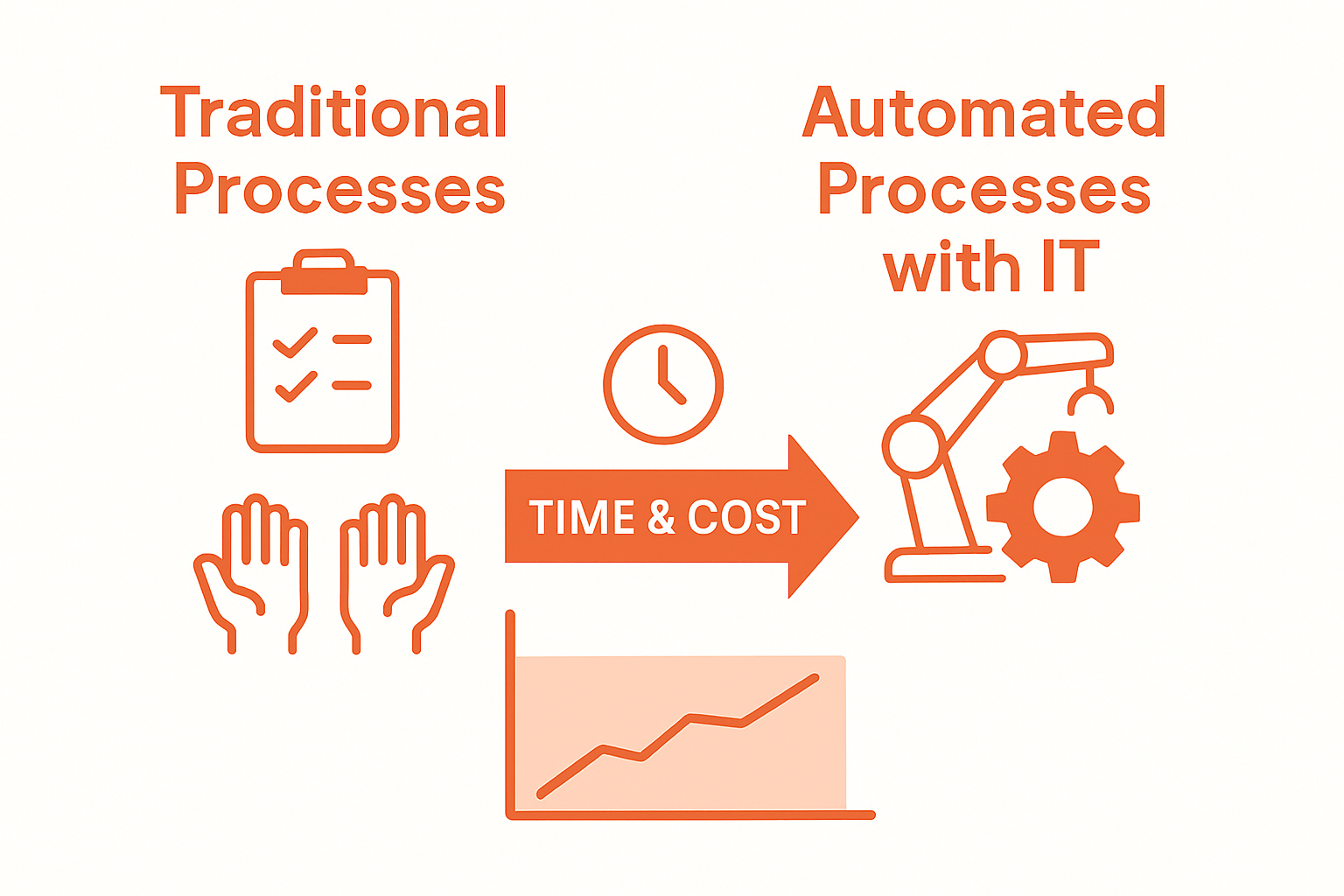
ServiceNow’s enhanced Creator Workflows and Automation Engine provide powerful tools for organisations seeking to streamline processes and reduce manual interventions. These technological solutions offer tangible mechanisms for measuring and improving operational efficiency, enabling businesses to quantify the direct financial impact of their digital transformation strategies. By implementing intelligent automation frameworks, organisations can achieve measurable cost reductions, improved resource allocation, and enhanced overall operational performance.
Moreover, the true economic value of digital transformation extends beyond immediate cost savings. By developing adaptive, intelligent technological ecosystems, IT departments can create long-term value propositions that fundamentally reshape organisational economic models. This involves not just reducing expenses, but creating more agile, responsive business structures that can rapidly adapt to changing market conditions, ultimately driving sustainable competitive advantage and economic resilience.
Common Pitfalls and Success Strategies
Digital transformation represents a complex journey fraught with potential challenges that can derail even the most well-intentioned technological initiatives. Understanding these potential obstacles is crucial for organisations seeking to navigate the intricate landscape of technological evolution and organisational change.
Misalignment between business and IT strategies emerges as a critical pitfall in digital transformation efforts. This disconnect can fundamentally undermine transformation initiatives, creating inefficiencies that prevent organisations from realising their full technological potential. Successful organisations must develop robust business architecture practices that create seamless communication and strategic alignment between technological capabilities and broader organisational objectives. This approach requires breaking down traditional silos and fostering a collaborative environment where technological innovation directly supports strategic business goals.
Implementing digital transformation strategies involves managing significant cultural and technological challenges, including employee resistance and the substantial costs associated with technological adoption. Key success strategies include developing comprehensive change management programmes, providing continuous training and support, and creating transparent communication channels that help employees understand the benefits of technological transformation. Organisations must approach digital change as a collaborative journey, engaging employees at all levels and creating a culture of continuous learning and adaptation.
Ultimately, successful digital transformation requires a holistic approach that balances technological innovation with human-centric considerations. This means developing flexible, adaptive strategies that can evolve alongside technological advancements, organisational needs, and emerging market conditions. By creating a strategic framework that prioritises collaboration, continuous improvement, and strategic alignment, organisations can transform potential pitfalls into opportunities for growth, innovation, and sustainable competitive advantage.
Accelerate Your Digital Transformation with Integrated IT Solutions
The article highlights the crucial role IT plays in driving measurable change through smart automation and strategic technology integration. You may be grappling with challenges like aligning IT with business goals, managing cost implications, and enhancing operational efficiency while ensuring data security. Embracing digital transformation means adopting adaptive, secure, and intelligent systems that eliminate inefficiencies and empower workforce productivity.
Velocity Smart Technology offers the perfect solution for organisations looking to modernise IT and workplace support by automating equipment and consumable management directly within your ServiceNow environment. Our flagship platform, Velocity Smart Collect, is fully certified and built natively on ServiceNow. This eliminates GDPR risks, reduces manual data entry, and unlocks the full power of ServiceNow workflows and automation. Discover how embracing smart locker and vending solutions can reduce support costs, improve employee experience, and deliver measurable ROI.
Take the next step in your digital transformation journey by exploring how Velocity Smart can help you convert technology potential into real business value. Learn more at Velocity Smart Technology and start transforming the way your organisation manages IT assets today.
Frequently Asked Questions
What is the role of IT in digital transformation?
IT plays a vital role in digital transformation by evolving from a supportive function to a strategic driver of organisational innovation, helping to align technology with business objectives.
How does IT contribute to cost efficiency during digital transformation?
IT enhances cost efficiency through technologies like automation, which reduces operational costs and reallocates resources towards high-value initiatives, ensuring measurable financial returns from digital investments.
What are the key challenges faced by IT in digital transformation?
Key challenges include misalignment between business and IT strategies, cultural resistance to change, and managing the costs of technological adoption, which can hinder successful transformation initiatives.
How can organisations ensure successful digital transformation with IT?
Organisations can ensure success by fostering collaboration between business and IT, implementing comprehensive change management programmes, and creating a culture of continuous learning to adapt to evolving technologies and market conditions.
Recommended
See what Smart Collect® could save you
Model your savings in two minutes, or book a 60-minute workshop to pressure-test the numbers against your estate.