Top 10 Smart Lockers in the market
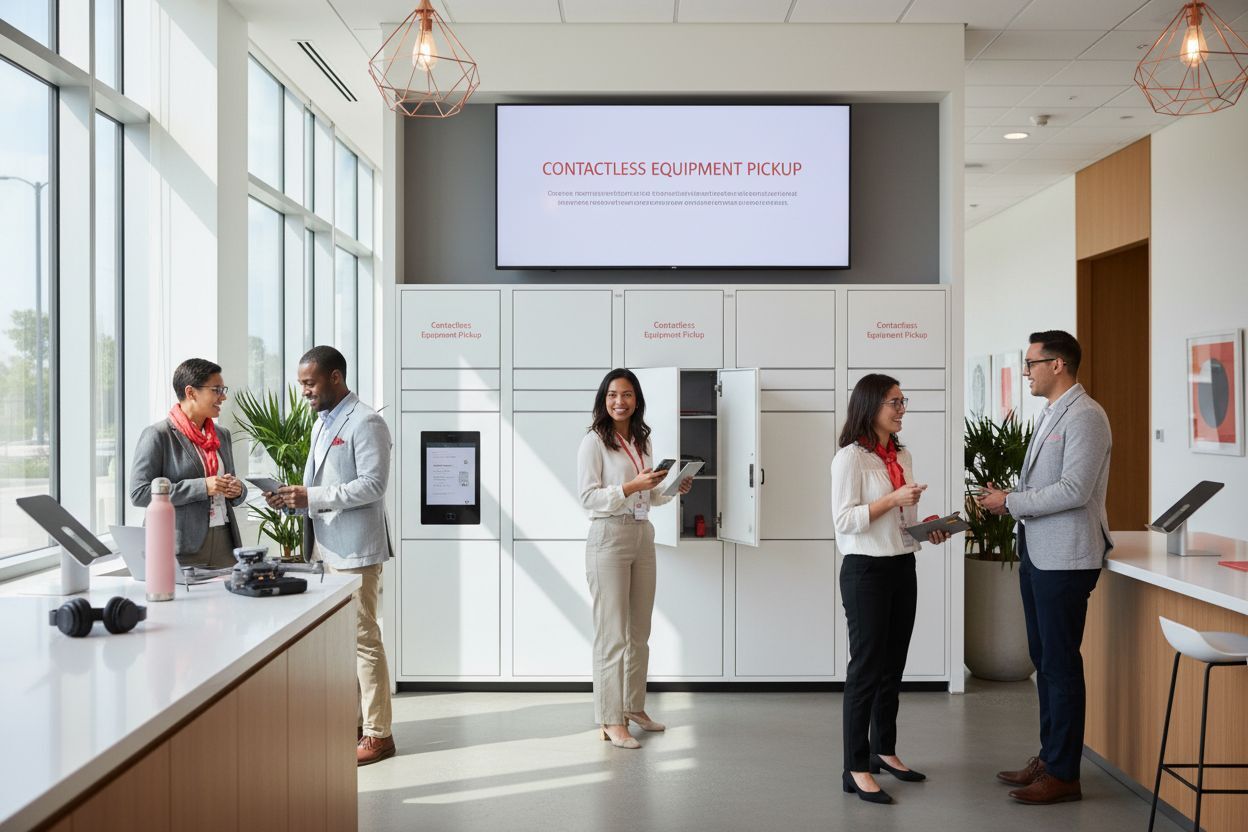
"Smart locker" describes at least four different products sold to four different buyers. A parcel machine in a supermarket car park, a bank of laptop lockers in a corporate lobby, a day locker in an agile office and a tool crib on a factory floor all carry the name, and a supplier who is excellent at one is often irrelevant to another.
So this is not a ranked list from best to worst. It is ten suppliers grouped by what they actually do, with an honest note on who each one suits. We build smart lockers for enterprise IT, so we have an obvious interest here, and we have tried to be straight about where other suppliers are the better answer.
Enterprise IT asset lockers
These handle two-way movement of identified, high-value devices: laptops out and back, break-fix swaps, loan devices, returns. The defining question is whether the locker software talks properly to your service management platform, because that determines whether the system reduces administrative work or adds to it.
1. Velocity Smart Technology
Our own platform, Smart Collect, runs as a scoped application inside ServiceNow rather than as an integration, so there is no second database to reconcile and the asset record is the one already in your CMDB. It was the first smart locker and vending application certified Built On Now by ServiceNow, in December 2020. Velocity is certified to ISO 9001 and ISO 27001.
Access is a single-use code or QR sent to the user's ServiceNow-registered email, which identifies the transaction rather than the person, so the locker knows which of two open tickets it is fulfilling. The Impulse Charge range provides power and network inside the cell, so a device can charge, patch or be wiped while it waits.
Best for: enterprises and managed service providers running ServiceNow, particularly multi-site and regulated estates.
Not for you if: you do not run ServiceNow. A ServiceNow-native locker is the wrong answer in that case and we would say so on a call.
2. Signifi Solutions
Canadian, founded in 2005 and based in Toronto, with a combined kiosk and locker portfolio and its own SignifiVISION platform. Signifi covers both IT asset dispensing and retail-facing automated kiosks.
Best for: organisations wanting kiosk and locker from one supplier, particularly in North America.
3. IVM
A long-established industrial and IT vending specialist. The strength is dispensing consumables and controlled items at volume, with lockers offered alongside.
Best for: estates where the dominant need is high-volume issue of consumables rather than device handover.
4. eLocker
A UK supplier covering workplace and IT asset lockers, with a large content presence in the category. Worth evaluating on the same architectural question as anyone else: where the software runs, and what happens to your asset record.
Best for: UK workplace and general asset-locker deployments.
5. LapSafe
A UK manufacturer with deep roots in education, known for charging and device-management lockers in universities, colleges and libraries. Education has genuinely different requirements from corporate IT, including very spiky demand around term dates, and LapSafe is built around that.
Best for: higher and further education device lending.
6. Traka, part of ASSA ABLOY
Traka comes at this from key management rather than IT, and is strong where the controlled item is a key, a radio, a firearm or a piece of test equipment rather than a laptop. Backed by a large security group.
Best for: mixed asset and key control, particularly in utilities, transport and secure facilities.
Parcel, click-and-collect and retail
An entirely different economic model. In open networks the carrier owns the machine, the host site provides the floor space and the consumer gets the convenience, so the party who pays is rarely the party who benefits. These suppliers are not competitors to an IT asset locker and should not be compared with one.
7. InPost
Europe's largest pure-play out-of-home network operator. InPost ended 2025 with 94,536 out-of-home points including 61,196 automated parcel machines, handling 417.6 million parcels in the fourth quarter alone (Parcel and Postal Technology International, 19 March 2026).
Best for: e-commerce retailers wanting out-of-home delivery and returns at scale in Europe.
8. Quadient, including Parcel Pending and Package Concierge
Carrier-agnostic and user-agnostic open platform, strong in US multifamily residential, higher education and the UK open network. Quadient grew the installed base from around 2,000 lockers in 2018 to over 28,000, generating €114 million in FY 2025. Worth knowing that Quadient announced a strategic review of its locker division in July 2026 (Quadient, 20 July 2026), which is the kind of thing to raise in a procurement conversation.
Best for: residential buildings, campuses and multi-carrier parcel estates.
9. Cleveron
Estonian manufacturer best known for robotic in-store click-and-collect towers, used by large retailers including Walmart and Zara. Genuinely different engineering: a vertical automated store rather than a bank of compartments.
Best for: retailers with high in-store collection volumes and limited floor space.
The agile office
10. Vecos
Dutch, and the reference name for dynamic locker allocation at enterprise scale. Where an office has removed assigned desks, Vecos handles day-use allocation, self-managed lockers and the analytics that let a workplace team shrink the locker estate rather than grow it.
Best for: corporate real estate and workplace teams sizing storage against attendance rather than headcount.
A category that is not on this list
Industrial tool cribs and consumable dispensing, as run by Fastenal, Grainger, Apex and CribMaster, look like smart lockers and are bought completely differently. The distributor usually places the machine and the stock and recovers the cost through consumption, so the competition is over the supply contract rather than the hardware. For scale, Fastenal alone signed 25,892 weighted vending and bin devices in 2025 (Fastenal, 19 January 2026). If you are buying gloves and cutting inserts rather than laptops, start there instead.
How to choose between them
Five questions separate suppliers faster than any feature list.
- Where does the software run? Native to your service management platform, middleware, or standalone with its own database. This decision compounds for the life of the contract.
- What is the record of truth? If the answer involves a sync, ask what happens when it fails and who notices.
- Whose identity system does it use? A platform needing its own user directory adds an access review to somebody's year.
- What happens offline, and when an item is never collected? The failure modes tell you more than the demonstration.
- Can you see it running in your own tenant? Not a vendor sandbox. Yours.
Two phrases worth listening for in a response to a requirements document. "Compatible with" is not the same as "certified on". And a feature described as being on the roadmap is not a feature.
When we are not the right answer
Worth stating plainly, because a comparison page where the author wins every category is not a comparison.
- You do not run ServiceNow. Our entire proposition is that Smart Collect is native to it. Without ServiceNow, look for a supplier native to the platform you do run.
- You need consumer parcel delivery. InPost, Quadient or Amazon Hub will serve you better and cheaper. We build IT asset lockers, not repurposed parcel boxes.
- You need day lockers for an agile office. That is a workplace problem with workplace suppliers, and Vecos or a retrofit lock on your existing cabinets is the sensible route.
- Your volume is low. Below a certain number of device events a year, a cupboard and a sign-out sheet is the correct answer.
- You are dispensing consumables on a shop floor. A vendor-managed inventory agreement with an industrial distributor will beat us on cost.
Where to go next
If you are comparing suppliers for enterprise IT device handover, the two things worth doing before you shortlist are working out what your current manual process actually costs, and understanding the architectural difference between native, middleware and standalone.
The complete guide to smart lockers covers the architecture question in detail, and the Deskside Support Cost Benchmark gives you your own baseline in about three minutes. If you want to see how our platform handles it, Velocity smart lockers sets out the workflows.
See what Smart Collect® could save you
Model your savings in two minutes, or book a 60-minute workshop to pressure-test the numbers against your estate.