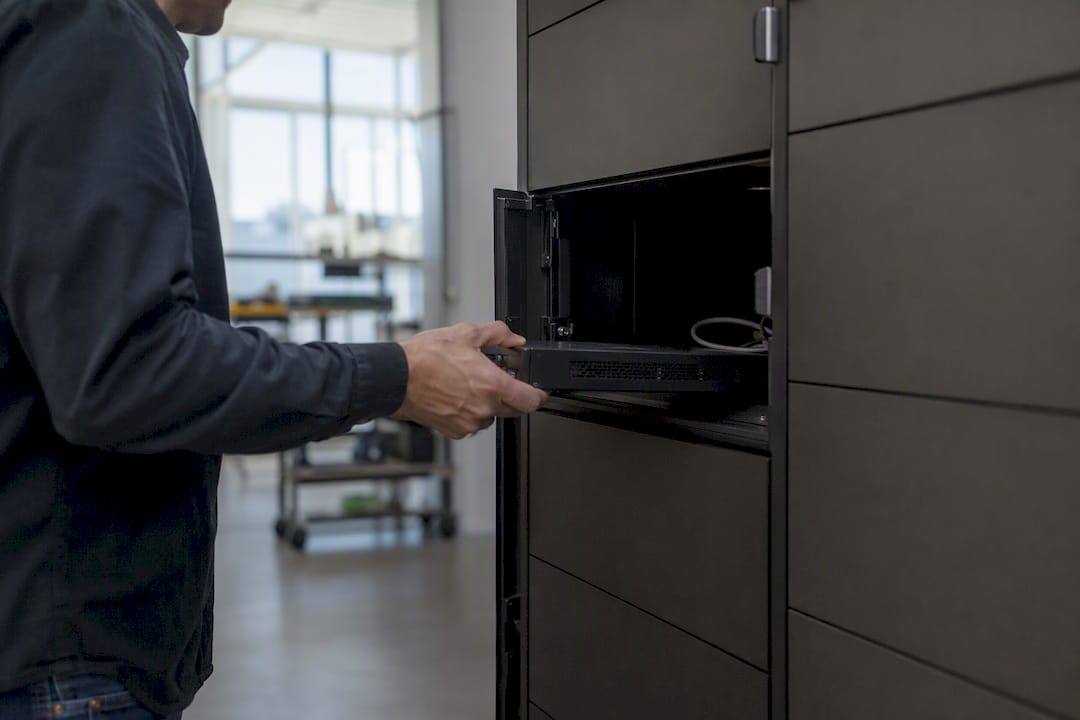
What is an inventory management software for ServiceNow owners?
An inventory management software, in the ServiceNow-native sense that matters for enterprise IT, is a platform that tracks and moves physical devices, from laptops to peripherals, using the CMDB as the single system of record rather than a bolted-on database. The strategic gain is straightforward: Hardware Asset Management (HAM) records, an Advanced Shipment Notification (ASN), and a locker fulfilment event all update the same tenant, so nobody reconciles two versions of the truth. That eliminates the sync risk that plagues external inventory databases bolted onto ServiceNow through middleware.
Key Takeaways
A ServiceNow-native inventory platform succeeds when the CMDB stays the single source of truth and every handover, from ASN to locker to retirement, updates it automatically.
| Point | Details |
|---|---|
| Single data model wins | A native CMDB record beats a synced external database because there is nothing to drift out of alignment. |
| ASN sets the starting state | Shipment notifications create “In Transit” records tied to purchase orders before hardware even arrives. |
| IRE prevents duplicates | Identification rules require a unique identifier, serial, MAC, or asset tag, on every incoming record. |
| Pilot narrow, then scale | One region and one hardware form factor, locker or vending, limits risk before a full rollout. |
| Smart Collect® fits the spec | Runs natively inside the customer’s ServiceNow tenant across Smart Lockers, Smart Vending, and Smart Kiosk with ISO 9001/27001 certification. |
Table of Contents
- What does inventory management software actually do?
- How does inventory management software work day to day?
- What operational benefits and KPIs does it deliver?
- Implementation checklist for a ServiceNow-native rollout
- Why a ServiceNow-native platform beats an external database
- What should your first 90 days look like?
- If you need a ServiceNow-native option
- Sources
What does inventory management software actually do?
A ServiceNow-native platform captures assets through several channels at once: Discovery for network-visible devices, agent-based reporting for remote endpoints, mobile scanning for stockroom audits, and ASN import for goods still in transit. Each method feeds the same CMDB rather than a shadow spreadsheet.
Beyond capture, the platform manages the physical infrastructure of distribution:
- Smart Lockers handle full-device swaps and new-starter kit delivery without an engineer present.
- Smart Vending dispenses peripherals and consumables on demand, 24 hours a day.
- Smart Kiosk supports guided self-service for walk-up technical issues.
- Stockroom controls track on-hand quantities against reorder thresholds.
- Lifecycle workflows move a device through procurement, transit, deployment, swap or repair, return, and retirement as one continuous chain.
Reconciliation happens automatically. The Identification and Reconciliation Engine applies identity rules so a device scanned at a locker matches the same configuration item created when the ASN first landed. Integrations with procurement, Discovery, Service Graph Connectors, and IntegrationHub ETL keep the model current without manual data entry.
Pro Tip: Check which capture method dominates your estate before you design workflows. A distributed workforce with unpredictable network access typically needs agent-based reporting more than Discovery, since devices report their state regardless of where they connect from.
How does inventory management software work day to day?
The mechanics follow a fixed sequence, and understanding it is what separates a clean rollout from a messy one.
- A vendor sends an ASN, which creates an asset record in an “In Transit” state and links it to the purchase order line item.
- The device arrives at a stockroom or smart locker, where a scan updates its state and location.
- Fulfilment happens: a full device goes out through a locker, a peripheral through vending, or guided support through a kiosk.
- The employee returns, swaps, or retires the device, and each event writes back to the CMDB.
- Audit and compliance teams query the same record for reporting, with no export or reimport step.
ASN templates need the right identifier fields, serial number, MAC address, asset tag, because IRE rules typically require at least one identifier value before it will treat an incoming record as unique. Get the template wrong and you create duplicate configuration items that take weeks to untangle. Automated workflows and AI agents increasingly handle the normalisation step, flagging malformed identifiers before they hit the CMDB rather than after.
Pro Tip: Pilot with one ASN template and one hardware form factor, either a smart locker or a vending unit, before rolling out the full estate. It is far cheaper to fix IRE matching rules against 200 devices than 20,000.
What operational benefits and KPIs does it deliver?
Three categories of metric matter to a CIO building a business case, and each answers a different stakeholder’s question.
Visibility metrics answer “can we find it”: percentage of assets reconciled to the CMDB, mean time to locate a device, and stockroom count accuracy. Service and cost metrics answer “what does it cost us”: ticket deflection rate, fulfilment throughput, engineer travel hours reclaimed, and cost per fulfilment. Compliance metrics answer “can we prove it”: audit pass rate, time to produce a full asset record on request, and the integrity of RBAC and audit trails.
Velocity Smart Collect® customers have recorded large uplifts in IT service throughput at a global pharmaceutical enterprise, alongside substantial reductions in on-site tickets at a US nuclear energy operator.
Those results were achieved under traditional ITSM workflows, before agentic AI was driving ticket resolution end to end. As Now Assist and similar agents mature, the expectation is that these numbers represent a floor rather than a ceiling, since AI-driven reconciliation and dispatch decisions should compound on top of an already-automated physical layer. Additional context on throughput gains sits in this workflow-driven asset management analysis.
Implementation checklist for a ServiceNow-native rollout
Getting this right in a regulated, multi-site enterprise means locking down five areas before go-live.
Governance and data model
- Define a single CMDB model with standardised naming conventions across regions.
- Set IRE rules so every ASN import carries a unique identifier before it is accepted.
- Agree attribute ownership between IT, procurement, and security teams.
Integrations and security
- Connect Discovery, Service Graph Connectors, and IntegrationHub ETL so the CMDB stays current without manual imports.
- Confirm RBAC scopes match existing tenant permissions rather than creating a parallel access model.
- Verify ISO 9001 and ISO 27001 alignment for any vendor touching the hardware layer.
Operational readiness
- Design ASN templates with vendors before the first shipment, not after.
- Map courier and returns logistics for each pilot site, since a hybrid model combining central control with regional fulfilment usually cuts customs delays.
- Train stockroom staff on mobile scanning procedures for physical audits.
A pilot scoped to one region and one hardware form factor, a locker or a vending unit, gives you a rollback point if IRE rules need adjustment before wider deployment. The hardware management checklist covers site-level controls in more depth, and secure retirement deserves its own attention in the asset disposal guide.
Why a ServiceNow-native platform beats an external database
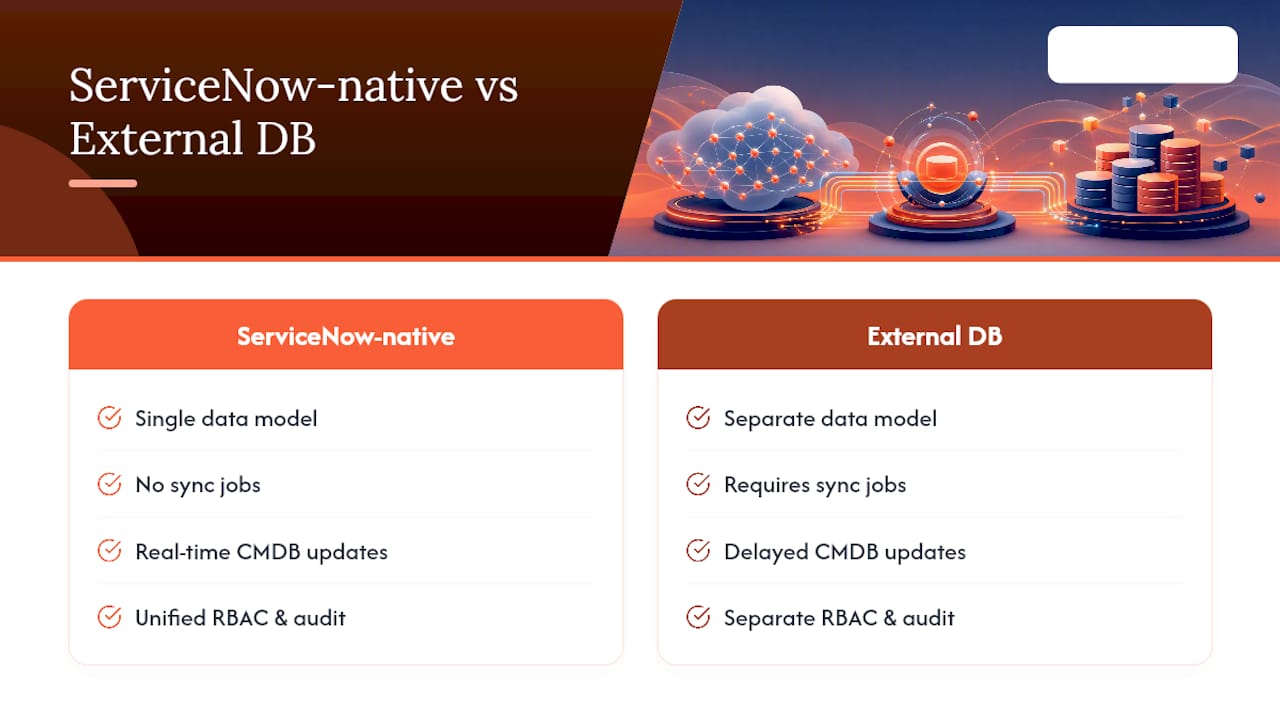
The case for native architecture is a data integrity argument more than a feature argument. An external inventory database requires a sync job, and every sync job is a point where records drift, permissions diverge, or a security review has to start from scratch. A single data model inside the tenant means a locker handover updates the same CMDB record that Discovery populated, with the same RBAC and audit trail governing both events.
This is also why hardware form factor matters as much as software architecture. Full-device swaps need Smart Lockers. On-demand peripherals and consumables need Smart Vending. Guided self-service for common issues needs a Smart Kiosk. Velocity Smart Collect® orchestrates all three from inside ServiceNow, tracking ServiceNow’s own release schedule so the platform never falls behind the tenant it serves. Enterprises running Smart Collect® across multiple countries, six in one energy sector deployment, report that consistency is what makes multi-site rollout manageable rather than chaotic.
What should your first 90 days look like?
Start narrow. Define your success KPIs (fulfilment throughput, ticket deflection, time to reconcile) before touching hardware, then agree CMDB attributes and IRE rules with your platform team. Design one ASN template with a single vendor and select one pilot site paired with one hardware type, locker or vending, not both.
A workable 90-day sequence looks like this:
- Weeks 1 to 3: design ASN template, confirm IRE rules, integrate with HAM.
- Weeks 4 to 6: ingest first ASN shipments, validate identifier matching.
- Weeks 7 to 10: deploy locker or vending hardware at the pilot site.
- Weeks 11 to 13: validate data quality and assess KPIs against baseline.
Involve your ServiceNow platform owner, procurement, security and compliance, site operations, and a local logistics partner from week one, not week six.
If you need a ServiceNow-native option
Everything covered so far, the CMDB single data model, ASN-driven transit tracking, IRE identity rules, describes what a ServiceNow-native inventory platform must do. Smart Collect® is built to that specification rather than around it: it runs inside your existing tenant, inherits your RBAC and audit posture, and orchestrates Smart Lockers, Smart Vending, and Smart Kiosk™ from one console.
Velocity Smart Technology holds ISO 9001 and ISO 27001 certification and is a ServiceNow Service Specialist Partner, which matters when your security team is reviewing a vendor that will sit inside a regulated tenant. Customer deployments have recorded outcomes including significantly faster fulfilment and noticeably less employee downtime at a global pharmaceutical customer, delivered before AI agents were driving the workflow end to end. If you are scoping a pilot, the Smart Locker whitepaper covers ASN and IRE design in technical detail, and the Smart Collect® product page is the place to check fit against your own CMDB model and hardware requirements.
Sources
- Use Advanced Shipment Notification (ASN) — ServiceNowDocs (Australia)
Recommended
See what Smart Collect® could save you
Model your savings in two minutes, or book a 60-minute workshop to pressure-test the numbers against your estate.