Top 6 Native ServiceNow vs API Integration Alternatives 2026
Managing devices and asset workflows with fragmented integration across ServiceNow and separate API-based systems reduces operational control and audit quality for enterprise IT departments. Too many solutions push device orchestration out to third-party API middleware or require additional connectors, which splits records and duplicates governance workloads. This comparison details six alternatives on native integration, deployment speed, and control so enterprise IT departments can select an orchestration tool that fits both platform strategy and audit demands.
Table of Contents
- Velocity Smart Technology
- Stave
- ZertID
- Alemba Service Manager
- ZentraITSM
- Kovira
- Comparison of alternatives
Velocity Smart Technology
At a Glance
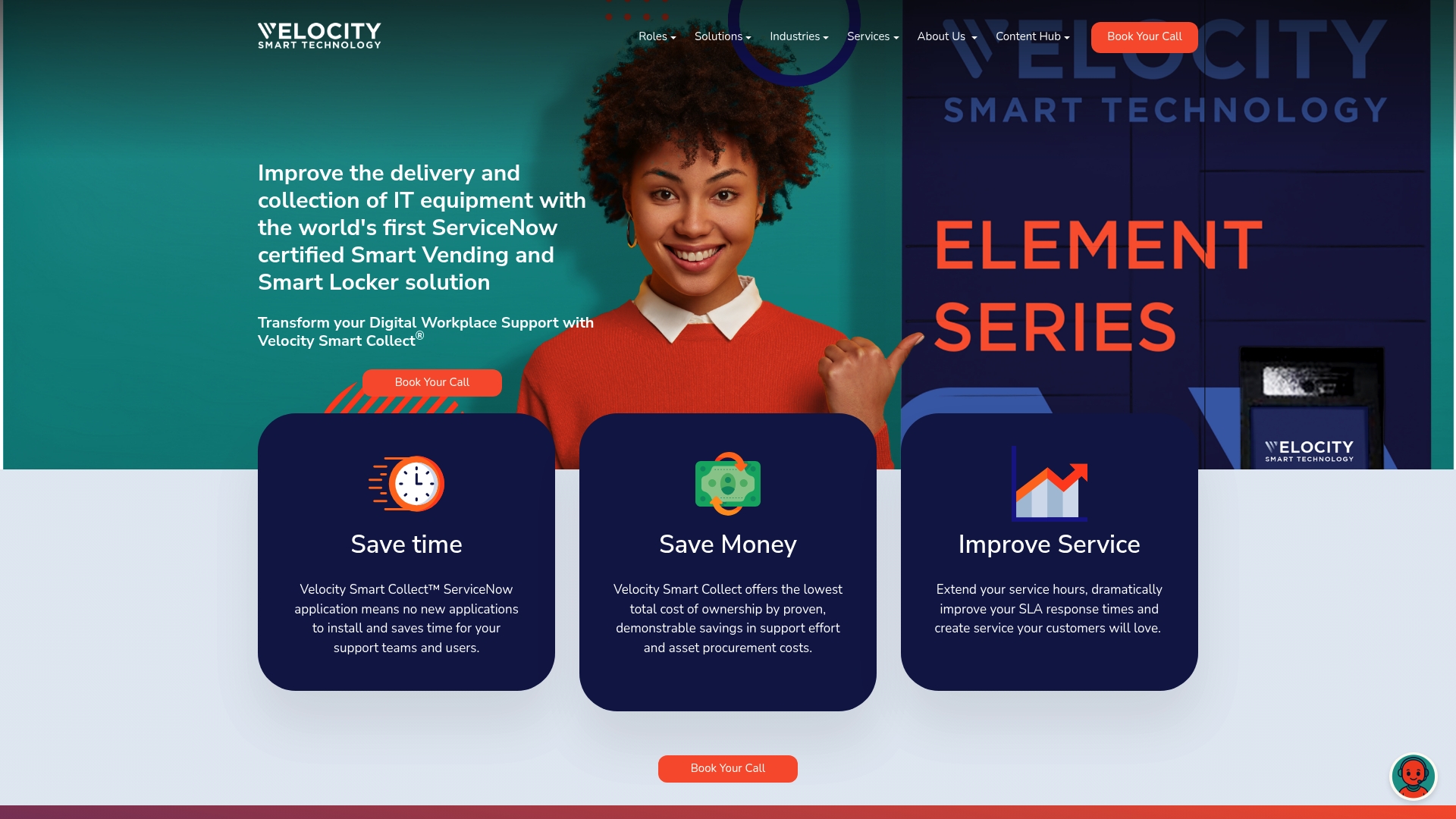
The company reports that its Smart Lockers and Smart Kiosks were the first enterprise grade devices certified on ServiceNow’s Built On Now programme. That certification links hardware and workflows directly into ServiceNow. The claim suggests fewer integration touchpoints for enterprises that already run ServiceNow.
Core Features
Velocity Smart Technology bundles physical devices and management software to automate asset delivery and collection, and it connects those flows into existing ServiceNow workflows. The offering includes real time inventory and asset tracking plus remote support through live video and diagnostics. Hardware is modular and scalable across lockers, vending machines, and walk up kiosks.
Key Differentiator
The certification on ServiceNow’s Built On Now programme is the single distinguishing element. It positions the devices and the management platform to run inside ServiceNow rather than as a separate middleware layer. That design reduces the need for parallel databases and keeps asset workflows inside the customer environment.
Pros
Integration with ServiceNow lets teams trigger and manage pick up, returns, and fulfilment using the same workflows and access controls they already operate. Global support and modular hardware mean rollouts can scale from single sites to multi country estates without changing the operational model. The vendor highlights sustainability measures, specifying carbon neutral operations as part of its supply and service approach.
Cons
- Pricing is not publicly specified and requires direct contact for a quote.
Notable Integrations
- ServiceNow
Who It’s For
Large enterprise IT departments and managed service providers that run ServiceNow and need a physical delivery, collection, and on demand support capability will find this relevant. It suits organisations managing distributed offices, hybrid workforces, or campuses where central IT cannot meet all physical handover needs. The product targets teams who prefer to keep asset workflows inside the primary ITSM tool.
Unique Value Proposition
The Smart Collect platform centralises lockers, vending, and kiosks under a single management plane that integrates into ServiceNow. That approach keeps asset records and fulfilment workflows within the same operational environment as incident and request management. For organisations that must preserve RBAC, audit trail, and a single source of truth, this reduces the risk and governance work associated with third party middleware.
Real World Use Case
A multinational firm deploys Velocity Smart Lockers across three regional hubs to automate laptop distribution for starters and fault exchanges. IT triggers fulfilment from ServiceNow, staff collect devices from lockers with their corporate credentials, and the vendor reports faster fulfilment and reduced manual handling. The setup removes repeated ticket handoffs between IT and facilities teams.
Pricing
Pricing is not listed publicly. Procurement requires a direct consultation to receive a tailored quote that reflects site count, hardware mix, and service level. Prospective customers should prepare site and volume data when they contact the vendor.
Website: https://velocity-smart.com
Stave
At a Glance
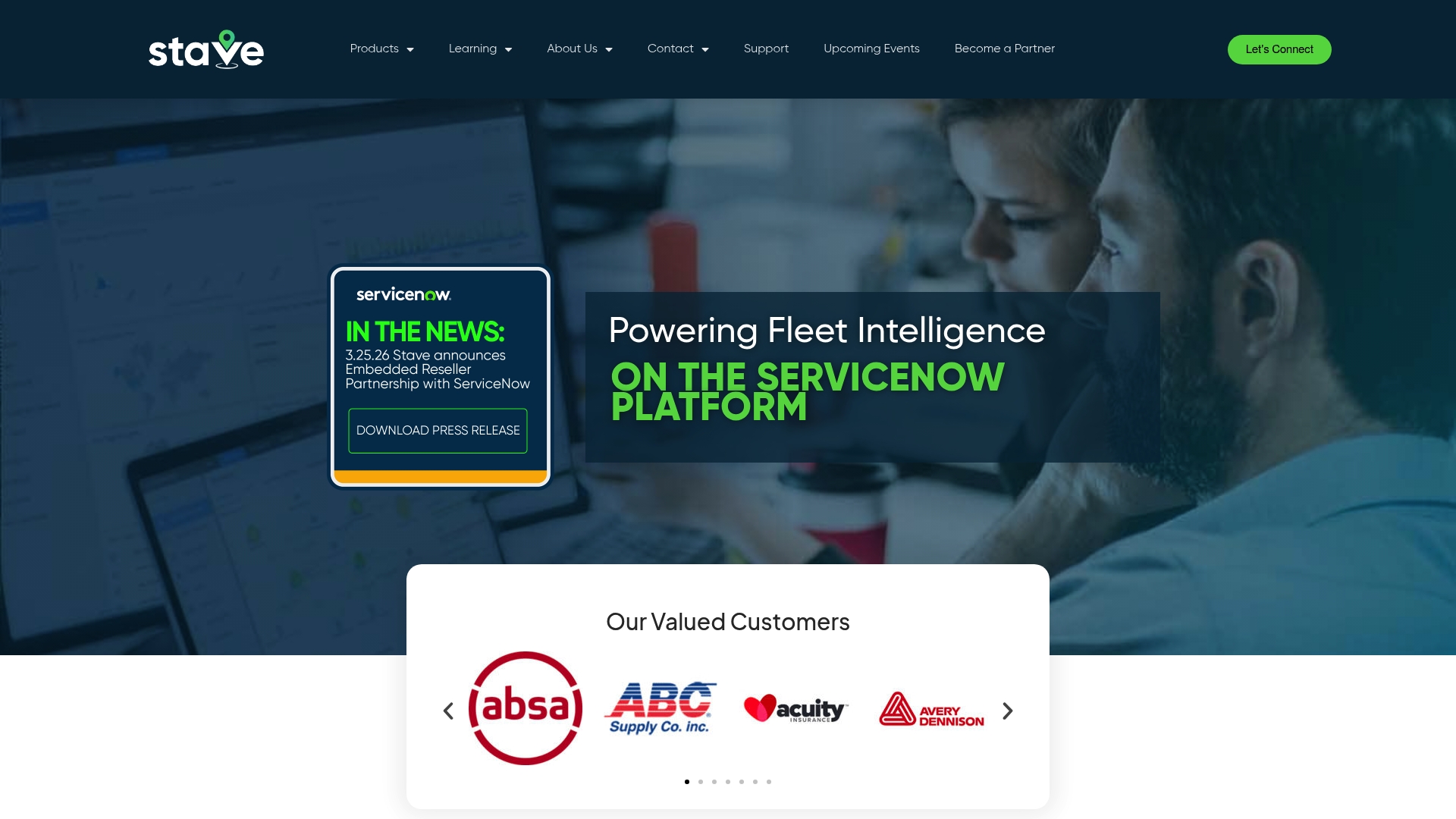
Fleet management runs natively on ServiceNow and includes configurable mapping, QR code generation, and predictive maintenance tools. The platform centralises fleet operations, data, and resource planning inside the enterprise ServiceNow instance. Stave targets enterprise and public sector fleets, and advertises agentic AI for autonomous decision making.
Core Features
Core functionality covers native fleet management on ServiceNow. It provides data normalisation and enrichment to improve record accuracy and trust. The product also delivers predictive insights for maintenance and utilisation, plus configurable maps with Stave Maps and QR code tooling for asset tagging.
Key Differentiator
The primary differentiator is native integration with ServiceNow, which keeps fleet records and workflows inside the organisation’s platform. That design reduces the need for separate middleware and helps preserve access controls and the existing data model. The vendor positions the product for AI readiness so fleets can adopt predictive scheduling and autonomous decision making over time.
Pros
Built on ServiceNow, the solution inherits platform integration points and the reliability organisations expect from that enterprise product. Its focus on data normalisation and predictive insights supports clearer maintenance planning and better utilisation reporting. The vendor also supplies sector resources and highlights notable clients and strategic partnerships to aid procurement review.
Cons
- Dependence on ServiceNow means organisations must have the platform and accept associated licence and platform commitments.
- Pricing and total cost of ownership are not specified, so procurement will require a custom quotation and scope review.
- Smaller fleets or organisations without ServiceNow expertise may find implementation complex and will need platform skill to operate it effectively.
Who It’s For
Large enterprises, government agencies and public sector fleet managers who already run ServiceNow will get the most value. The product suits teams that need consolidated asset records, mapping and predictive maintenance. Organisations without a ServiceNow investment should factor in integration and licence overhead.
Real World Use Case
A government agency consolidated its fleet data onto the platform to automate maintenance scheduling and compliance reporting. That consolidation reduced manual reporting effort across regional depots. The project increased fleet availability by improving maintenance predictability.
Pricing
Pricing is not specified by the vendor. The company indicates an enterprise tier and custom quotes based on implementation scope and integration complexity. Procurement will need to request a tailored proposal to get a final cost.
Website: https://stavecorp.com
ZertID
At a Glance
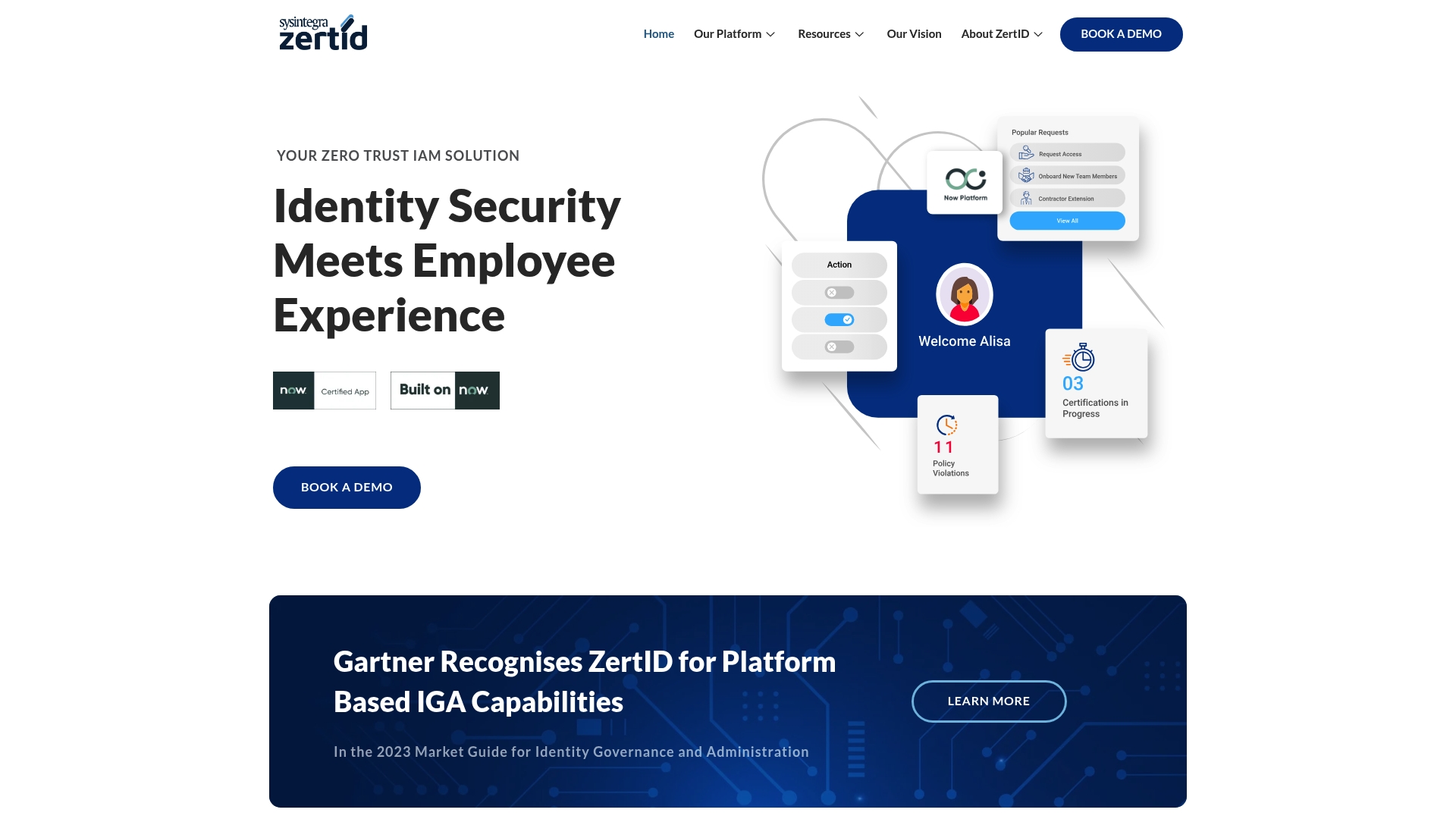
ZertID’s marketing materials state it is recognised by Gartner as a leader in platform-based IGA. The product runs natively on ServiceNow, which places identity records inside the customer tenant and uses existing RBAC and audit trails. That architecture reduces the need for a parallel identity store and keeps governance where your ITSM workflows already live.
Core Features
The vendor advertises rapid deployment, often within weeks, with a configuration-driven setup that aims to reduce implementation time. ZertID converges workforce, customer, privileged, and machine identities into a single ServiceNow-native solution and combines IAM, IGA, and lightweight PAM capabilities. It also supports SSO and MFA, automated access recertification, policy management, and a broad connector library for cloud and enterprise systems.
Key Differentiator
The ServiceNow-native architecture is the platform’s defining distinction. Identity objects, provisioning actions, and audit logs appear as native records in the tenant, avoiding data sync and parallel databases. That design choice suits organisations that want identity governance inside the same control plane as their IT workflows.
Pros
Built on ServiceNow, ZertID inherits the platform’s data model and existing access controls, which reduces integration risk for ServiceNow customers. The product bundles IAM, IGA, and PAM functions in one offering and includes connectors to major cloud providers and enterprise apps, shortening integration effort. That connector coverage and the configuration-led deployment model support faster time to value for complex estates.
Cons
- Limited public user reviews. The company reports Trustpilot scores that suggest high customer satisfaction, but independent, detailed reviews are scarce.
- Breadth of capability can increase initial configuration complexity. Skilled personnel are likely needed for optimal policy tuning and privileged access workflows.
- Organisations without an existing ServiceNow investment will face additional licensing and implementation costs.
- Pricing is not published, which makes budget forecasting harder for procurement teams.
When It May Not Fit
If your organisation does not run ServiceNow and plans to avoid that platform, ZertID will add platform and implementation cost. Small to midmarket buyers with limited identity governance needs may find the feature set larger than required. If transparent, list-price budgeting is a hard procurement requirement, the absence of public pricing will slow evaluation.
Notable Integrations
Integrations listed include AWS, Azure, GCP, O365, Okta, Oracle, MySQL, MS SQL Server, Workday, SAP, Salesforce, Jira, Primavera, Teams, Slack, and Splunk. The connector library is a core element for estates that rely on a mix of cloud providers, HR systems, collaboration tools, and enterprise databases.
Who It’s For
Large enterprises and government organisations that already use ServiceNow and need consolidated identity governance across workforce, customers, privileged accounts, and machines. Security and identity teams that value native audit trails and tenancy controls will find the ownership model familiar. Organisations that require a single vendor to handle IAM, IGA, and lightweight PAM within their platform are the primary fit.
Real World Use Case
A Fortune 500 company integrated ZertID to streamline employee onboarding and offboarding, automating access provisioning and periodic access reviews. The platform placed identity lifecycle events into ServiceNow records so audit and compliance teams could run reviews from the same tenant. That deployment reduced manual handoffs between HR, IT, and security teams.
Pricing
Not specified. Typically, contact sales for a tailored quote and deployment estimate. Procurement teams should plan for ServiceNow platform licensing if it is not already in place.
Website: https://zertid.com
Alemba Service Manager
At a Glance
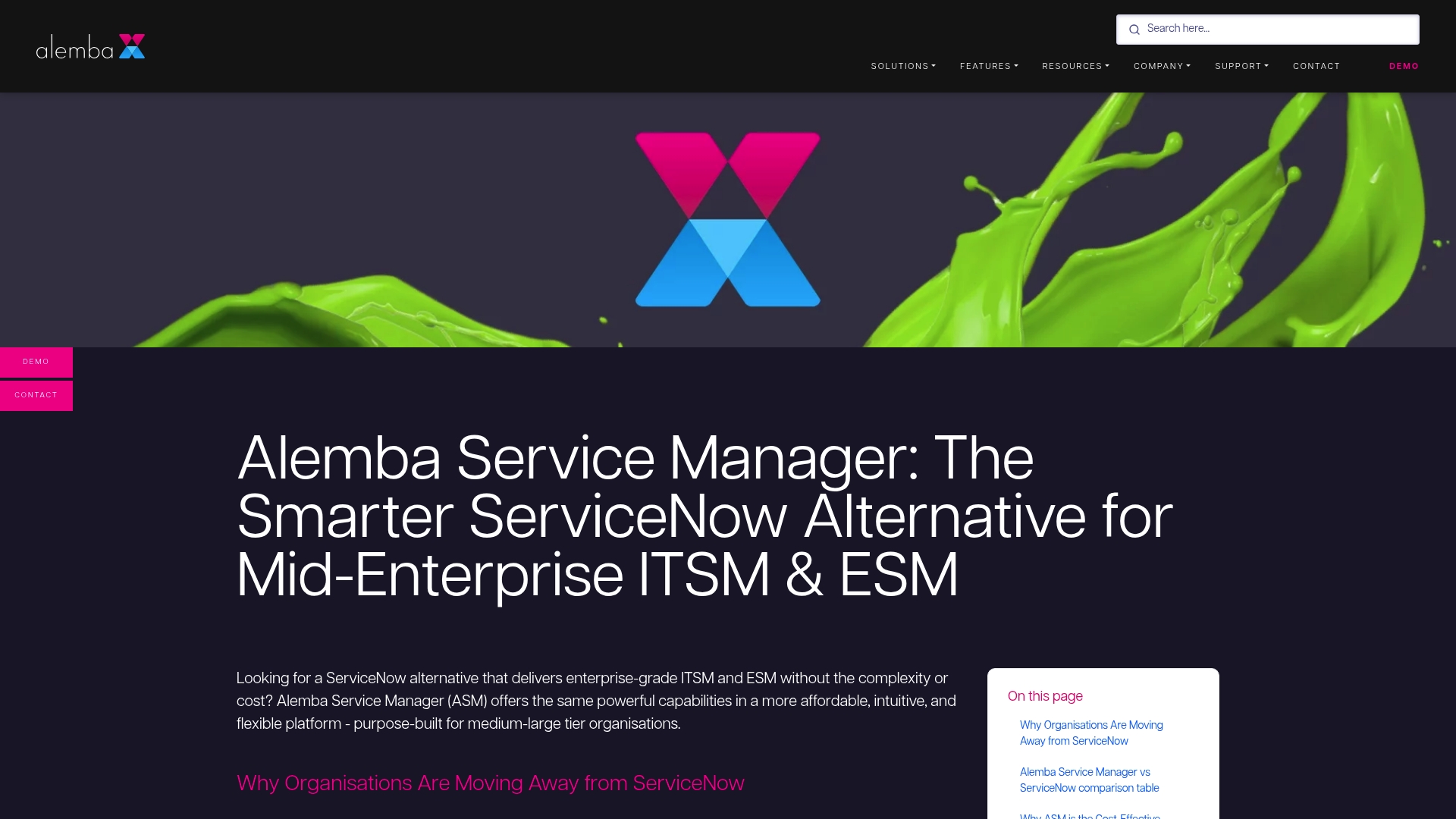
The vendor positions Alemba Service Manager for organisations with 1,000+ employees. It targets mid large organisations seeking a ServiceNow alternative with faster deployment, no code customisation and predictable licensing. An NHS Trust has adopted it to replace ServiceNow and reduce costs while accelerating rollout.
Core Features
Alemba ships with ready configured ITIL aligned processes for incident, change, request, problem, CMDB and knowledge, and it pairs those with a no code visual workflow builder for inhouse automation and edits. The platform includes unlimited self service portals under a site licence and promises quick deployment in weeks with minimal customisation and no reliance on external developers.
Key Differentiator
Alemba positions itself as a practical ServiceNow replacement for mid large organisations, emphasising faster time to value and lower apparent operational overhead. The product gives internal teams the tools to own changes through the no code designer and predictable licence structures. That focus on inhouse control and quicker deployments is the core selling point.
Pros
The vendor advertises a lower total cost of ownership versus ServiceNow through predictable licensing and a site licence for unlimited portals, which simplifies planning. Ready configured ITIL aligned processes reduce initial implementation time and allow teams to start with standard workflows. The no code designer reduces dependency on external consultants and lets service managers modify processes without developer handoffs.
Cons
- Trust is placed on third party reviews; some users report limits in advanced customisation compared with ServiceNow.
- Organisations with very complex or highly bespoke workflows may find the platform restrictive for deep technical customisation.
- The public overview provides limited detail on integration scope and additional capabilities beyond the headline features.
When It May Not Fit
This product may not fit organisations that demand extensive bespoke integrations or deep platform extensibility. Buyers planning highly customised automation or uncommon approval models should validate advanced customisation capabilities. If a firm needs broad ecosystem connectors or complex data transformation, further technical evaluation is required.
Notable Integrations
Alemba lists connectors and discovery tools that support practical ITSM workflows:
- Microsoft Teams
- ServiceNow connector
- Azure DevOps
- Alemba Discovery
Who It’s For
That sizing and feature mix suits mid enterprise IT teams and service managers who want enterprise grade ITSM without the ServiceNow operational complexity. Internal operations teams who prefer to make frequent process changes without vendor intervention will find the no code approach attractive. Procurement teams seeking predictable licence models and fewer external consultancy costs are another fit.
Real World Use Case
An NHS Trust adopted Alemba Service Manager to replace ServiceNow, citing faster deployment and lower running costs. The trust used ready configured ITIL aligned processes to standardise incident and request handling across multiple departments. The organisation then used the no code tooling to adjust workflows without further consultant engagement.
Pricing
Pricing is not specified on the vendor site. The vendor positions Alemba as a more affordable alternative with predictable licensing and a site licence for unlimited portals; contact Alemba for a formal quote and licensing details.
Website: https://alemba.com/servicenow-alternative
ZentraITSM
At a Glance
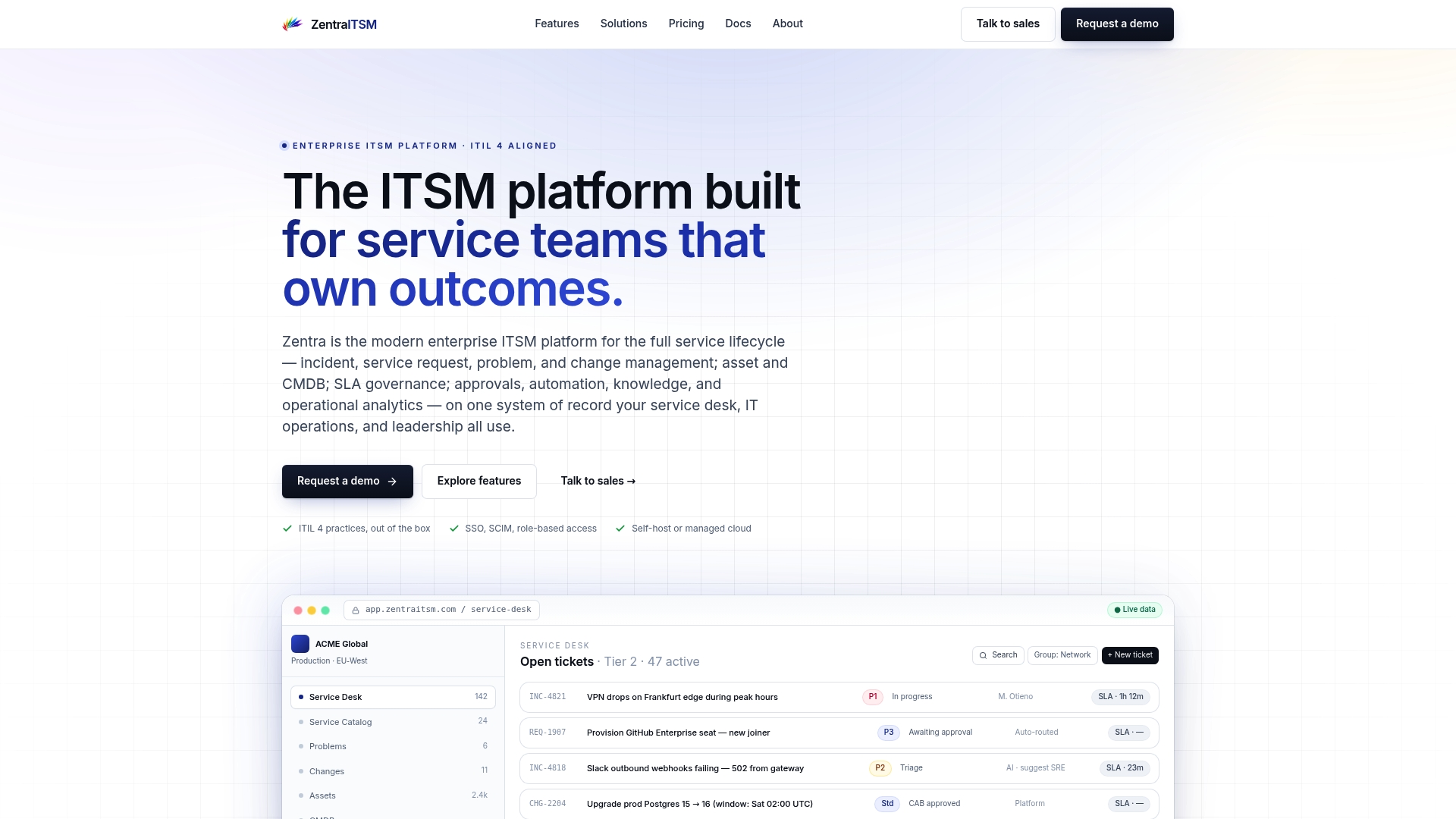
ZentraITSM’s marketing materials state a 31% reduction in mean time to repair within the first three months after consolidating several disjointed tools. The product centres its design on the ITIL 4 service lifecycle, bringing incident, change, problem, request, asset and CMDB records into a single system of record. That single record model aims to improve routing, SLA attainment and auditability for regulated environments.
Core Features
ZentraITSM delivers Incident management with multichannel intake, AI classification, live SLA timers and a major incident command room, and it ties those records directly into problem tracking and root cause workflows. The platform also includes Change management with risk scoring, CAB support, freeze windows and traceable audit trails. Its Asset and CMDB management maintains relationships, lifecycle state and renewal alerts for hardware, software and licences while feeding fulfilment and request processes.
Key Differentiator
ZentraITSM combines all ITIL practices and operational controls into one configurable platform, so governance and audit trails live inside the same system as service delivery. The analytics layer focuses on operational accountability rather than vanity metrics, giving teams the ability to monitor SLA health and change risk alongside incidents. That integration suits organisations that must show regulated evidence and tight role based access controls.
Pros
The platform supports both cloud and self hosted deployments, which helps organisations with strict data residency or security policies. Its no code workflow engine and automation reduce repetitive work and preserve audit trails across incident, change and asset records. Role based access and live SLA timers give operations teams precise control over escalation, and the built-in analytics make it simpler to report to compliance and executive stakeholders.
Cons
- Initial setup and migration can require dedicated effort and specialist expertise, increasing project lead time.
- Pricing appears targeted at mid sized and larger organisations, which may limit adoption by very small teams seeking a simple helpdesk.
- Advanced features for MSPs and large enterprise environments can demand additional configuration and staff training to unlock full value.
When It May Not Fit
Organisations seeking a lightweight, no frills ticketing tool will find ZentraITSM to feature rich and too costly. Small teams without dedicated IT operations staff may struggle with the implementation and day to day tuning the platform requires. Firms that need an out of the box, zero configuration solution should look elsewhere.
Notable Integrations
ZentraITSM includes connectors for identity and collaboration platforms and for incident and observability tooling. Supported integrations listed by the vendor include Okta, Entra ID, Google Workspace, Slack, Teams, PagerDuty, Datadog and GitHub.
Who It’s For
Support teams, IT managers, MSPs and enterprise IT operations that require a unified ITIL oriented platform will benefit most. The platform suits organisations that must evidence governance, track lifecycle information and run controlled change processes. It fits teams ready to invest in a structured implementation and operational discipline.
Real World Use Case
A large enterprise transitioned from multiple disjointed tools to ZentraITSM. The platform bundles incident, change, problem, request, asset and CMDB functions into one system of record, so that single record approach drives faster routing and clearer audit trails for regulated environments. That figure above followed the migration while dashboards and automation improved SLA attainment.
Pricing
Cloud plans start at $19 per agent/month with tiered Basic, Standard and Advanced options that target different organisational needs. Self hosted licences are available at a flat rate, and the vendor asks customers to contact sales for specific self hosted pricing. Additional fees may apply for professional services during migration.
Website: https://zentraitsm.com
Kovira
At a Glance
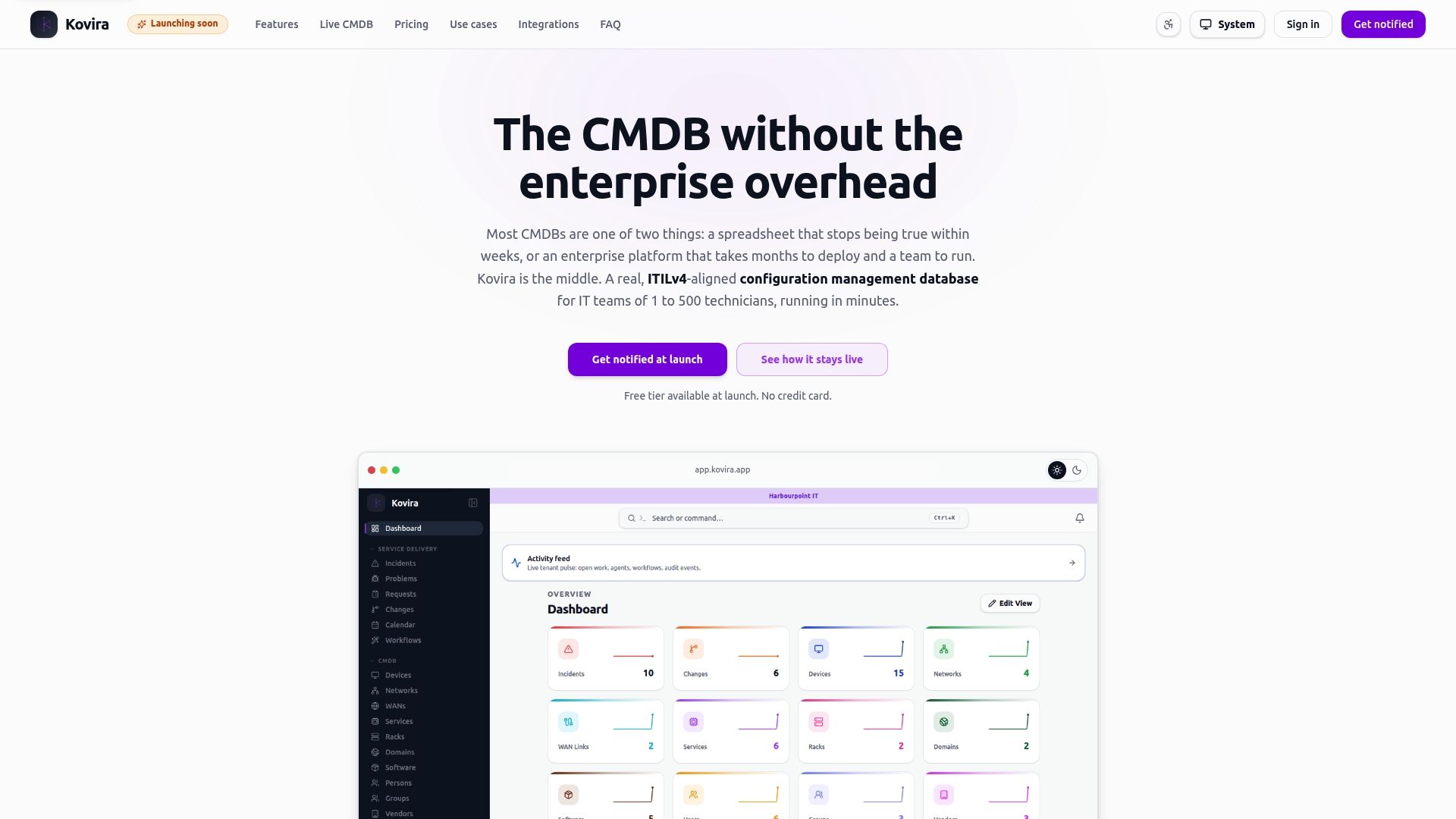
Continuous discovery and automated reconciliation keep the CMDB live and accurate without manual upkeep. Kovira presents a self healing CMDB that the vendor says corrects and reconciles records as changes appear. This behaviour aims to reduce routine maintenance and improve confidence in configuration data for operations teams.
Core Features
Kovira combines asset tracking with dependency mapping, ITILv4 incident and change workflows, and a visual workflow automation builder into a single product. It offers network and endpoint discovery surfaces plus embedded documentation and role based access controls, so audit trails and compliance evidence sit with the configuration items. Microsoft 365 connectivity and multi tenant support extend the platform across organisational units and managed clients.
Key Differentiator
The platform centres on its autonomous CMDB layer that continuously discovers, reconciles, and corrects records. That approach reduces manual reconciliation work and keeps relationship models current, which makes impact analysis and change risk assessment more reliable. For teams facing noisy, stale CMDB data this operational model is the primary selling point.
Pros
Fast deployment is emphasised in vendor materials and Kovira claims setup often completes in minutes, which suits small IT teams that need immediate value. The product groups ITILv4 aligned incident and change capabilities with continuous discovery and a live CMDB, so operational processes and configuration data live together. Integration with Microsoft 365, VECTOR Network Scanner, and ATLAS Endpoint Agent gives multiple discovery surfaces and agent options for device inventory and reconciliation.
Cons
- SaaS only model. The product cannot be self hosted, which limits customers who require on premises deployment or full control of infrastructure.
- Integration ecosystem still growing. Some third party connectors are roadmapped rather than shipping today.
- Regional data residency is not yet available and is listed as a forthcoming capability.
- Pricing transparency is early. The vendor warns that commercial terms may change on wider launch.
When It May Not Fit
Organisations that mandate on premises hosting or have strict data residency requirements will find Kovira unsuitable today. Large enterprises with an established ecosystem of bespoke integrations may face additional integration work while the platform matures. Teams that need confirmed enterprise grade connectors across niche tools should budget for integration effort.
Notable Integrations
Kovira lists integration with VECTOR Network Scanner, ATLAS Endpoint Agent, and Microsoft 365 to cover network discovery, endpoint inventory, and user and group synchronisation. These connectors provide multiple discovery paths for the live CMDB.
Who It’s For
The product targets IT teams from solo sysadmins to managed service providers managing multiple tenants. It suits small to medium sized organisations that want ITIL aligned processes without lengthy rollout. MSPs seeking automated discovery and reconciliation across client estates will find the multi tenant model relevant.
Real World Use Case
A managed service provider uses Kovira to discover network devices, servers, and user devices across client sites and to reconcile discrepancies automatically. The platform then feeds incidents and change approvals back into the same configuration items so audit trails remain intact. This removes much of the manual data entry and keeps compliance evidence with the CMDB.
Pricing
A free tier is available at launch with no credit card required. Paid plans start at around $25AUD per technician per month with larger plans that increase capacity and features. The vendor presents these figures as launch pricing and indicates commercial terms may evolve.
Website: https://kovira.app
Comparison of alternatives
Every solution included in this comparative analysis aims to enhance organisational efficiency through native ServiceNow integration. Organizations aiming to streamline IT asset management and related workflows will benefit differently depending on the unique capabilities and features provided by each contender.
ServiceNow integration depth
Velocity Smart Technology distinguishes itself through its certification under ServiceNow’s Built On Now programme. This accreditation ensures that hardware like its Smart Lockers operates directly as an extension of the ServiceNow environment, minimising the complexities of third-party middleware. Competitors like Stave and ZertID, while also natively integrated, have not highlighted such explicit organisational alignment for physical asset management workflows.
Advanced analytics and customisability
Among the contenders, Stave stands out with advanced predictive analytics and autonomous decision-making features relevant for asset maintenance and optimisation. Additionally, both ZentraITSM and Kovira provide notable customisation options, with Kovira offering a particularly compelling autonomous CMDB for automated routine management. These aspects cater to specific needs for organisations prioritising refined analytics or custom configuration.
Best fit
- Organisations using ServiceNow desiring physical asset distribution within existing workflows will find Velocity Smart Technology most aligned.
- Teams in public sector or enterprises with a focus on predictive analytics for proactive management will appreciate Stave’s capabilities.
- MSPs and IT service departments requiring an automated CMDB combined with multi-tenant support will consider Kovira a valuable choice.
- Procurement departments in mid-sized to large organisations prioritising cost predictability and ITIL-aligned processes may favour Alemba Service Manager.
Our pick
Velocity Smart Technology emerges as the choice for large enterprises fully established within the ServiceNow ecosystem and looking to unify physical device distribution with operational workflows. Its certification under the Built On Now programme signifies maximum compatibility and operational efficiency. However, specific organisations prioritising predictive analytics or alternative customisability might explore competing offerings for tailored solutions.
To aid in evaluating the top ServiceNow-integrated IT solutions, here is a concise comparison detailing their core features, differentiators, pricing, and limitations.
| Product | Core Feature | Key Differentiator | Pricing | Notable Limitation |
|---|---|---|---|---|
| Velocity-smart | Physical asset delivery and collection | Built on Now ServiceNow certification | Price not published | Pricing requires direct consultation for tailored quotes |
| Stave | Fleet management | ServiceNow-native fleet operations platform | Price not published | Smaller fleets may find complexity and scale unsuitable |
| ZertID | Identity Governance | Data records natively in ServiceNow | Price not published | Limited availability of independent user reviews |
| Alemba Service Manager | ITIL-oriented IT Service Management | Fast deployment and predictable licensing | Price not published | Potential restrictions for deeply bespoke workflows |
| ZentraITSM | Comprehensive ITIL practices integration | Analytics-based SLA and operational monitoring | From $19 per agent/month | Advanced setup efforts may increase time and staff investment |
| Kovira | Automated CMDB reconciliation | Self-healing database technology | Free tier, paid from ~AUD25/month | SaaS only, no support for on-premises hosting |
How Can Native ServiceNow Integration Transform Physical IT Support?
One key challenge in the debate of native ServiceNow vs API integration alternatives lies in handling physical device handovers within existing IT workflows. Traditional API integrations or middleware layers introduce complexity, potential data duplication, and governance risks. Velocity-smart addresses these issues by delivering a fully ServiceNow-certified application that operates natively inside your ServiceNow tenant. This approach preserves your existing RBAC, audit trails, and CMDB integrity while automating device distribution, returns, and onsite support without dispatching an engineer.
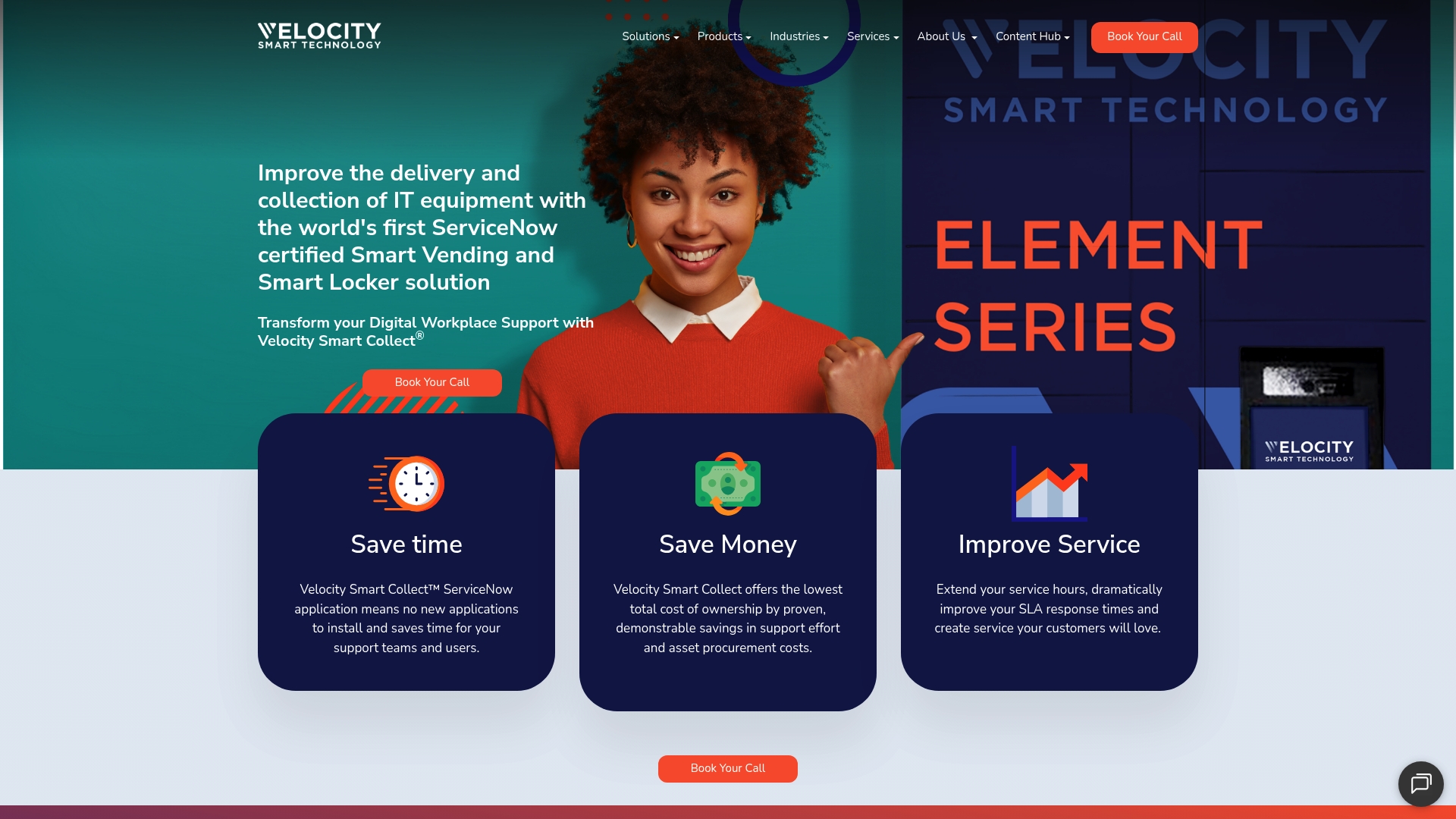
Explore how Velocity-smart’s AI-enabled Smart Collect® platform unifies smart lockers, vending, and kiosks inside ServiceNow’s workflow orchestration. Global enterprises recover IT staff time, reduce on-site tickets, and accelerate fulfilment. Visit Velocity-smart to review the platform’s details and arrange a conversation on accelerating your digital and physical IT service automation.
FAQ
What capabilities do Velocity-smart offer for asset management?
Velocity-smart automates asset delivery and collection through its Smart Lockers and Smart Kiosks, integrating directly with ServiceNow workflows. This integration reduces the need for separate middleware and brings physical asset management into the ServiceNow environment for enhanced tracking and support.
How does Velocity-smart compare to Stave in fleet management functionality?
Stave excels in native fleet management on ServiceNow, emphasising data normalisation for improved record accuracy. Velocity-smart is better suited for managing physical asset workflows through its Smart Lockers and Kiosks, ideal for organisations focused on automating device distribution.
What is the pricing structure for Velocity-smart?
Pricing for Velocity-smart is not publicly listed, requiring direct consultation for a tailored quote based on site count and hardware requirements. Prospective customers should prepare their deployment needs when contacting the vendor.
What integration advantages does Velocity-smart have over ZertID for identity governance?
ZertID is noted for its extensive connector library for cloud and enterprise systems, which enhances application integration. Velocity-smart stands out by keeping asset workflows directly within the ServiceNow environment, which simplifies auditing and role-based access control.
Can Velocity-smart be tailored for specific devices across hybrid environments?
Yes, Velocity-smart includes modular and scalable hardware options, allowing enterprises to deploy Smart Lockers and Kiosks across various locations to meet their operational needs. This flexibility helps accommodate differing requirements in distributed workplaces.
Recommended
See what Smart Collect® could save you
Model your savings in two minutes, or book a 60-minute workshop to pressure-test the numbers against your estate.