Smart lockers give your people IT hardware the moment they need it, built natively on ServiceNow.
Your IT team loses hours every week to hardware handovers — laptops to swap, peripherals to issue, devices to chase back. Velocity smart lockers turn every one of those into a secure, 24/7 self-service collection, orchestrated end to end by your own ServiceNow workflows. It is how IT leaders at Roche, BAE Systems and Centrica have cut device tickets by up to 40%, reduced onsite IT spend, and reached a return on investment inside the first year.
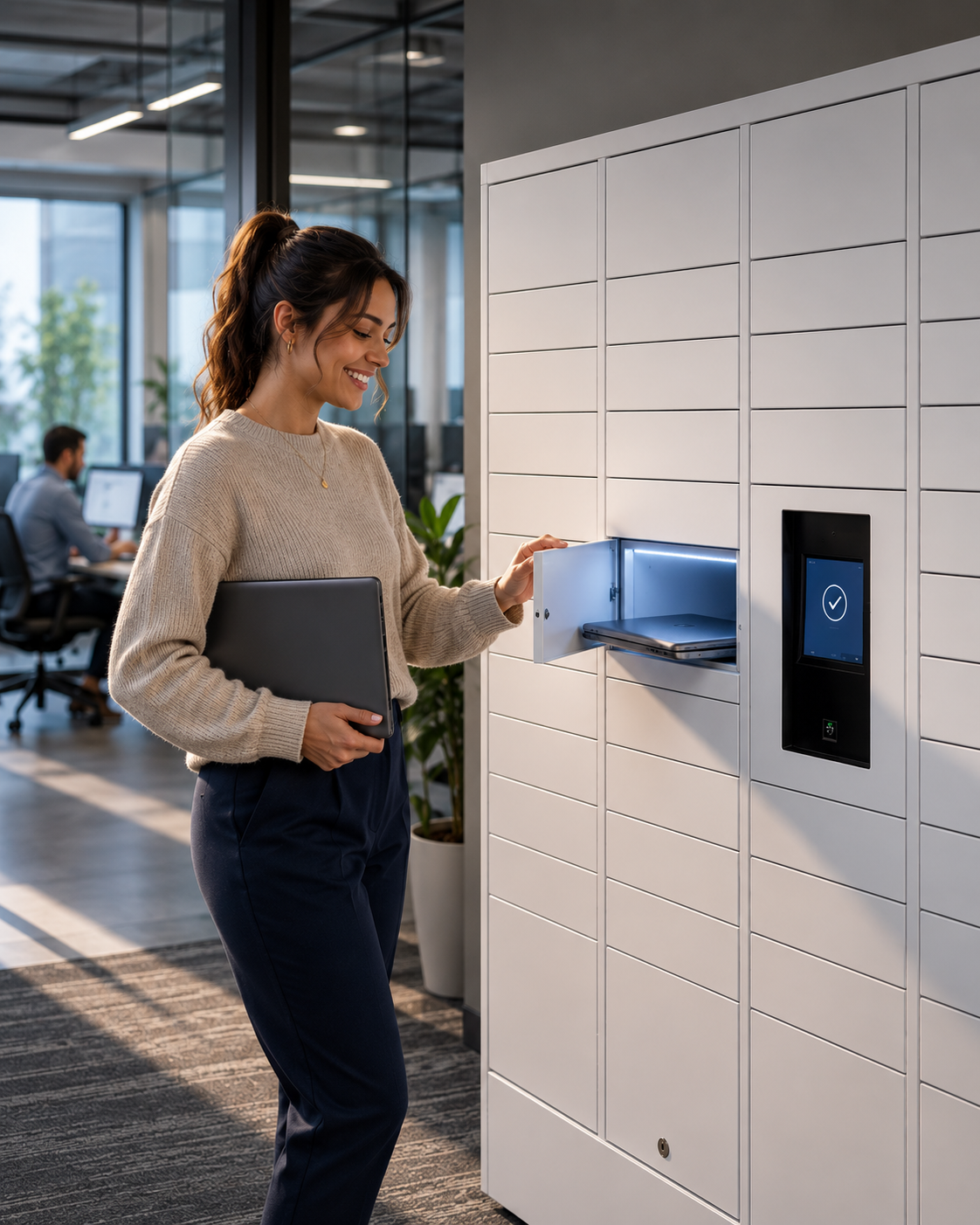
What is a smart locker system?
A smart locker system is a networked bank of secure, electronically controlled compartments that automates how IT equipment reaches your people. Your employees request a device or accessory through their service portal, then collect it from an assigned locker whenever it suits them — day or night, without joining a service-desk queue. Every collection is logged, every asset is tracked across its lifecycle, and your IT team keeps complete visibility without lifting a finger.
Velocity smart lockers run natively inside your ServiceNow tenant, so every transaction happens end to end within workflows you already own. There is no middleware to maintain, no nightly data sync to reconcile, and no engineer to dispatch.
- Networked, electronically controlled compartments — secure, audited, every transaction logged
- Self-service collection 24/7 — employees collect when convenient, not when IT is open
- ServiceNow-native — no middleware, no data sync, no engineer dispatch needed
Velocity builds IT asset lockers, not repurposed parcel boxes.
Every Velocity unit is a purpose-built IT asset locker, engineered for the secure storage, handover and tracking of IT hardware rather than adapted from a click-and-collect delivery box. Whether you need a laptop locker for break-fix swaps and new-starter provisioning, or a bank of bays for peripherals and device returns, you get a fully automated, 24/7 collection point with a complete audit trail behind every door.
Because each IT asset locker connects directly to your ServiceNow CMDB, every device movement reconciles itself, every approved request fulfils automatically, and your team holds full visibility without manual stock-takes. That is what separates a true IT asset locker from a general-purpose smart locker bolted onto your estate.
Smart Collect® gives you one locker management system for the whole estate.
Velocity Smart Collect® is the locker management system that runs your entire estate from inside ServiceNow. From a single dashboard, in the environment your team already works in every day, you see every locker, every asset and every transaction in real time — across every site and every hardware range.
It automates request fulfilment, updates the CMDB, fires restock alerts, produces usage reporting and keeps a full audit trail. Where standalone locker management software would leave you maintaining yet another integration, Smart Collect® needs none, because it is a native ServiceNow application rather than a separate system to connect and reconcile.
That single management plane is what lets you scale a smart locker system across sites and manufacturers without fragmenting how your team operates.
What can a Velocity smart locker do?
These four workflows repeat across the Velocity customer base. Each one used to need an engineer, a ticket queue and a wait — now the locker closes it on its own.
New-starter kit-out
Day-1 productivity for every new hire.
Laptop, peripherals, ID badge, security key — all pre-allocated and ready before they walk in. The new starter collects on arrival; the ticket closes; the asset register updates itself.
Break-fix swap
Broken laptop in. Replacement out. Same hour.
Employee returns the broken device, collects the loaner, and the ticket closes automatically. No engineer dispatched. No appointment booked. No wait.
Peripheral fulfilment
Headsets, cables, accessories — on demand.
High-volume consumables dispensed without a ticket ever touching a human. Pre-authorised users collect; restock alerts fire automatically when inventory drops below threshold.
Loan and return
Loaner devices, automatically tracked.
Issue, due-date, return reminder, automated overdue handling — all inside ServiceNow. No spreadsheets, no email chasing, no IT staff time spent on tracking.
Versa and Impulse. Two locker ranges, one Smart Collect® workflow.
Every unit — whichever range, whichever site — runs the same ServiceNow-native workflow, audit trail and support model through Smart Collect®.
Smart Collect® connects to six locker manufacturers and three vending manufacturers — eight distinct hardware partners in total, since one builds both — so you're never locked to a single shell.
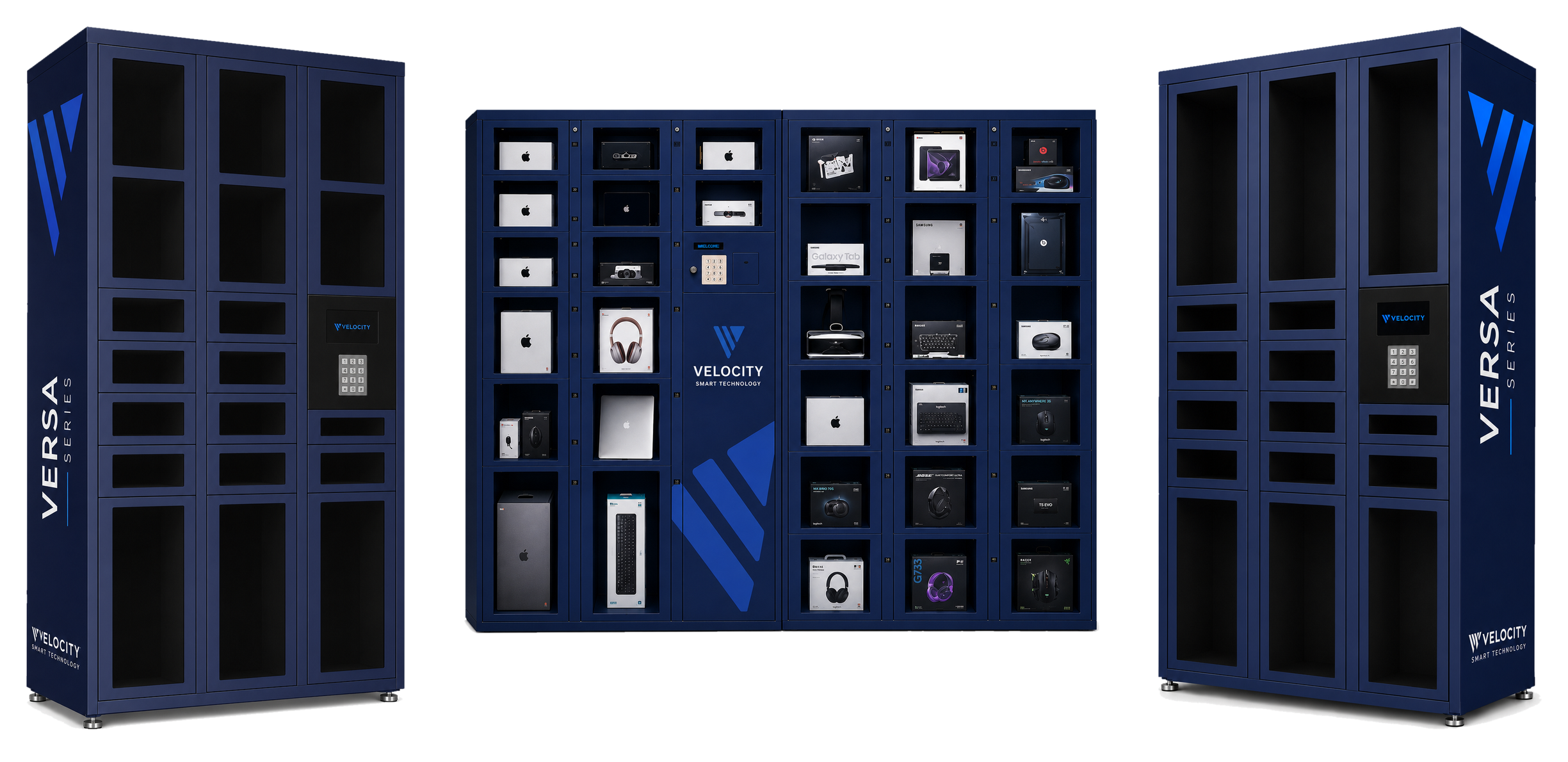
Versa Series
A versatile dispensing range with windowed, individually locked bays — built for asset check-in and check-out, package pickup, and large or bulky-item handover. Runs standalone, grouped into banks of up to 120 bays, or connected to a smart vending machine, in configurations from 2 to 48 bays.
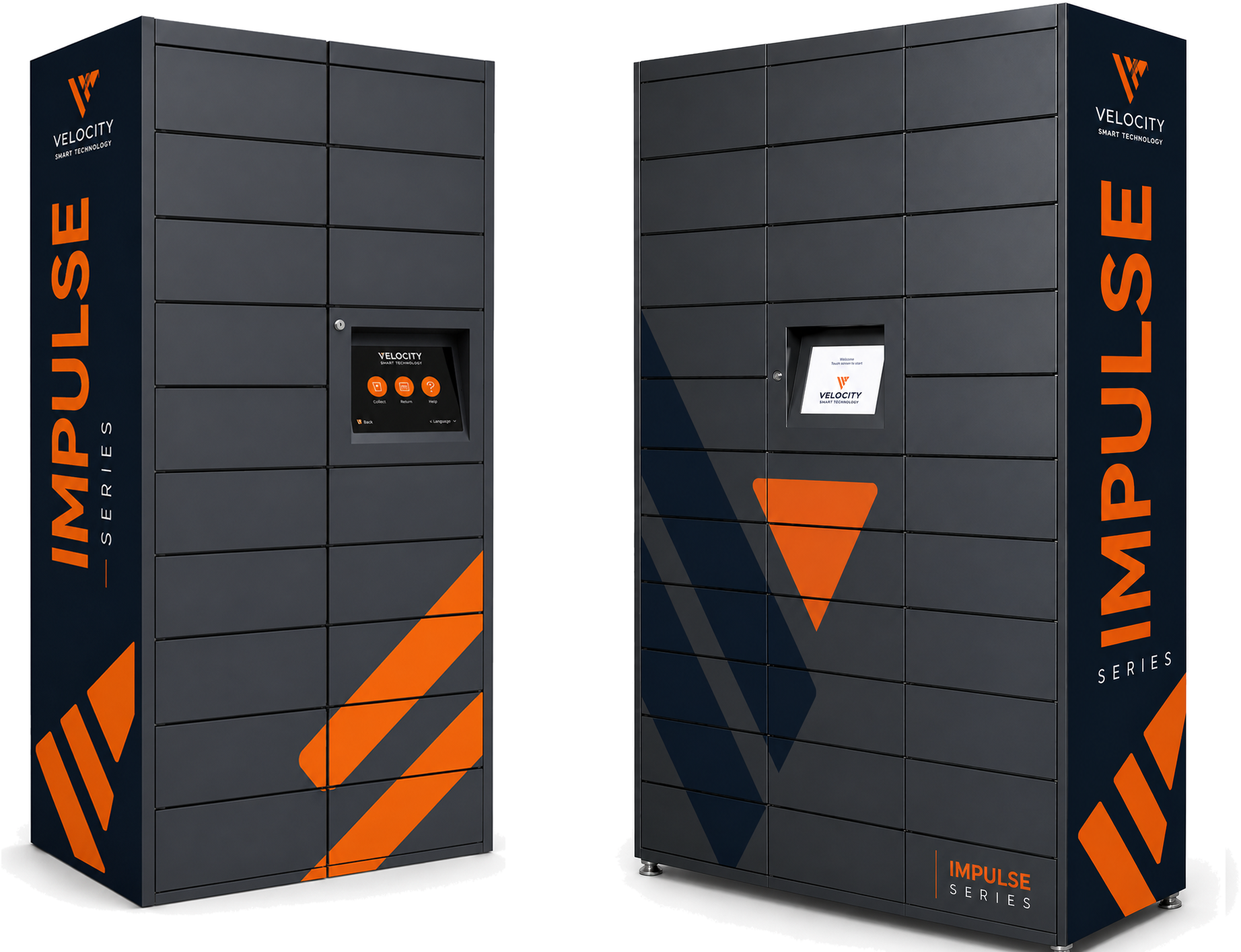
Impulse Series
The newest Velocity locker range: solid-door units with an integrated touchscreen, available in three variants — including the powered Impulse Charge and, from Q4 2026, the walk-up Impulse Now.
One ticket. One item. One collection code.
Velocity smart lockers authenticate every collection against a specific ServiceNow ticket, not against the person standing in front of the locker. When the system pre-allocates an item, it generates a unique single-use collection code — QR, barcode or PIN — and emails it to the user's ServiceNow-registered address. That code opens one bay, releases one item, and closes one ticket, so you never have to wonder which transaction just happened.
Why not badges or biometrics? A badge tap identifies the person — but if a user has two open tickets, a badge can't tell the locker which one to fulfil. A system-generated, single-use code identifies the transaction: this code opens this bay, releases the item allocated to this ticket, and writes the audit record that closes it. The result is a one-to-one map between every ServiceNow ticket and every physical collection — which is exactly what regulated industries (pharma, defence, nuclear energy) need from an audit chain.
Where the code is delivered: the user's ServiceNow-registered work email, secured by the same identity controls your organisation already trusts. No second user directory. No new credential to manage. No app to install.
What does one handover actually cost you?
A single-use collection code replaces an engineer walking a laptop across a building. Do that a few thousand times a year, across new starters, leavers, swaps, loaners and break-fix, and it adds up to real money. Almost no IT team can say how much, because deskside support never appears as its own budget line and so never gets challenged.
Two ways to put a number on it. Start with whichever matches what you already know.
The Deskside Support Cost Benchmark
Twelve questions about how your team runs device support today. No spreadsheet, no digging through ticket exports, nothing to prepare.
- Twelve questions, every one multiple choice
- Around three minutes, start to finish
- Your annual deskside support cost, calculated from your answers
- How your handover times, wait times and kit recovery rates compare with other enterprise IT teams
The Smart Collect® ROI Calculator
If you already know your ticket volumes, your sites and what an engineer costs you, skip the diagnosis and go straight to modelling the saving.
- Savings modelled against your own volumes, not an industry average
- Payback period and multi-year return
- A written breakdown you can take into a budget conversation
Both are free. The benchmark sends your result by email, so you will need a work email address.
IT leaders ask us these questions about smart lockers.
Ready to see smart lockers running inside your ServiceNow?
Spend 60 minutes with a Velocity ServiceNow architect and you will leave with your physical-handover use cases mapped, a pilot sized, and the right hardware ranges chosen for your environment. You bring the estate; we bring the plan.