 Role of relational databases in asset tracking">
Role of relational databases in asset tracking
TL;DR:
- Relational databases serve as the authoritative system for enterprise asset tracking, maintaining data integrity and full lifecycle records. They support complex queries, enforce constraints, and enable accurate, auditable tracking across large volumes of assets. Moving from spreadsheets or NoSQL to properly designed schemas ensures scalability, compliance, and operational efficiency.
Relational databases are the system of record for enterprise asset tracking, organising asset data into structured tables with enforced relationships that make every assignment, location change, and maintenance event queryable and auditable. The role of relational databases in asset tracking extends beyond simple storage: they enforce data integrity through constraints, prevent conflicting state changes through transactional controls, and support complex lifecycle queries that no spreadsheet or document store can replicate at scale. For IT professionals and asset managers overseeing thousands of devices across distributed sites, understanding how relational database management systems (RDBMS) such as PostgreSQL and MySQL underpin these capabilities is the foundation for building tracking systems that hold up under operational pressure.
How relational databases support accurate asset tracking
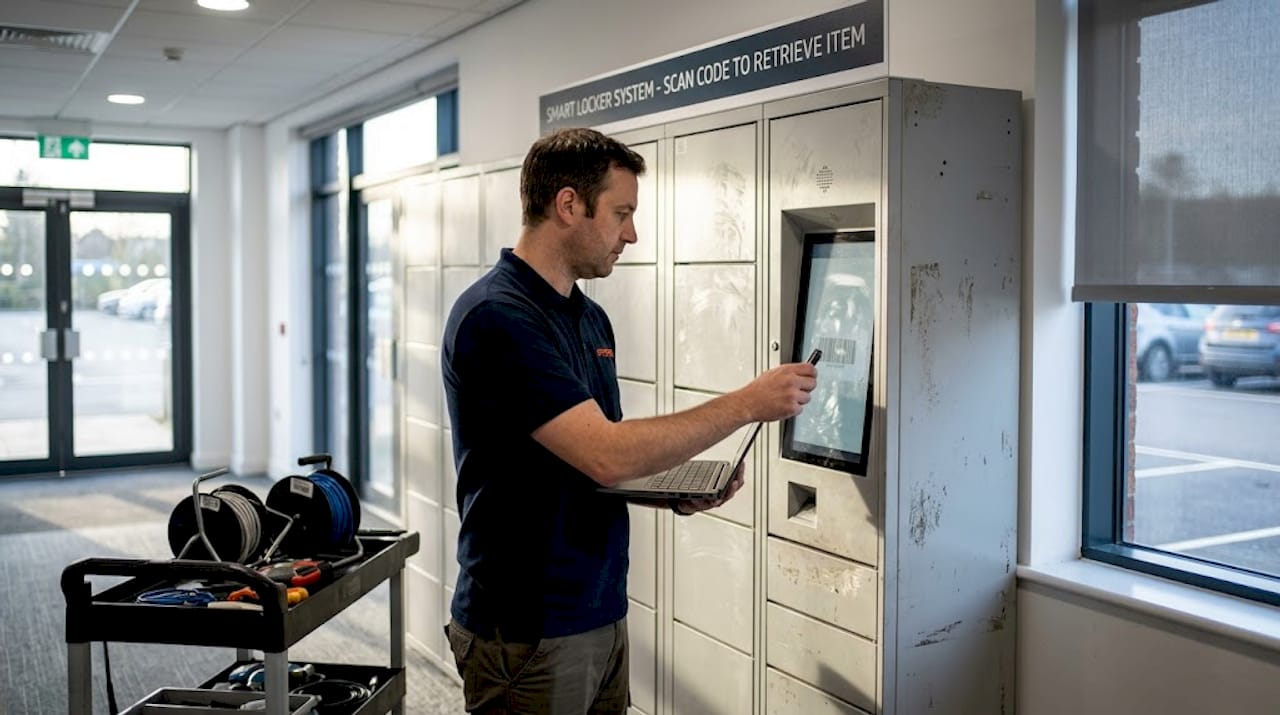
Relational databases function as the authoritative source for assets, their assignments, location changes, maintenance records, and audit logs, enabling queries for both current status and full historical change sets through normalised tables. This architecture means that when an IT manager asks “who has this laptop, where is it, and when was it last serviced,” the answer comes from a single, consistent source rather than from reconciling three separate spreadsheets.
The core features that make this possible are:
- ACID transactions. Atomicity, Consistency, Isolation, and Durability guarantees ensure that a check-out event either completes fully or rolls back entirely. ACID transactions and foreign keys reduce the risk of inconsistent asset states during concurrent updates, which is critical when multiple engineers are processing device swaps simultaneously.
- Foreign key constraints. A foreign key linking an assignment record to a valid asset ID and a valid user ID means the database physically prevents orphaned or invalid assignments. No asset can be assigned to a user who does not exist in the system.
- SQL joins and aggregation. SQL joins enable efficient reporting across related tables such as assets, assignments, locations, and maintenance records. A single query can return every device due for maintenance across 20 sites, ranked by urgency, without any manual data assembly.
- Standardised tooling. PostgreSQL, MySQL, and Microsoft SQL Server all support the same ANSI SQL standard, meaning reporting tools, BI platforms, and monitoring dashboards connect to asset data without custom connectors.
Pro Tip: When designing an asset tracking schema in PostgreSQL, use "SELECT FOR UPDATE` on the asset row during check-out workflows. This locking strategy prevents double assignments in high-concurrency environments where multiple service desk agents may process requests against the same device simultaneously.
The practical implication is that relational databases are best suited for asset tracking when strong consistency, rules-based data management, and complex relationships among assets, users, and locations are required. Organisations that attempt to replicate this behaviour in loosely structured systems consistently encounter reconciliation overhead that grows with asset volume.

Relational databases vs spreadsheets and NoSQL for asset tracking
The choice of data store for asset tracking is not purely technical. It carries direct operational consequences.
| Criterion | Spreadsheets | NoSQL (e.g. MongoDB) | Relational databases |
|---|---|---|---|
| Data integrity | No constraints; manual validation only | Optional schema validation | Enforced via foreign keys and constraints |
| Concurrency control | None; last-write-wins | Eventual consistency by default | ACID transactions with row-level locking |
| Audit trail | Manual; prone to overwrite | Possible but not native | Native history tables and audit log tables |
| Complex queries | Limited; pivot tables only | Aggregation pipelines; no joins | Full SQL joins across related tables |
| Scalability | Low; degrades beyond thousands of rows | High horizontal scale | High with indexing; vertical and read-replica scaling |
Spreadsheets are the most common starting point for asset tracking in organisations with fewer than 500 devices, and they fail predictably. They lack relational integrity and concurrency control, which creates reconciliation overhead that grows non-linearly as asset volumes increase. A team managing 200 laptops across two sites can maintain a spreadsheet. A team managing 5,000 devices across 30 sites cannot.
NoSQL databases such as MongoDB offer horizontal scalability and flexible schemas, which appeal to developers building rapidly evolving applications. However, they sacrifice strong consistency and native relational joins, both of which are non-negotiable in asset tracking. When an asset is checked out, the system must guarantee that no other process can simultaneously assign the same device. Eventual consistency does not provide that guarantee.
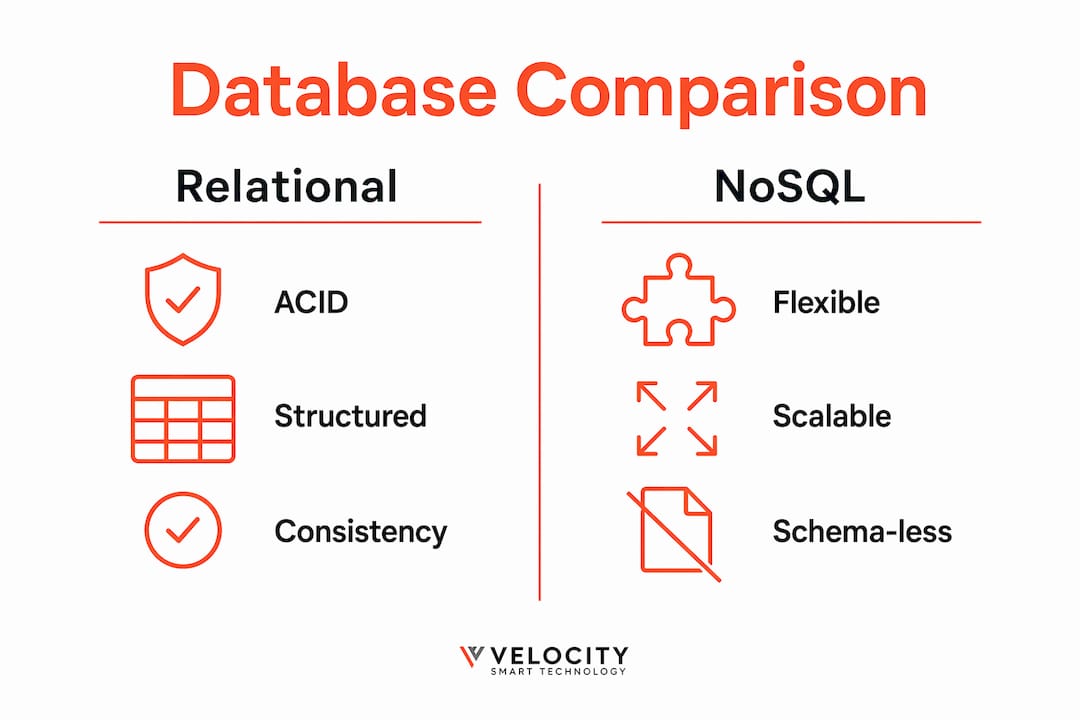
Moving from spreadsheets to connected relational records reduces manual reconciliation and improves visibility across the full asset lifecycle, from procurement through deployment, maintenance, and retirement. The audit trail that a relational schema produces is not a reporting feature added after the fact. It is a structural property of how the data is organised.
Practical asset tracking workflows enabled by relational databases
A well-designed relational schema for asset tracking separates concerns into distinct tables, each with a clear purpose. A typical enterprise schema includes the following:
- Assets table. Contains the master record for each physical item: serial number, model, purchase date, warranty expiry, and current status. Status is a constrained field, accepting only defined values such as “available,” “assigned,” “in maintenance,” or “retired.”
- Assignments table. Records every check-out and check-in event, linking an asset ID to a user ID, a location ID, and a timestamp. This table is append-only. Returning a device creates a new record rather than overwriting the previous one, preserving the full assignment history.
- Maintenance records table. Logs every service event against an asset ID, including the engineer, the work performed, and the next scheduled service date. Event-driven queries against this table surface devices due for maintenance before they fail in the field.
- Audit log table. Audit logging tables linked to asset IDs provide the “who did what and when” evidence required in enterprise asset management audits. Every create, assign, return, and maintenance event is written here with a timestamp and the identity of the user who triggered it.
- Locations table. Stores site, building, floor, and room data. Foreign keys in the assignments and assets tables reference this table, ensuring that no device can be recorded at a location that does not exist in the system.
Auditable lifecycle workflows from procurement through deployment, maintenance, and retirement benefit from relational schemas that keep connected records, ensuring consistent handoffs and historical audit trails. This is the structural property that makes compliance reporting tractable rather than laborious.
Pro Tip: Integrate QR code or RFID tag lookups directly against the assets table primary key. A scan resolves instantly to the full asset record, its current assignment, and its maintenance history without any intermediate lookup service. This is one of the most practical data management improvements an IT team can make to daily operations.
Advanced relational features for enterprise-scale asset management
Enterprise deployments introduce two challenges that basic schemas do not address: location-aware tracking across large physical sites, and performance under high transaction volumes.
Spatial data types for location-aware tracking
Spatial data types and indexes in relational databases support efficient location-aware asset tracking while maintaining integrity. MySQL and PostgreSQL both support GIS geometry types natively. Storing asset coordinates as geometry points rather than plain latitude/longitude decimal pairs enables spatial index queries such as “find all assets within 50 metres of building entrance B” without external mapping services. This matters for large campuses, data centres, and multi-building enterprise sites where physical proximity is operationally relevant.
The table below illustrates how a spatial-aware schema extends the standard assets table:
| Column | Data type | Purpose |
|---|---|---|
| asset_id | UUID | Primary key |
| serial_number | VARCHAR | Unique hardware identifier |
| location_id | INTEGER (FK) | References locations table |
| coordinates | GEOMETRY(Point) | GPS or indoor positioning data |
| spatial_index | GIST index | Enables fast proximity queries |
| last_seen | TIMESTAMP | Most recent location update |
Aggregate synchronisation and transactional consistency
Derived or aggregate data must be updated synchronously within the same transaction as event writes to keep source-of-truth and summary data consistent. This pattern, used in designs such as the pg_accumulator approach for PostgreSQL, means that when a device is checked out, the aggregate count of available assets at that location decrements in the same database transaction. Users never see a dashboard showing 10 available laptops when 9 have already been assigned.
Balancing normalisation with strategic indexing and pre-aggregated tables optimises performance without compromising correctness, which is critical for enterprise-scale asset tracking. A fully normalised schema is correct but can be slow under high read volumes. Pre-aggregated summary tables, updated transactionally, provide dashboard-speed reads without sacrificing the integrity of the underlying event data. This is not a workaround. It is a deliberate architectural pattern used in production systems managing hundreds of thousands of assets.
Key takeaways
Relational databases provide the only data architecture that simultaneously enforces asset state integrity, supports full lifecycle audit trails, and scales to enterprise asset volumes through transactional design and strategic indexing.
| Point | Details |
|---|---|
| ACID transactions are non-negotiable | They prevent double assignments and partial updates during concurrent check-out workflows. |
| Append-only assignment tables | Recording returns as new rows rather than overwrites preserves the full assignment history for compliance. |
| Spatial types extend tracking capability | GIS geometry columns and spatial indexes enable proximity queries without external mapping services. |
| Aggregate synchronisation prevents stale data | Updating summary tables within the same transaction as event writes keeps dashboards accurate at all times. |
| Relational schemas outperform spreadsheets at scale | Moving to connected relational records reduces manual reconciliation and improves operational visibility. |
Why schema design is the decision most teams get wrong
Having worked through asset tracking implementations across a range of enterprise environments, the pattern I see most consistently is organisations that design their schema for current state rather than for history. They build an assets table with a “current_user” column, update it on every assignment, and six months later they have no idea who had a device before the current holder. The audit trail is gone. The compliance team is unhappy. The IT manager is rebuilding history from email threads.
The correct approach is to treat the assignments table as an immutable event log from day one. Every check-out and check-in is a new row. The current assignee is always the most recent open assignment record. This costs almost nothing in storage and pays back enormously in auditability. It is the same principle that makes financial ledgers reliable: you never edit a past entry, you write a new one.
The second mistake is deferring the move away from spreadsheets until the problem is already painful. Organisations that track assets efficiently at scale make the transition to a relational schema before they feel the pain, not after. By the time spreadsheet reconciliation is consuming meaningful IT staff time, the migration is harder because the data quality has already degraded.
The third observation is about performance. Teams sometimes over-normalise their schemas in the name of correctness, then find that dashboard queries are slow and reach for caching layers or external analytics tools. The better answer is almost always a set of pre-aggregated summary tables updated transactionally. It keeps the architecture simple, the data consistent, and the queries fast.
— Anthony
How Velocity-smart puts these principles into practice
Velocity-smart’s Smart Collect platform runs natively inside ServiceNow, which means asset state, device location, ownership history, and audit data sit in the customer’s CMDB as native records, queryable like any other configuration item. There is no parallel database, no data sync, and no reconciliation overhead. The smart locker and vending workflows that handle device handovers, peripheral dispensing, and equipment returns are all backed by the same transactional integrity principles described in this article. Every assignment event writes to the ServiceNow CMDB in real time, producing the audit trail that compliance and operations teams require. To see how this translates into measurable operational outcomes, explore Velocity-smart’s automation solutions for enterprise IT.
FAQ
What is the role of relational databases in asset tracking?
Relational databases organise asset data into structured, related tables and enforce constraints that maintain consistent asset states across assignments, locations, and maintenance events. They serve as the system of record for the full asset lifecycle, from procurement to retirement.
Why are ACID transactions important for asset tracking?
ACID transactions ensure that check-out and check-in events either complete fully or roll back entirely, preventing scenarios where the same device appears as both available and assigned. This is particularly critical in high-concurrency environments with multiple simultaneous service desk operations.
How do relational databases compare to spreadsheets for managing assets?
Spreadsheets lack foreign key constraints, concurrency control, and native audit logging, which makes them unreliable for asset volumes above a few hundred items. Relational databases enforce data integrity structurally and scale to hundreds of thousands of assets without reconciliation overhead.
What is an audit log table in an asset tracking database?
An audit log table records every create, assign, return, and maintenance event against an asset ID, along with a timestamp and the identity of the user who triggered the action. This provides the evidence trail required for enterprise compliance audits.
Can relational databases handle location-aware asset tracking?
Yes. PostgreSQL and MySQL both support GIS geometry data types and spatial indexes natively, enabling proximity queries against asset coordinates without external mapping services. This is particularly useful for large campuses and multi-building enterprise deployments.
Recommended
See what Smart Collect® could save you
Model your savings in two minutes, or book a 60-minute workshop to pressure-test the numbers against your estate.